Whether a Basset Hound Is Trainable at All
It's a question I hear time and time again from exasperated Basset Hound owners, or even those just considering bringing one of these adorable, floppy-eared darlings into their lives: "Is a Basset Hound even trainable?" The frustration is real. You see those long, soulful eyes and assume a gentle, eager-to-please companion, only to find yourself shouting commands into the wind as your Basset's nose leads them on an epic adventure completely divorced from your desires. This guide is here to tell you, yes, your Basset Hound is absolutely trainable, but perhaps not in the way you might expect from other breeds. We'll dive deep into their unique psychology, explore effective training methods, and equip you with the patience and strategies you need to build a strong, obedient bond with your Basset.
Deconstructing the "Untrainable" Myth: Understanding Your Basset's Brain
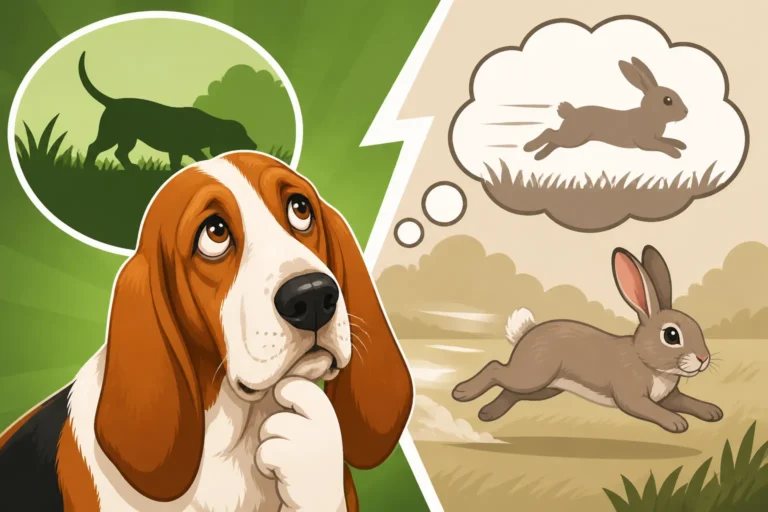
The widespread belief that Basset Hounds are untrainable isn't really about their intelligence. It's about their priorities, which, let's be honest, often don't align with ours. A Basset's brain is wired for one thing above all else: scent. They were bred for centuries to follow a trail, to be tenacious and independent in their pursuit, largely ignoring human commands if a compelling scent was present. This deep-seated instinct often gets misinterpreted as stubbornness or a lack of understanding, when in reality, it's just your Basset being exactly what they were bred to be.
Understanding the Basset Hound's Instincts
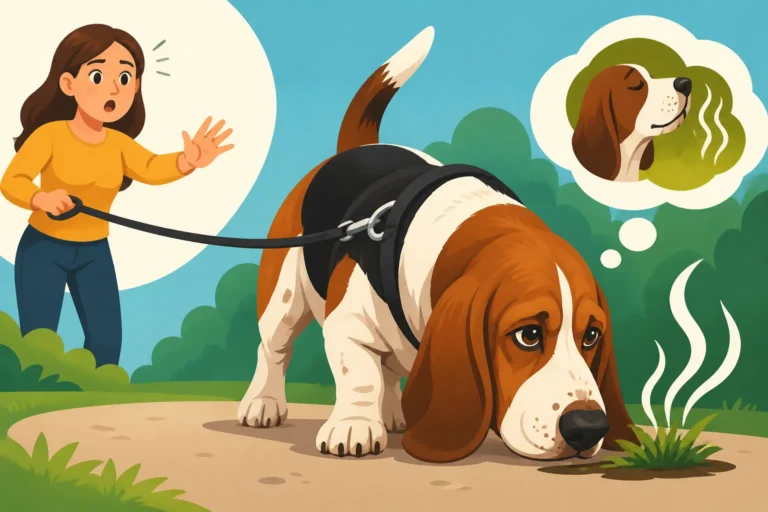
Imagine walking through a bustling city square. You hear the chatter, the music, the distant sirens. Now imagine you also have a superpower that lets you smell every single coffee bean, every discarded wrapper, every person's unique scent profile, all at once, with incredible detail. That's a tiny glimpse into the sensory world of a Basset Hound. Their nose isn't just good; it's a super-powered organ designed to process an incredible amount of information. When they latch onto a scent, it's an immersive experience that literally overrides other stimuli, including your voice. It's not a choice to ignore you; it's a biological imperative. This is why you often hear owners lament, Why a Basset Hound Stops Hearing You When It Smells Something. Their ears might be long, but it's their nose that truly dominates their world.
This profound drive means that traditional, rote obedience methods often fall flat. They aren't trying to be defiant; they are simply fulfilling their genetic destiny. A Basset’s ancestors spent their lives tracking game through dense underbrush, relying on their incredible noses to lead them, often out of sight and hearing of their human companions. This independence, while endearing in some ways, can be incredibly frustrating when you're trying to teach "sit" or "stay" in a distracting environment. Their focus is internal, driven by the invisible tapestry of odors around them, rather than external, driven by your directives.
The Difference Between Stubbornness and Scent-Driven Focus
Let's clear the air on "stubbornness." When a Basset Hound stands firm, nose glued to the ground, pulling against the leash despite your pleas, it’s not necessarily an act of defiance. It's often a deep immersion in their scent world. To them, that fleeting whiff of yesterday's squirrel or a distant dog's trail is far more compelling and immediate than your request to walk nicely. This singular focus can certainly look like stubbornness, leading many to incorrectly conclude Whether a Basset Hound Chooses Not to Obey.
Think of it this way: if you were engrossed in a thrilling novel, would you instantly drop it and jump to attention if someone asked you to fold laundry? Probably not without a moment of hesitation or a strong incentive. For a Basset, the "novel" is the scent trail, and it's captivating beyond measure. Their low-slung body, powerful neck, and long ears are all perfectly designed to keep that nose on the ground, scooping up every last molecule of scent. This makes them phenomenal at tracking, but a challenge for off-leash recall in an unpredictable environment. Understanding this distinction is the first step toward effective training.
The Art of Motivating a Basset Hound
Since traditional methods often miss the mark, training a Basset Hound requires a different approach – one rooted in positive reinforcement, high-value rewards, and a deep understanding of what truly makes them tick. You're not fighting their instincts; you're learning to work with them.
Finding What Actually Motivates a Basset Hound
If a Basset Hound seems uninterested in pleasing you, it's usually because what you're offering simply isn't as good as what the environment offers, or what their nose has found. The key to successful Basset training lies in finding those irresistible motivators. For many Bassets, food is king. And not just any food – we're talking about the good stuff: small pieces of cheese, boiled chicken, hot dogs, or specially formulated high-value training treats. What Actually Motivates a Basset Hound is almost universally food, and often, the stinkier, the better.
Beyond food, some Bassets might be motivated by specific toys, especially those that engage their hunting drive, like a squeaky plush toy that mimics small prey. Praise and affection can certainly play a role, but they are rarely enough on their own, especially in a distracting outdoor environment. It's a hierarchy, and food is almost always at the top. Experiment to find your Basset's absolute favorite treat. Once you've identified their 'gold standard' reward, you have a powerful tool in your training arsenal. Use these super-rewards judiciously for critical commands like recall or staying put.
The Importance of Consistency and Patience
Training a Basset Hound is a marathon, not a sprint. Consistency is paramount. Short, frequent training sessions are far more effective than long, drawn-out ones. A Basset's attention span, especially for tasks that don't involve sniffing, can be quite brief. Whether Short Sessions Suit a Basset Hound is a resounding yes! Five to ten minutes, several times a day, will yield better results than a single 30-minute session.
Patience is equally crucial. You will have days where you feel like you're getting nowhere. Your Basset might stare blankly, offer a dramatic sigh, or simply lie down mid-command. Don't take it personally. Avoid punishment or harsh corrections, as these can easily shut down a sensitive Basset and make them even less willing to engage. Instead, celebrate small victories, keep sessions positive and fun, and remember that slow progress is still progress. Every successful "sit" or "stay" is a brick in the foundation of your bond.
Training doesn't just happen in specific sessions; it's an ongoing dialogue. Every interaction is a training opportunity. Reward calm behavior, polite greetings, and choosing to pay attention to you even when there are distractions. Using clicker training can be incredibly effective with Bassets, as it provides a clear, consistent marker for desired behavior immediately, followed by that high-value reward. This helps bridge the gap between action and reward for their easily distracted minds. For structured training, an online program like those offered by BAXTER & Bella can provide a consistent curriculum and support, which is often invaluable for breeds like Bassets who benefit from a clear, step-by-step approach.
Overcoming Common Basset Hound Training Hurdles
Let's be realistic: Basset Hounds come with a few built-in "features" that can make training more challenging. But understanding these challenges allows you to prepare for them and implement strategies to overcome them.
Overcoming Common Basset Hound Training Hurdles
One of the biggest hurdles, as we've discussed, is their nose. Recall is notoriously difficult. The Recall a Basset Hound Will Never Reliably Give You is a stark truth for many owners. Once they're on a scent, it's as if the world outside that olfactory trail ceases to exist. This means a secure, physical fence is non-negotiable for most Basset Hounds. For walks, a sturdy harness and a long line are your best friends. Using a long line in a safe, open area allows them to explore scents more freely while still giving you control and the ability to practice recall in a controlled manner. It's also wise to consider Whether a Basset Hound Should Wear a Tracker, even with the best precautions, as their nose can lead them far astray.
Another common challenge is their love of food, which can extend to counter-surfing, trash-raiding, and begging. Early training to "leave it" and rewarding calm behavior when food is present is essential. Bassets also have a reputation for being quite vocal. Their signature bay can be charming, but it can also be a nuisance if not managed. Teaching a "quiet" cue can be helpful, though it requires consistent effort and understanding of why they are baying. Are they bored? Lonely? Alerting you to something? Addressing the root cause alongside training a cue is key.
Here’s a quick overview of common Basset Hound training challenges and solutions:
| Challenge | Description | Solution |
|---|---|---|
| Scent-Driven Distraction | Basset ignores commands when on a scent trail. | Use high-value treats, long lines, secure fencing. Practice recall in controlled environments. |
| "Stubbornness" | Appears unwilling to obey, often linked to low motivation or distraction. | Identify peak motivators (food!), keep sessions short and positive, avoid punishment. |
| Vocalization (Baying) | Frequent, loud baying, especially when bored or on a scent. | Identify triggers. Teach "quiet" cue. Provide mental stimulation (scent work). Ensure adequate exercise. |
| Leash Pulling | Strong pullers due to their forward drive and low center of gravity. | Use a front-clip harness or head halter. Train loose-leash walking with consistent rewards. |
| House Training | Can take longer due to their deep sleep and lower bladder awareness. | Consistent potty breaks, crate training, immediate rewards for outdoor elimination. |
When to Seek Professional Help
While Basset Hounds are trainable, there are times when seeking professional guidance can make a world of difference. If you're struggling with persistent behavioral issues, feel overwhelmed, or simply want to fast-track your training success, a certified professional dog trainer is an excellent resource. They can offer personalized strategies tailored to your Basset's specific personality and your household's dynamics.
Look for trainers who use positive reinforcement methods and have experience with scent hounds. Group classes can be beneficial for socialization, but often, one-on-one sessions are more effective for addressing specific Basset challenges. Don't be afraid to interview a few trainers to find one whose philosophy aligns with yours and who understands the unique Basset temperament. Resources like the Association of Professional Dog Trainers (APDT) or the Certification Council for Professional Dog Trainers (CCPDT) can help you find qualified professionals in your area. Sometimes, a fresh pair of eyes and expert guidance are exactly what you need to break through a training plateau and foster an even stronger relationship with your beloved Basset.
Celebrating the Trainable Basset Hound
Despite their charming quirks, Basset Hounds are incredibly intelligent and capable dogs. It's about tapping into their natural talents and understanding their unique learning style, rather than trying to force them into a mold that doesn't fit.
Beyond Basic Obedience: Tapping into Their Strengths
Once you've mastered the basics, you'll discover that Basset Hounds excel at activities that engage their powerful sense of smell. Scent work, tracking trials, and even barn hunt are fantastic ways to channel their natural instincts and provide immense mental stimulation. Whether a Basset Hound Can Do Tracking Trials is a definite yes, and they often surprise people with their dedication and skill in these areas. Giving them a job that utilizes their best asset – their nose – will make them incredibly happy and fulfilled. You'll find that a mentally tired Basset is a much calmer, more "obedient" Basset around the house.
Don't underestimate their capacity to learn tricks, either! While they may not be the flashiest performers, Bassets can absolutely learn a variety of commands and behaviors. Whether a Basset Hound Learns Tricks is often a matter of finding the right motivation and breaking down complex tasks into small, achievable steps. Imagine teaching your Basset to "play dead" or "high five" – it’s not only fun for both of you but also strengthens your bond and improves their general responsiveness. They might take a bit longer to grasp certain concepts, but once they get it, it sticks. They are problem-solvers in their own right, and figuring out how to earn that coveted high-value treat is a challenge they often relish.
The Reward of Training a Basset Hound
Training a Basset Hound might require more patience and creativity than training some other breeds, but the rewards are truly immense. When you finally break through and establish that clear line of communication, the bond you form is incredibly special. You learn to appreciate their independence, their single-mindedness, and their often hilarious approach to life.
A well-trained Basset is a joy to live with. They're typically wonderful family dogs, known for their gentle nature and patience with children. The process of training helps you understand your Basset on a deeper level, transforming potential frustrations into a shared journey of discovery and mutual respect. So, if you've been wondering, "Is a Basset Hound trainable at all?", the answer is a resounding yes, absolutely! It just means embracing their Basset-ness and adapting your methods to suit their remarkable, scent-driven minds. With the right approach, you'll not only have a well-behaved companion but also a deeply enriched relationship with your unique, lovable hound.
Disclaimer
This article is for general informational purposes only and does not constitute professional advice. Laws, prices and regulations vary by location and change over time. Consult a qualified professional for guidance on your specific situation.