Whether a Basset Hound Tolerates Rough Handling
It’s a common misconception that because Basset Hounds are known for their laid-back demeanor and patient nature, they’re automatically tolerant of any kind of handling, including the rough and tumble kind. As a long-time Basset enthusiast, I can tell you this simply isn't true, and misunderstanding your Basset's limits can lead to discomfort for them and potential injury for both of you. This guide will walk you through why Basset Hounds, despite their gentle reputation, need careful handling and how to ensure every interaction is positive and safe for your beloved hound.
The Basset Hound's Physical Vulnerabilities and Rough Handling
Our Basset Hounds are wonderfully unique, but their distinctive build also comes with specific physical vulnerabilities that make them particularly susceptible to injury from rough handling. It's not just about being gentle; it's about understanding their anatomical quirks.
Their Delicate Backs and Necks
That long, low-slung body, while undeniably charming, is a Basset Hound's Achilles' heel, especially when it comes to their spine. Basset Hounds are one of the breeds predisposed to Intervertebral Disc Disease (IVDD), a condition where the cushioning discs between the vertebrae can rupture or bulge, pressing on the spinal cord. This can lead to immense pain, nerve damage, and even paralysis.
Imagine a child, full of excitement, pulling on your Basset's collar while they're exploring a fascinating scent. That sudden jerk on the neck and spine can be incredibly dangerous. Or perhaps a well-meaning but unaware guest tries to pick up your Basset by grabbing them around the chest and lifting them awkwardly, leaving their back unsupported. These actions, which might be harmless to a sturdier breed, can cause significant trauma to a Basset Hound's delicate back. Even vigorous, uncontrolled play that involves twisting, jumping, or hard landings can put undue stress on their spinal column. It's crucial to always support their entire body when lifting, and teach everyone in the household, particularly children, the importance of gentle interactions. This means no roughhousing that involves wrestling, tugging, or sudden movements that could jar their spine. It truly is a case of prevention being better than any cure when it comes to spinal health. The Back Trouble a Basset Hound Is Built Into goes into more detail on these concerns.
Sensitive Skin and Pendulous Ears
Beyond their backs, Basset Hounds have wonderfully loose, pliable skin and those iconic, long, heavy ears. While these features contribute to their endearing appearance and incredible scenting abilities, they also make them quite sensitive to rough handling. The loose skin, especially around their face, neck, and jowls, can easily be pulled or pinched. This isn't just uncomfortable; it can lead to skin irritation or even open sores if caught on something or repeatedly tugged.
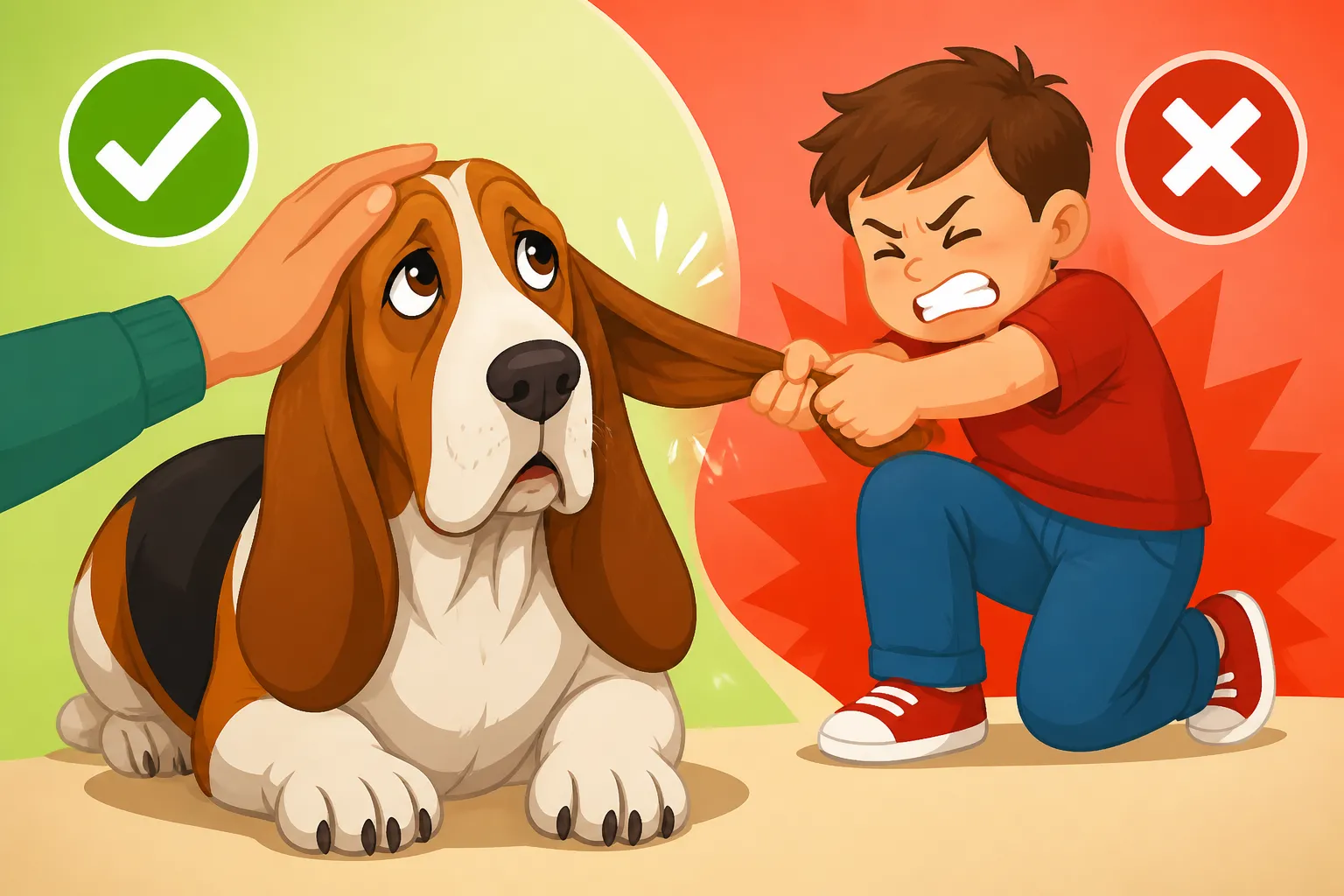
And those magnificent ears? They're not just for show; they're vital scent-gathering tools. However, they are also prone to injury and discomfort. A child, captivated by their length, might pull or yank on them. This can cause immediate pain, but also potentially lead to aural hematomas – a painful collection of blood within the ear flap, often requiring veterinary intervention to drain and heal. Rough play that involves grabbing ears or even clumsy petting that pulls them can contribute to these issues. Furthermore, the skin inside their ear canals is delicate, and rough cleaning or probing can cause damage or push debris further in, exacerbating the already common ear infections Bassets face. Their skin folds, particularly around the face, need regular, gentle cleaning to prevent irritation and infection, which rough handling can make worse. The Skin Under a Basset Hound's Folds and The Ear Infections That Never Really Leave a Basset Hound offer more insight into caring for these sensitive areas.
Understanding a Basset Hound's Temperament and Stress Signals
Basset Hounds often have a reputation for being perpetually mellow, almost stoic. While it's true they possess a remarkable calmness and patience, mistaking this for an endless tolerance for all forms of interaction, especially rough handling, is a dangerous generalization.
The Myth of the "Bomb-Proof" Basset
Many people assume a Basset Hound, with its placid expression and low energy, is "bomb-proof" – meaning nothing fazes them. They might tolerate a lot more than, say, a high-strung terrier, but "tolerating" is not the same as "enjoying" or "being completely comfortable." Bassets are inherently gentle and usually prefer a peaceful environment. When subjected to rough handling, they often internalize their discomfort rather than reacting overtly or aggressively right away. This can be misleading. An owner might think their Basset is fine because it isn't growling or snapping, but the dog could be experiencing significant stress or pain.
Their stoicism means they might endure an unpleasant situation for a period, but this endurance has limits. Pushing those limits can lead to a sudden, out-of-character reaction when the dog finally reaches its breaking point. This isn't a sign of aggression; it's a sign that their subtle warnings were missed, and they felt they had no other option to communicate their distress. Understanding that even the most laid-back Basset can feel vulnerable and overwhelmed is key to fostering a truly trusting and safe relationship.
Recognizing Signs of Discomfort or Fear
Because Basset Hounds might not immediately offer a growl or a snap when uncomfortable, it's vital for owners to become fluent in their subtle language of distress. Missing these cues can escalate a situation from mild discomfort to genuine fear or defensive behavior.
Here are some common signs a Basset Hound might display when they are not tolerating handling, even if it's not overtly "rough" but just unwelcome:
- Lip Licking and Yawning: These are often calming signals, indicating mild stress or anxiety. They're trying to communicate discomfort without being confrontational.
- Averting Gaze or Turning Head Away: If your Basset avoids eye contact or tries to turn its head when approached for handling, it's a clear signal they're not keen on the interaction.
- Freezing or Becoming Tense: A Basset that suddenly becomes rigid, stops moving, or holds its breath is likely uncomfortable and trying to "disappear" or brace itself for what's coming.
- Tail Tucked Low or Between Legs: This is a universal sign of fear or anxiety in dogs.
- Low Growl or Muzzle Punch: If the subtle signs are missed, a low growl is often the next step – a clear warning that they need space. A "muzzle punch" is a quick, soft contact with their nose, often a final warning before a bite. Whether a Basset Hound Snaps When Sore delves into these warning signs further.
- Whale Eye: When you can see the whites of their eyes, it usually means they are stressed or fearful.
- Ears Pinned Back: While a Basset's ears are naturally low, if they are flattened against their head, it's a sign of fear or appeasement.
- Reluctance to Approach or Attempts to Move Away: If your Basset tries to walk away, leans away from your touch, or is hard to catch, they are communicating their desire not to be handled.
Learning to observe these signals is critical. When you see them, stop what you are doing, give your Basset space, and re-evaluate the interaction. Respecting these boundaries builds trust and prevents escalation.
Teaching Appropriate Interaction: Especially for Children
One of the biggest challenges for Basset Hound owners, especially those with families, is ensuring everyone, particularly children, understands how to interact appropriately. Bassets are often very patient with kids, but patience is not a limitless resource, and their physical vulnerabilities demand careful handling.
Educating Children on Gentle Handling
The key to a harmonious household with children and a Basset Hound lies in consistent education and supervision. Children, by nature, can be exuberant and sometimes clumsy, and they need to be taught explicitly how to interact respectfully with a dog whose body is quite fragile.
Start by teaching children the concept of "gentle hands." Practice with a stuffed animal first, demonstrating soft strokes rather than pats, pulls, or pokes. Explain that a Basset's ears are very sensitive and should never be pulled, nor should their long tail be yanked. Teach them that hugging around the dog's neck can make the Basset feel trapped and uncomfortable. Instead, encourage petting on the back or chest, always with an open hand, stroking in the direction of the fur.
Supervision is non-negotiable, especially with very young children. Always have an adult present during dog-child interactions to guide the child and advocate for the dog. If you notice your Basset showing any signs of discomfort (as discussed earlier), gently intervene and redirect the child. Use positive reinforcement for both the child ("That was such a gentle pet!") and the dog (a calm treat after a positive interaction). Consider investing in a comfortable, sturdy dog bed or crate, perhaps from a reputable online retailer like Amazon, which can serve as a designated "safe zone" for your Basset, a place where they can retreat and children are taught to leave them undisturbed. This creates clear boundaries and respect for the dog's need for personal space. For a deeper dive into living with kids and Bassets, check out A Basset Hound in a House With Children.
Socialization and Positive Reinforcement for Your Basset
While teaching children is crucial, it's equally important to positively socialize your Basset Hound to various forms of handling from an early age. The goal isn't to make them tolerate rough handling, but to make them comfortable and confident with appropriate handling that is necessary for their care.
This means starting early with gentle, positive exposure to being touched everywhere: paws, ears, tail, and mouth. Pair these touches with high-value treats and praise. For example, during ear checks, gently lift an ear, give a treat, then release. Gradually increase the duration and intensity of the touch. This process, known as desensitization and counter-conditioning, helps your Basset associate handling with positive experiences, making routine care like ear cleaning, nail trims, and vet visits much less stressful. Teaching a Basset Hound to Have Its Ears Handled offers great tips on this specifically for ear care.
Enlist the help of a professional trainer or an online program that emphasizes positive reinforcement, such as those offered by BAXTER & Bella. These resources can provide structured guidance on teaching your Basset to be comfortable with handling and cooperative during necessary procedures. Consistency is key, and making handling a predictable, pleasant experience will significantly reduce any potential for fear or defensiveness down the line. Remember, we're not aiming for a Basset that will endure anything, but one that trusts you and understands that handling is safe and often rewarding.
Preventing Problems: Management and Safe Practices
Even with the best intentions and training, preventing rough handling requires proactive management and a strong commitment from the owner to advocate for their Basset Hound. Their well-being depends on the environment you create and the boundaries you enforce.
Setting Up a Safe Environment
Creating a safe and predictable environment is paramount, especially if you have a bustling household or frequent visitors. This means actively minimizing opportunities for your Basset to be subjected to unwanted or rough handling.
Think about your home layout. Do you have areas where your Basset can retreat undisturbed? A crate can be an invaluable tool here. It provides a secure, personal den where your Basset can go when they need peace and quiet, and everyone in the household should be taught that the crate is their safe space – no bothering the dog when they’re inside. When choosing a crate, make sure it's appropriately sized and comfortable; many excellent options are available from retailers like Amazon. You can learn more about finding the right one in What a Crate That Fits a Basset Hound Costs. Baby gates, available from the same sources, are another fantastic management tool. They can be used to create physical barriers, separating children from the dog when direct supervision isn't possible, or preventing your Basset from accessing areas where they might be at risk of accidental jostling or being tripped over. These simple management tools aren't just for puppies; they're essential for establishing boundaries and ensuring everyone's safety. What Baby Gates Cost a Basset Hound Owner might be helpful for budgeting. Consider installing ramps to furniture or beds, removing the temptation for your Basset to jump down and risk spinal injury from rough landings, or from being pulled off suddenly. How to Lift a Basset Hound Safely also provides critical information for careful handling.
Advocating for Your Basset Hound
As a Basset Hound owner, you are your dog’s most important advocate. It’s your responsibility to protect them from situations that could cause them harm or distress, and this often means speaking up for them, even if it feels uncomfortable.
This means being firm but polite with family members, friends, or even strangers who might not understand your Basset's specific needs. If you see someone approaching your Basset too boisterously, or attempting to handle them roughly, it's okay to interject. A simple, "He's got a really sensitive back, so please be gentle and pet him softly on his chest," or "She needs her space right now, please let her come to you," can make all the difference. Don't worry about offending someone; your dog's safety and comfort come first. It’s not about being aggressive, but about clearly communicating boundaries and educating others on how to respectfully interact with your dog. Remember, many people simply don't know any better and will appreciate the guidance. Being a strong advocate ensures your Basset feels safe and protected, reinforcing their trust in you. For more insights on safeguarding your Basset in various situations, consider Whether a Basset Hound Is Safe Around Food and Children.
Appropriate vs. Inappropriate Handling
To help clarify, here's a quick guide on what constitutes appropriate versus inappropriate handling for a Basset Hound:
| Feature/Action | Appropriate Handling | Inappropriate Handling |
|---|---|---|
| Back/Spine | Lift by supporting chest and hindquarters equally. | Lifting by only the front, middle, or allowing jumping down. |
| Ears | Gently lift for inspection/cleaning, soft strokes. | Pulling, tugging, rough rubbing, letting children yank. |
| Skin/Folds | Softly wipe/clean folds, gentle petting. | Pinching, pulling, rough wrestling that twists skin. |
| Tail | Gentle, soft strokes along the base. | Pulling, yanking, stepping on. |
| Overall | Calm, predictable, treat-rewarded interactions. | Loud, sudden movements, grabbing, prolonged forced restraint. |
| Children | Supervised, gentle petting on back/chest, respecting space. | Unsupervised, rough play, chasing, invading dog's safe zone. |
Disclaimer
This article is for general informational purposes only and does not constitute professional advice. Laws, prices and regulations vary by location and change over time. Consult a qualified professional for guidance on your specific situation.