Whether a Basset Hound’s Nails Wear Down Naturally
Oh, the eternal question for Basset Hound parents: "Do their nails just wear down naturally?" It’s a perfectly reasonable thought, especially when you see them pottering around, sometimes on pavement, sometimes in the yard. You might envision them like wild animals, whose paws are constantly working and filing their nails down to a neat, manageable length. But let's be real, our couch-loving, scent-driven Basset Hounds are a far cry from their wild ancestors, and the truth is, their nails rarely, if ever, wear down naturally enough to keep them healthy. This guide is here to unravel why that's the case and, more importantly, what we, as their devoted caregivers, need to do to keep those precious paws in tip-top shape.
The Anatomy of a Basset Hound's Paw and Why It Matters
When you look at a Basset Hound, your eyes are often drawn to those magnificent long ears, those soulful eyes, or that wonderfully wrinkled brow. But take a moment to look at their feet, and you'll begin to understand why their nails are such a specific concern. They're not just any dog's paws; they're Basset Hound paws, designed for a particular purpose and carrying a significant amount of weight.
The Basset Hound's Unique Structure and Gait
Basset Hounds are built low to the ground, with heavy bone structure and large, substantial feet. Their short, sturdy legs are designed for endurance, allowing them to follow a scent trail for miles, albeit at a leisurely pace. This unique build means their gait isn't like that of a sleek greyhound or a high-stepping terrier. Their feet are often described as being compact and round, with tough pads, but the way they carry themselves means their nails don't always make firm, regular contact with the ground in a way that encourages natural abrasion.
Think about it: a Basset Hound's deep chest and short legs mean their center of gravity is quite low. When they walk, particularly on softer surfaces, their nails might simply sink into the ground rather than scrape against it. Unlike a dog with a more upright, springy gait where the nails are more exposed to friction, a Basset's deliberate, plodding stride often allows the nails to be somewhat protected or simply not engaged enough to wear down significantly. This is especially true if your Basset has a bit of an easygoing, 'sniff-every-blade-of-grass' walking style, which, let's face it, most of them do. They're not typically running marathons on asphalt, and even if they were, the angle of their paws might not be conducive to effective self-filing.
The Quick and the Importance of Regular Trimming
Every dog's nail contains something called the "quick." This isn't just a fancy term; it's a living tissue filled with blood vessels and nerves. If you've ever accidentally cut a dog's quick, you know it's not fun – it bleeds, it hurts, and it can make future nail care a battle of wills. For Basset Hounds, particularly those with darker nails, locating the quick can be a real challenge, adding to the anxiety many owners feel about trimming.
Here's the kicker: when nails are allowed to grow long, the quick grows along with them. This means that if you've neglected regular trims, you can't just hack off a big chunk of nail to get it back to a healthy length. You have to trim small amounts very frequently to encourage the quick to recede over time. It's a slow process, and frankly, it's often more stressful than simply maintaining healthy nails from the start. Overgrown nails can push the quick further out, making proper trimming more difficult and increasing the risk of pain and bleeding with each attempt. This is why getting into a routine for How Often a Basset Hound's Nails Need Cutting is so vital from puppyhood.
Factors Influencing Natural Nail Wear
The idea of "natural wear" implies that a dog's environment and activity level should naturally keep their nails in check. While this might hold true for some highly active dogs on abrasive surfaces, it's a much more complex picture for a Basset Hound.
Lifestyle and Activity Levels
Let's be honest, many Basset Hounds are champion nappers and expert couch potatoes. While they certainly need and enjoy their walks, they aren't typically the kind of dog that's constantly tearing around the backyard on concrete or joining you for intense trail runs. Their activity level plays a huge role in how much natural wear their nails actually get. A Basset Hound who enjoys a couple of leisurely strolls around the block each day on mostly grassy verges or soft dirt trails isn't going to wear down their nails much at all.
Even if your Basset is more active, perhaps accompanying you on longer walks or exploring varied terrain, it's rare for this activity alone to be sufficient. Their physical structure, as we discussed, often prevents the nails from making enough consistent, abrasive contact. If your Basset Hound is one who perhaps Sits Down Mid Walk or displays general reluctance, long nails could actually be contributing to their discomfort, making them even less inclined to move, and thus creating a vicious cycle of less activity and longer nails. We all want our Bassets to be happy and comfortable, and ensuring their feet are sound is a big part of that.
Surfaces and Environments
The surfaces your Basset Hound walks on are critical. Imagine the difference between soft grass, carpet, or even a nice, smooth hardwood floor, versus rough concrete, asphalt, or rocky terrain. Most modern Basset Hounds spend a significant portion of their lives indoors on soft surfaces, and even outdoor walks are often on sidewalks or manicured park paths that aren't abrasive enough.
If your Basset Hound mostly walks on grass or dirt, their nails will likely show very little wear. These surfaces simply aren't hard or rough enough to file down the tough keratin of a dog's nail. Even daily walks on pavement, while better than grass, often aren't sufficient on their own. The contact needs to be consistent and firm, and the Basset's gait sometimes means their nails hit the ground at an angle that reduces effective friction. It's a bit like trying to sand wood with a feather – you're just not getting the necessary grit. While some natural wear can occur, relying solely on it for a Basset Hound is almost always a recipe for overgrown nails and the problems that come with them.
The Risks of Overgrown Nails
Allowing your Basset Hound's nails to become too long isn't just an aesthetic issue; it's a significant health and welfare concern that can lead to a cascade of problems. As responsible pet parents, understanding these risks helps underscore the importance of regular nail care.
Pain and Discomfort for Your Basset Hound
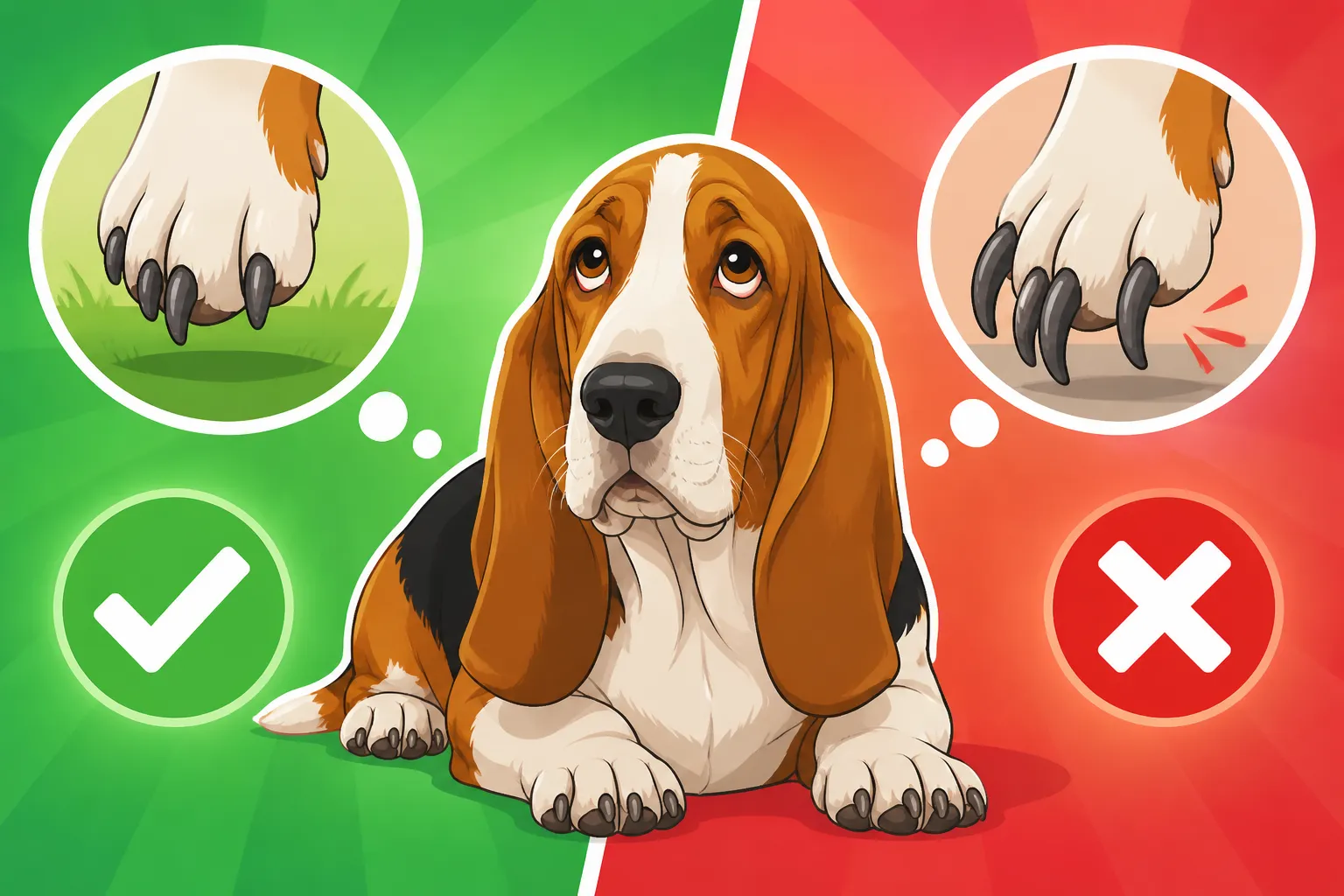
Imagine trying to walk or run when your shoes are several sizes too small, or when you have pebbles constantly digging into your soles. That's a bit what it's like for a Basset Hound with overgrown nails. When the nails get too long, they start to hit the ground before the paw pads do. This creates an unnatural pressure, pushing the toes upwards and backwards into the footbed. This constant, abnormal pressure can be incredibly painful, especially on hard surfaces. Your Basset might start walking differently to compensate, shifting their weight, and distributing their balance unevenly. This can lead to soreness in their paw joints, ankles, and even further up their legs.
Over time, this discomfort becomes chronic. You might notice your Basset hesitating to walk, struggling to get up, or even limping slightly after activity. They might become reluctant to engage in play or go for walks that they once enjoyed. Their entire posture can be affected, as they try to alleviate the pressure on their sensitive toes. It's a silent suffering that many Bassets endure, simply because their nails aren't kept to a proper length. This can lead to them becoming what appears to be a [Lazy or Sore] dog, when in reality, they're simply in pain.
Long-Term Health Consequences
The issues caused by long nails extend far beyond immediate pain. The altered gait that a Basset Hound adopts to cope with overgrown nails can have serious, long-term consequences for their musculoskeletal system. The toes are pushed out of alignment, which puts strain on the ligaments and tendons in their feet. This unnatural alignment can lead to arthritis not just in the toes, but also in the hocks, knees, and even hips. For a breed already prone to joint issues, like Elbow Dysplasia in a Basset Hound or even hip dysplasia (though less common than in some other breeds), adding this extra strain is a recipe for accelerated deterioration.
Furthermore, extremely long nails can curl around and grow into the paw pads, causing painful infections, ingrown nails, and open sores. These can be incredibly difficult to heal and often require veterinary intervention, sometimes even sedation to properly trim the nails and treat the infection. In severe cases, where the quick has grown out significantly and the nails have become almost talons, the only way to quickly rectify the problem might be a deep trim under sedation, which is an expense and a stressor that could be avoided with regular maintenance. Ensuring Looking After a Basset Hound's Feet and Nails is a regular part of your routine is an investment in their comfort and long-term health.
Practical Strategies for Nail Care
Okay, so we've established that natural wear isn't enough, and overgrown nails are a no-go. The good news is, keeping your Basset Hound's nails in good shape is entirely manageable with a consistent, practical approach. It's not always fun, but it's one of the most important aspects of their routine care.
Regular Trimming and Grinding
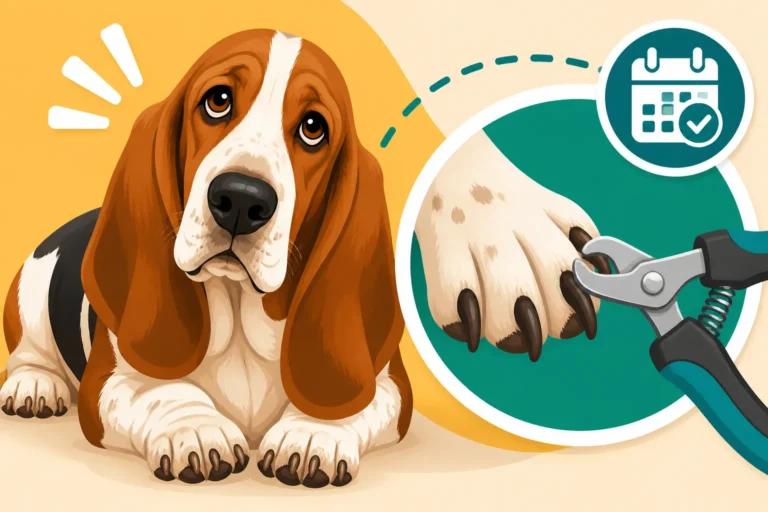
This is the cornerstone of healthy Basset Hound nails. There's no getting around it: regular manual intervention is necessary. For most Basset Hounds, this means trimming or grinding their nails every 2-4 weeks. Some dogs might need it more frequently, especially if you're trying to recede the quick.
There are two main approaches:
- Clipping: You can use guillotine-style clippers or scissor-style clippers. The key is to take off only the very tip of the nail, avoiding the quick. If your Basset has clear or light-colored nails, you might be able to see the pink quick through the nail. For dark nails, it's much harder, so trim tiny amounts at a time, looking at the cut surface for a greyish-white center. If you see a tiny black dot, you're close to the quick, so stop. Many owners find it helpful to have styptic powder (like Kwik Stop, easily found on Amazon or Chewy) on hand, just in case of an accidental quicking.
- Grinding: A Dremel-style rotary tool can be an excellent alternative, especially for Basset Hounds who are nervous about clippers or if you have difficulty seeing the quick. Grinders file the nail down slowly and smoothly, allowing you to take off tiny layers at a time. This method also rounds the nail, which can be more comfortable for the dog and less likely to snag on carpets. The vibrating noise can be a deterrent for some Bassets, so introduce it slowly with plenty of positive reinforcement and treats.
Whichever method you choose, consistency is key. Make it a positive experience with treats and praise, and if your Basset is very resistant, don't hesitate to seek guidance from your vet or a professional groomer. They can often demonstrate the correct technique and help you get started.
| Method | Pros | Cons | Best For |
|---|---|---|---|
| Clipping | Quick, efficient if dog tolerates it | Risk of cutting quick, sharp edges, can be stressful | Bassets with light nails, tolerant of handling |
| Grinding | Smooth finish, less risk of quicking, recedes quick | Can be noisy/vibrating, takes longer, requires training | Bassets with dark nails, nervous about clippers |
Creating Opportunities for Natural Wear
While not a complete solution, you can certainly supplement manual trimming by strategically creating opportunities for some natural wear. This is about making their environment work a little harder for their paws.
- Pavement Walks: Regular walks on concrete or asphalt are still beneficial. Aim for shorter, more frequent walks on these harder surfaces if your Basset tolerates it. Remember to check pavement temperature in warmer weather to prevent burns.
- Play on Rougher Surfaces: If you have a patio, driveway, or even a section of brick in your yard, encourage short bursts of play on these surfaces. A quick game of fetch (if your Basset is so inclined) can help.
- DIY Filing Surfaces: Some owners get creative with DIY solutions, like placing a piece of rough sandpaper or a concrete paver in an area where their Basset frequently walks or stands, like near their food bowl or a favorite sunbathing spot. The idea is that they'll naturally scuff their nails against it. Just ensure it's secure, safe, and doesn't cause any injury.
- Dog Boots/Paw Protection (Carefully): While not for wear, if you have to walk your Basset on very abrasive surfaces for extended periods, protective boots can prevent injury to the paw pads, allowing them to walk more comfortably, which in turn might slightly increase natural nail contact. This is rare for a Basset Hound's typical activity, but worth mentioning.
Remember, these are supplementary tactics. They won't replace regular trimming. Consider them bonuses that might extend the time between professional trims or make your at-home maintenance a little easier. For overall foot health, including between the toes, don't forget the importance of Whether a Basset Hound Gets Interdigital Cysts.
Keeping your Basset Hound's nails at a healthy length is truly a gift you give them. It prevents pain, promotes good posture, reduces the risk of long-term joint issues, and keeps them comfortable as they sniff their way through life. It might not be the most glamorous part of Basset ownership, but it's certainly one of the most important. You can find a vast array of clippers, grinders, and even styptic powder on platforms like Amazon or Chewy, making it easier than ever to equip yourself for this essential care routine. And if you're ever in doubt, your veterinarian is always the best resource for personalized advice and demonstrations on how to properly care for your Basset's unique paws. Perhaps a quality dog food from Ollie can also contribute to their overall health, including strong nails and paw pads, reducing some peripheral issues.
Disclaimer
This article is for general informational purposes only and does not constitute professional advice. Laws, prices and regulations vary by location and change over time. Consult a qualified professional for guidance on your specific situation.