Whether a Basset Hound Needs a Dog Door
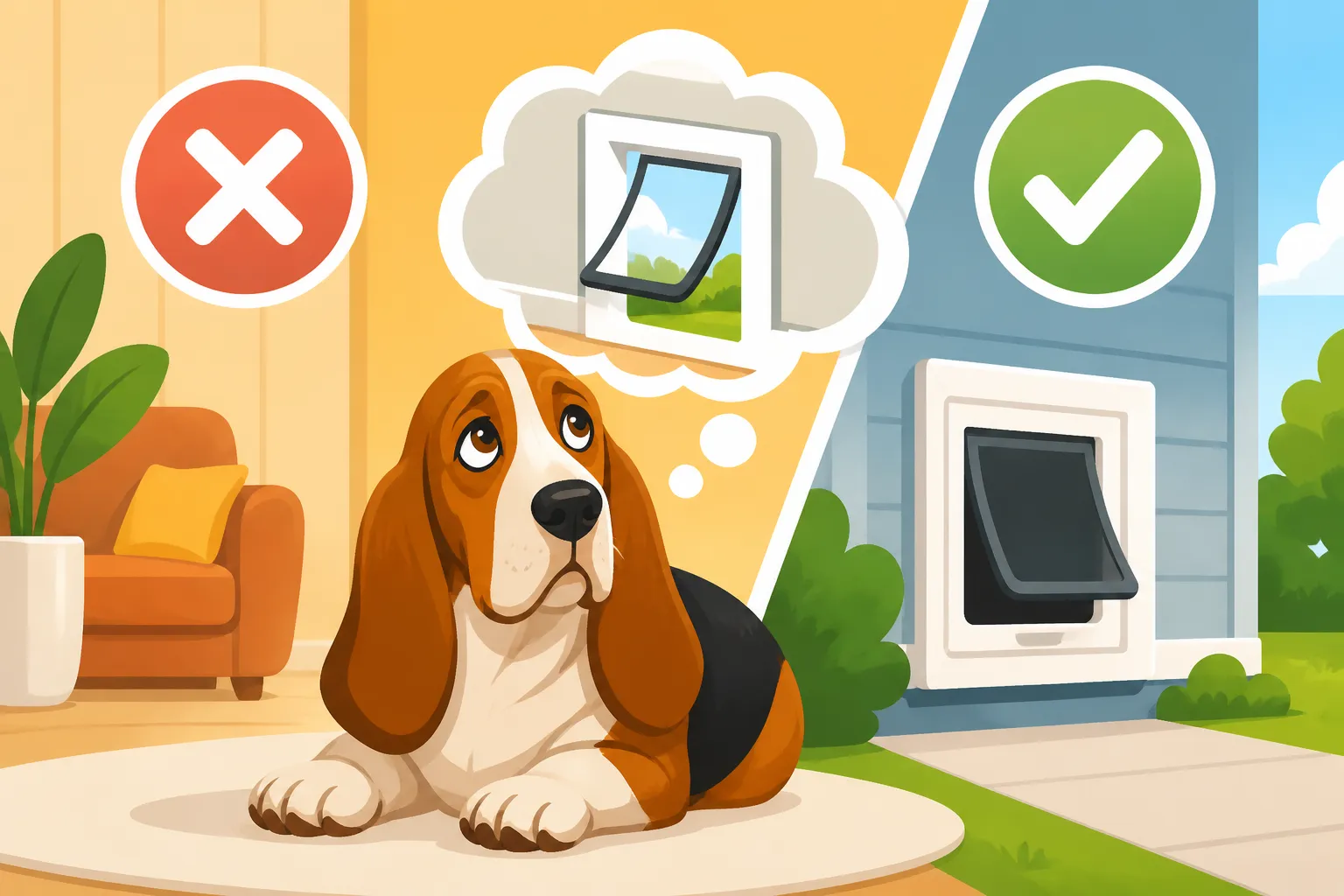
As Basset Hound parents, we often find ourselves dreaming of ways to make our dogs’ lives a little easier, and ours too. The idea of a dog door, letting our low-slung, independent pups trot in and out as they please, sounds like pure freedom. But the reality of a Basset Hound's unique physique often clashes with the design of most standard dog doors, leaving many of us wondering if it's even a viable option. This comprehensive guide will explore the ins and outs of dog doors specifically for Basset Hounds, helping you decide if it's the right choice for your home and how to make it work.
The Basset Hound's Unique Physiology: Why Standard Dog Doors Just Don't Cut It
Let's be honest, Basset Hounds are built… differently. Their long, heavy bodies, short legs, and deeply furrowed brows are undeniably charming, but they also present some unique challenges when it comes to navigating the world, especially when that world includes a dog door. You might look at a typical dog door at the local pet supply store or online at Chewy and immediately see the potential problems.
Low Stature and Long Body Challenges
The most obvious hurdle is their height. Or rather, their lack thereof. Basset Hounds are famously "basset," meaning "low" in French, and their short legs mean the bottom of a standard dog door opening can often be too high for them to comfortably step over, or too far from the ground to easily duck through. This isn't just about convenience; it's about their physical well-being. Asking a Basset to repeatedly strain or jump through an opening that's not suited to their Why a Basset Hound's Legs Are So Short could put undue stress on their back and joints. Their long bodies mean that if the door is too low to the ground, they might have to crawl or wiggle through, which can be awkward and even painful over time, especially as they get older.
Imagine your Basset, nose to the ground, trying to push through a flap that catches on their back or forces them into an unnatural arch. It's not a pretty picture, and it's certainly not comfortable for them. We want to avoid anything that exacerbates their natural propensity for The Back Trouble a Basset Hound Is Built Into.
The Role of Weight and Mobility
Basset Hounds are surprisingly hefty for their height. A healthy adult Basset can easily weigh between 40-65 pounds, sometimes more, and this substantial weight, combined with their low center of gravity, affects their agility. They aren't generally known for their athletic leaps or quick maneuvers. An ill-fitting dog door could become an obstacle course rather than a convenience. If your Basset is carrying What Extra Weight Does to a Basset Hound, these challenges are only amplified. Every extra pound puts more strain on their already unique skeletal structure, making jumps and awkward contortions even more detrimental.
Moreover, as Bassets age, their mobility can decrease. Joint issues like arthritis are common, and a dog door that was merely inconvenient in their youth could become entirely inaccessible or even dangerous for an older dog struggling with stiffness. We always want to set our dogs up for success, and that means considering their long-term physical capabilities when making structural changes to our homes.
Choosing the Right Dog Door for Your Low Rider
Given the unique physical attributes of our Bassets, picking just any dog door off the shelf simply won't do. We need to be thoughtful and strategic in our selection to ensure comfort, safety, and long-term usability. It's about finding a door that accommodates their low stature and heavy build, rather than forcing them to adapt to something unsuitable.
Measuring for the Perfect Fit
This is perhaps the most crucial step. Forget the generic sizing charts; you need to measure your specific Basset Hound. Here's how:
- Height: Measure your Basset from the floor to the top of their shoulders (their "wither height"). Then, add a couple of inches. This should be the minimum height for the top of the dog door opening. You want them to be able to walk through without ducking or scraping their back. For the bottom, measure from the floor to the bottom of your dog's chest. This will give you an idea of how high the flap's threshold can be without them having to step over it too much. Ideally, the bottom of the flap should be only an inch or two above the ground, or even flush if possible, to minimize stepping effort.
- Width: Measure your Basset across their widest point – usually their chest. Add a couple of inches to this measurement as well. Remember, Bassets are broad-chested. You don't want them to feel squeezed or have the sides of the door rub against them as they pass through.
- Overall Clearance: Consider the depth of the tunnel if it's a wall-mount door. A Basset's long body means they need sufficient clearance through the entire tunnel, not just at the entrance and exit. A short, squat tunnel might feel claustrophobic or awkward for them to navigate.
It's a good idea to create a cardboard mock-up of the door opening once you have your ideal dimensions. Place it in the intended location and see how your Basset interacts with it. Can they walk through easily? Does it seem comfortable? This visual and practical test can save you a lot of headache and expense down the line.
Types of Dog Doors Suited for Bassets
Once you have your measurements, you can start looking at specific types of dog doors. While there are many options out there, some are inherently better for Basset Hounds than others.
- Wall-Mounted Doors: These are often the best bet for Bassets because they offer the most flexibility in installation height. You can install a wall-mounted door at exactly the right height for your dog, ensuring the threshold is low and the top is high enough for comfortable passage. They do require a bit more installation work, cutting into a wall, but the customization is a huge advantage. They also tend to be more insulated, which is a bonus if you live in an area with extreme temperatures.
- Sash Window or Patio Pet Door Inserts: These are great for renters or those who don't want to cut a hole in their wall. They fit into existing sliding glass doors or windows. The main challenge here is often the fixed height of the step-over section. You'll need to find one specifically designed with a very low rise or be prepared to build a small ramp or step on either side to make it accessible for your Basset. Brands on Amazon offer a wide variety, so careful searching might yield a suitable option.
- Door-Mounted Doors: These install directly into an existing human door. Like wall-mounted doors, you have some control over placement, but you're limited by the height of the door itself. Ensure the lowest point of the opening doesn't require too high a step for your Basset.
Electronic doors, which open with a sensor on your dog's collar, can be great for security but add another layer of potential training. The most important feature for a Basset is the physical opening's dimensions and the ease of entry and exit.
Here's a quick comparison of common dog door types for Basset Hounds:
| Dog Door Type | Basset Hound Suitability | Pros | Cons |
|---|---|---|---|
| Wall-Mounted | Excellent – highly customizable height. | Best for precise height matching; good insulation; robust. | More complex installation; permanent structural change. |
| Door-Mounted | Good – some height flexibility within existing door. | Easier installation than wall-mount; widely available. | Limited by human door height; might still require a slight step. |
| Patio Panel Insert | Fair – fixed heights often an issue; requires external ramp/step for comfortable access. | No permanent installation; good for renters. | Can be drafty; fixed step-over height might be too high. |
| Manual Flap | Varies – depends entirely on exact dimensions and ease of pushing flap. | Simple, no power needed. | Can be drafty; Basset might struggle pushing a heavy flap. |
| Electronic/Microchip | Good (if flap is light enough and opening is sized correctly) – offers security. | Prevents strays/wildlife entry; secure. | Relies on batteries/power; training for sensing collar; higher cost. |
Tips and Tricks for Training Your Basset Hound to Use a Dog Door
So you've installed the perfect dog door, sized precisely for your Basset's unique shape. Now comes the fun part: convincing them to actually use it! Basset Hounds are intelligent, but they can also be incredibly stubborn when they don't see the immediate benefit of something new or if they're a little unsure. Patience, positive reinforcement, and high-value treats are your best friends here. Remember, a Basset isn't always motivated by praise alone; often, a good sniff or a tasty morsel is key to unlocking their cooperation. What Actually Motivates a Basset Hound is often a delicious reward.
Starting with Positive Associations
The first step is to make the dog door a positive, non-threatening experience. Avoid forcing your Basset through the opening, as this can create fear or anxiety and make them hesitant to use it in the future.
- Open Sesame: Begin by propping the flap open entirely, so there’s just an open doorway. Stand on one side and have a helper (or a very tempting treat from Ollie) on the other. Call your Basset through, using an excited, encouraging tone. When they come through, reward them instantly with praise and the treat. Repeat this several times, making it a fun game.
- The Gentle Flap: Once they're comfortable with the open doorway, gently lower the flap so it's just barely resting on their back as they pass through. This introduces the sensation of the flap without it being a barrier. Gradually let the flap fall more naturally, always rewarding them generously for passing through.
- Lure Them With Scent: Basset Hounds live by their noses. Use this to your advantage! Rub a treat on the flap, or even sprinkle some kibble just outside the door on the ground, creating an enticing scent trail that leads them to investigate and eventually push through. You can even try using a long line to gently guide them from a distance.
Remember, keep training sessions short and positive. If your Basset seems stressed or unwilling, take a break and try again later. It's better to end on a good note, even if it's just for a small success.
Addressing Common Basset Hound Hesitations
Bassets can have a few particular quirks that might make dog door training a bit more challenging:
- The "What's In It For Me?" Syndrome: Bassets are not known for blindly following commands. If they don't see a clear, immediate reward, they might just stare at you with those soulful eyes. This is where those high-value treats come in. Don't be afraid to use their favorite, stinkiest snack to get their attention and cooperation. Whether a Basset Hound Works for Food Only is a common question, and for new behaviors, the answer is often "mostly."
- Sensitivity to Sound/Movement: Some Bassets might be startled by the sound of the flap swinging or the sudden movement. Introduce these elements slowly. Gently tap the flap yourself to show them it's not scary. If it's a noisy door, consider a quieter flap material or adding weather stripping to muffle the sound.
- Fear of the Unknown: The outside world can be full of exciting (and distracting) scents for a Basset. Ensure the area immediately outside the dog door is familiar and safe. Don't expect them to push through a new door and immediately go off exploring. Keep initial outdoor rewards close to the door.
Consistency is key. Everyone in the household needs to be on the same page with the training methods and rewards. With patience, your Basset will eventually understand that the dog door leads to good things – and outdoor sniffing adventures!
Beyond the Flap: Safety and Practicalities of Dog Doors for Basset Hounds
Installing a dog door isn't just about getting your Basset from point A to point B; it's about integrating it safely and effectively into your home and lifestyle. There are several considerations beyond the physical fit that Basset Hound owners need to think about to ensure peace of mind and the well-being of their beloved hounds.
Security Concerns and Your Basset's Safety
One of the biggest worries for any dog owner considering a dog door is security. While a Basset's low profile might mean a smaller opening, it doesn't eliminate the risk.
- Intruders (Human and Animal): A small dog door might not accommodate a human, but it could still be a vulnerability. More importantly for Bassets, a dog door is an open invitation for other animals – raccoons, opossums, stray cats, or even other dogs – to enter your home. This could lead to messy encounters, spread of diseases, or even harm to your Basset. Consider electronic dog doors that only open for your dog's microchip or collar tag to mitigate this risk.
- Escape Artists and Wandering: Basset Hounds have an incredibly strong scent drive. If a captivating scent drifts by your yard, a dog door provides immediate access for your Basset to follow it. This means your yard absolutely must be secure, with a fence that's high enough (even though Bassets aren't jumpers, they can be surprisingly agile if motivated) and, crucially, one that they can't dig under. Whether a Basset Hound Digs Under a Fence is a real concern for many owners. An open dog door could lead to your Basset Whether a Basset Hound Follows Its Nose Into Traffic or getting lost. Using a Whether a Basset Hound Should Wear a Tracker on their collar is always a good idea if they have backyard access via a dog door.
- Weather and Insulation: Basset Hounds aren't built for extreme weather. Their short coat offers minimal protection, and their low-slung bodies can get cold or wet easily. A poorly insulated dog door can lead to drafts, higher energy bills, and a cold dog. Look for doors with double flaps, magnetic seals, and good weather stripping. For winter, your Basset might even need Whether a Basset Hound Needs a Coat in Winter for outdoor excursions, even through their personal door.
Maintenance and Cleaning
Let's talk about the practical side of things, because a dog door, like anything else in a Basset Hound household, isn't always pristine.
- Keeping the Door Clean: Bassets, with their long ears and low profiles, tend to get a bit messy, especially after sniffing around outdoors. Their ears can drag through mud or damp grass, and their dewlaps might collect debris. This means the dog door flap and its surrounding area will likely need regular cleaning. A quick wipe-down every few days or weekly might become part of your routine. You don't want the door to become a source of grime tracking into your house.
- Preventing Injury: Regularly inspect the dog door for wear and tear. Are the flaps still securely attached? Are there any sharp edges developing? Is the opening still clear? A damaged flap could snag on an ear or cause discomfort.
- Supervision, Especially Initially: While the goal of a dog door is often increased independence for your dog, initial supervision is crucial. You want to make sure they're using it correctly and safely every time. Even after they're pros, it's wise to occasionally observe them, especially if you notice any changes in their willingness to use it, which could indicate a developing discomfort or issue.
A dog door can be an incredible convenience, offering your Basset Hound the freedom to enjoy your yard whenever nature calls or a compelling scent demands investigation. It can also help with house training by providing constant access. However, it requires careful consideration, precise installation, dedicated training, and ongoing awareness of security and maintenance. When done right, a well-chosen and properly integrated dog door can truly enhance the quality of life for both you and your Basset.
Disclaimer
This article is for general informational purposes only and does not constitute professional advice. Laws, prices and regulations vary by location and change over time. Consult a qualified professional for guidance on your specific situation.