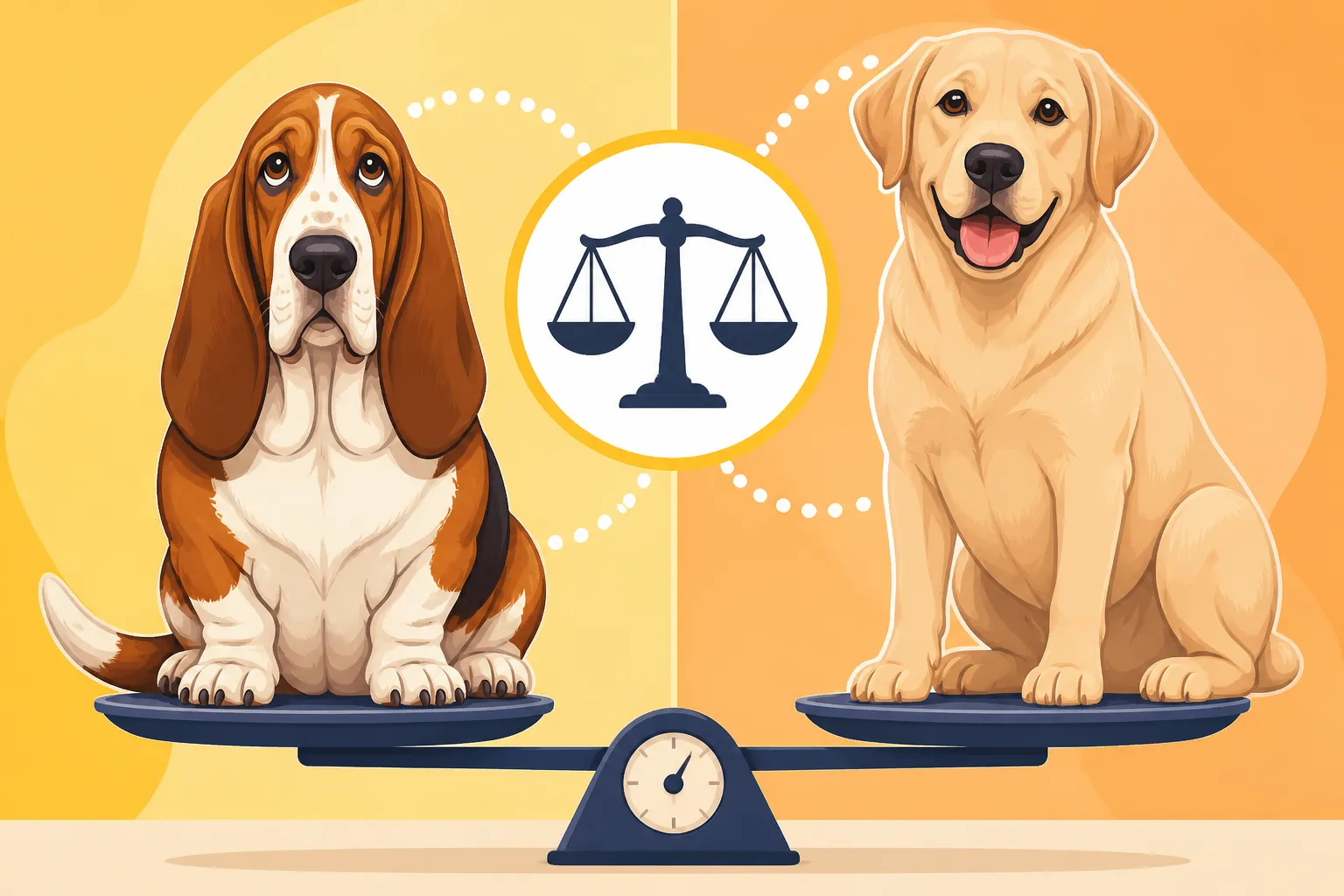
Why a Basset Hound Weighs as Much as a Labrador
You might look at a Basset Hound, with those endearing short legs and long, low-slung body, and assume they're a fairly light, easy-to-manage dog. Then you try to lift one, or perhaps you've heard a fellow Basset owner lamenting their dog's surprising heft, comparing it to a much taller breed like a Labrador. This guide is here to shed light on exactly why these charming hounds carry so much weight, often surprising even seasoned dog enthusiasts.
The Basset Hound's Surprisingly Sturdy Build
When you first meet a Basset Hound, their low stature can be incredibly deceptive. You see those long, floppy ears and the soulful eyes, and your mind often conjures an image of a gentle, perhaps even delicate, creature. But the moment you go to pick one up, or even just nudge them gently, you're met with an unexpected density. It's a bit like trying to lift a brick that you mistook for a sponge – the surprise factor is real, and it's all down to their unique skeletal structure and overall build. They are, in essence, compact powerhouses, designed for a very specific purpose.
Heavy Bone for a Low Rider
The Basset Hound's most defining physical characteristic, beyond those magnificent ears, is its short, stout legs. What isn't always immediately obvious, however, is that these legs, and indeed their entire skeletal frame, are composed of incredibly thick, dense bone. This isn't a breed with fine, delicate bones; quite the opposite. Imagine the structural integrity of a large, sturdy oak tree compared to a slender willow. The Basset Hound is built like that oak. This heavy bone contributes significantly to their overall weight, giving them a surprisingly low center of gravity and immense stability, even when navigating uneven terrain. It's a hallmark of the chondrodysplastic breeds – those with dwarfism – that while their limbs are shortened, the bone itself remains substantial, carrying the weight of a much larger dog.
This robust bone structure is not an accident; it's a deliberate characteristic bred into them over centuries. Their ancestors needed to withstand long days of trailing scent through dense undergrowth, brush, and across varied landscapes. Delicate bones simply wouldn't hold up to that kind of sustained activity. So, while they might not look like an athlete in the traditional sense, their skeletal system is engineered for endurance and resilience. You'll feel this heft particularly around their chest and shoulder area.
A Lot of Dog in a Small Package
Another aspect contributing to the Basset's surprising weight is how much dog is packed into their relatively small vertical footprint. They are long, deep-chested, and substantial in every dimension except height. Think of it this way: if you took a typical medium-to-large breed dog and compressed it vertically, maintaining all its bone, muscle, and organ mass, you'd get something akin to a Basset Hound. They have a considerable body mass distributed horizontally, rather than vertically. This means that while they might only come up to your knee, they carry the volume and density of a much taller animal.
Their broad, powerful heads also add to this dense package. A Basset's head is characteristic, with its loose skin and deep-set eyes, but it's also quite large and heavy for its body size. All of these features combine to create a canine that feels far more substantial in your arms than its appearance suggests. It's a constant source of amusement (and sometimes a bit of a struggle) for Basset owners, especially when trying to lift them into the car or onto an examination table at the vet. This compact mass means they take up more space in your lap than you’d expect, and moving them requires a surprising amount of effort.
More Than Just Short Legs: Muscle and Mass
Beyond their heavy bone, Basset Hounds possess a significant amount of muscle mass, particularly in their forequarters and hindquarters. This musculature is directly tied to their historical role as scent hounds. They weren't bred for sprinting or jumping high; they were bred for relentless, slow-and-steady trailing, often through challenging terrain, requiring immense strength and stamina.
Powerhouse Paws and Shoulders
Take a close look at a Basset Hound's front legs and shoulders. You'll notice they are surprisingly well-muscled and powerful, often with a slight bow that is characteristic of the breed. This strong front assembly, coupled with large, substantial paws, allows them to push through underbrush, maintain balance on uneven ground, and support their heavy frame during long hours of work. Their shoulders are laid back, yet incredibly muscular, providing the leverage and strength needed for their low-to-the-ground trailing style. When they are hot on a scent, that powerful front end is what drives them forward, digging into the earth with purpose.
This muscle development isn't just for show; it's functional. Imagine a dog that spends hours with its nose to the ground, pushing through thickets, and occasionally needing to navigate small obstacles. Such an activity requires immense neck, shoulder, and chest strength. They are built like canine bulldozers, clearing a path with their sheer physical presence. This dense muscle contributes significantly to their overall weight, adding to the feeling of solidity you get when you interact with them. It also means that even a properly conditioned Basset is going to feel heavy because a good portion of that weight is lean muscle.
A Compact, Robust Torso
The Basset Hound's body, from its deep chest to its sturdy loin, is built for endurance and resilience. They have a long back, yes, but it’s also very strong, designed to support their substantial weight. Their chests are notably deep and full, providing ample room for powerful lungs and a strong heart, essential for sustained activity. This deep chest also lowers their center of gravity, aiding stability when they're following a scent trail with their nose glued to the ground. The overall impression is one of a compact, robust frame that is built to last.
This robust torso is another major contributor to their overall weight. It’s not just bone and muscle; it’s a fully developed, substantial body. This build also influences how they move; they have a deliberate, unhurried gait, perfectly suited for detailed scent work rather than agile leaps or fast sprints. Understanding this physical design helps us appreciate why they feel so heavy and why this characteristic is so integral to the breed's identity and historical function. They are built for work, and that work requires a body that can take a beating and keep going.
Comparing Apples to Oranges: Basset Hound vs. Labrador Weight
It's natural to compare the weight of a Basset Hound to a Labrador Retriever. Visually, they are worlds apart. One is a tall, athletic, traditionally medium-to-large dog, while the other is decidedly low to the ground. Yet, the scales often tell a surprising tale, showing that a well-built Basset Hound can indeed tip the scales at a weight comparable to, or sometimes even exceeding, that of a female Labrador. This stark contrast often leads to head-scratching from those unfamiliar with the Basset's unique physique.
Visual Deception: Height vs. Weight
The primary reason for this comparison shock is visual deception. Our brains are hardwired to associate height with weight. A taller dog, we assume, must be heavier. A short dog, conversely, must be lighter. The Basset Hound completely upends this expectation. Standing at only about 14 inches at the shoulder, they appear much smaller than a Labrador, which typically stands around 21.5 to 24.5 inches. However, what the Basset lacks in height, it more than makes up for in length and sheer density.
Imagine a loaf of artisanal sourdough bread versus a long baguette. The baguette is longer, but the sourdough loaf is often denser and heavier due to its compact form. The Basset Hound is like that dense sourdough – a significant amount of mass compressed into a shorter, longer package. This optical illusion makes their actual weight all the more surprising when you lift them or see them on a scale next to a leaner, taller breed. They truly are a "heavy" dog in every sense of the word, despite their modest height. The Basset Hound Against the Beagle also highlights this difference in build.
Breed Standards and Weight Ranges
To really drive home the point, let's look at typical breed standards for both the Basset Hound and the Labrador Retriever.
| Breed | Height (at shoulder) | Weight Range (approx.) | General Build Description |
|---|---|---|---|
| Basset Hound | 14 inches max | 40-65 pounds | Solid, heavy bone, great substance, powerful, low-slung, long body |
| Labrador | 21.5-24.5 inches | 55-80 pounds | Strong, athletic, medium-sized, short-coupled, active |
As you can see from the table, a Basset Hound, despite being roughly half the height of a Labrador, can easily weigh within the range of a female Labrador (typically 55-70 lbs for females). Some particularly robust Basset males can even push towards the lower end of a male Labrador's weight range. This isn't about one being overweight and the other lean; it's about fundamental differences in their breed standards and physical composition. The Basset is bred for "substance" and "heavy bone," while the Labrador is bred for "athleticism" and a "short-coupled" frame that implies agility. It’s a clear indication that a Basset Hound is genuinely a much heavier dog for its size than most people initially perceive. When considering How Much a Basset Hound Should Weigh, it's clear their ideal weight is often higher than expected for a "short" dog.
The Historical Purpose Behind the Heft
The Basset Hound’s distinctive build, including its surprising weight, is not a random evolutionary quirk. It is the direct result of centuries of selective breeding aimed at creating the ultimate scent hound for specific hunting conditions. Every aspect of their unique physique, from their low-slung body to their heavy bone structure, contributes to their effectiveness in their traditional role. Understanding this history helps us truly appreciate why they are built the way they are.
Built for Endurance, Not Speed
Unlike sight hounds, which are bred for explosive speed to chase down prey, Basset Hounds were developed as trailing hounds. Their job was to follow a scent trail persistently, methodically, and tirelessly, often over long distances and through dense undergrowth, rather than to sprint after game. This meant they needed a body that could sustain prolonged effort without tiring quickly. A lighter, more agile dog might tire or get snagged more easily in thick brush. Their heavy, dense bone and muscular build provide the robust framework necessary for this kind of sustained, powerful movement.
This endurance-focused build allowed hunters on foot to easily keep pace with their dogs. There was no need for a fast dog that would outrun the human hunting party. Instead, a slow, methodical, unhurried pace was desired. The Basset Hound’s substantial weight and sturdy legs contribute to this deliberate gait, ensuring they could maintain their focus on the scent without being easily diverted or exhausted. This isn't a dog designed for bursts of speed, but rather for an unwavering, ground-covering trot that can go on for hours. The Abbey Hounds a Basset Hound Descends From tells us more about their origins.
Ground-Hugging Power
The low stature of the Basset Hound, combined with its substantial weight, gives it incredible "ground-hugging power." When their nose is to the ground, trailing a scent, their weight acts as an anchor, keeping them stable and preventing them from being easily deflected by small obstacles or uneven terrain. Their deep chest and broad body, close to the earth, also play a role in trapping scent, preventing it from dissipating too quickly. Why a Basset Hound's Ears Help It Smell delves deeper into how their physical features aid their scenting ability.
Imagine a low-riding tractor that grips the ground firmly, as opposed to a bouncy ATV. The Basset is the tractor of the canine world, steadfast and purposeful in its mission. This ground-hugging ability, combined with their strong musculature, allows them to push through brambles and dense cover with a powerful determination, rather than attempting to jump over them. Their sheer mass and low center of gravity make them incredibly effective at what they were bred to do: follow a scent trail relentlessly, no matter the obstacle. It's truly a marvel of form meeting function.
The Role of Lean Muscle vs. Fat
While a Basset Hound is inherently a heavy-boned, substantial breed, it's crucial to distinguish between a healthy, well-conditioned weight and excess body fat. Just because they're built solid doesn't mean every Basset you see carries its ideal weight. In fact, due to their endearing, sometimes pleading nature and a penchant for food, Bassets are prone to becoming overweight, which can severely exacerbate their breed-specific health challenges.
Maintaining a Healthy Basset Physique
A healthy Basset Hound should still have a discernible waist when viewed from above, and you should be able to feel their ribs with gentle pressure, even through their rather generous loose skin. Their topline should be level and strong, not sagging in the middle. Their heavy bone structure and deep chest contribute to a naturally stocky appearance, but this shouldn't be confused with fat. A properly conditioned Basset, though heavy, will still have definition to its muscles, particularly across its shoulders and hindquarters.
Achieving and maintaining this ideal body condition requires a mindful approach to diet and exercise. It means resisting those soulful eyes when they beg for an extra treat and ensuring they get regular, albeit moderate, exercise. Think consistent, purposeful walks where they can engage their nose, rather than intense, high-impact activities. Keeping them at their optimal weight is one of the most loving and responsible things you can do for your Basset, helping them live a more comfortable and active life. You might find a good selection of appropriate foods on Chewy. Keeping a Basset Hound at Its Correct Weight is a vital practice for every owner.
The Dangers of Extra Weight
For a breed already predisposed to certain musculoskeletal issues, carrying even a few extra pounds can have significant, detrimental effects. The Basset Hound's long back and short, bowed legs are not designed to carry an excessive load. Overweight Bassets are at a much higher risk for conditions like intervertebral disc disease (IVDD), a painful spinal condition where the discs between vertebrae can rupture or herniate. The additional strain on their spine and joints (like elbows and hips, which can also be prone to dysplasia) can lead to early onset arthritis and chronic pain. What Extra Weight Does to a Basset Hound cannot be overstated.
Beyond joint and spinal health, extra weight can also impact their cardiovascular system and make breathing more difficult, especially in warmer weather. Their deep chests and pendulous skin folds can already make thermoregulation a challenge, and obesity only compounds this. An overweight Basset will be less energetic, less willing to play, and generally less comfortable in its own skin. It's a cruel irony that a breed designed for endurance can be so easily hampered by something preventable. Regular veterinary check-ups are essential to monitor their weight and overall health.
Nutritional Considerations for a Stocky Breed
Feeding a Basset Hound is more than just pouring kibble into a bowl. Because they are inherently heavy and prone to weight gain, their nutritional needs require careful attention. Owners often find themselves balancing their Basset’s insatiable appetite with the need to maintain a healthy weight, which is paramount for their long-term well-being.
Choosing the Right Fuel
When selecting food for your Basset Hound, opt for high-quality dog food formulated for medium to large breeds, or specific weight management formulas if your Basset is already a bit chunky. Look for ingredients that support joint health, such as glucosamine and chondroitin, which can be beneficial for a breed prone to musculoskeletal issues. Protein content should be adequate to support their muscle mass without being excessively high, which isn't typically necessary for a moderately active dog. Whether a Basset Hound Needs Joint Supplements is a common question among owners.
It’s crucial to avoid overfeeding. Many Bassets would happily eat until they burst, and relying solely on the feeding guidelines on the bag might lead to weight gain, as these are often generalized. Instead, use those guidelines as a starting point and adjust based on your individual dog's activity level, metabolism, and body condition. Consulting with your veterinarian about the best food type and portion size for your specific Basset is always a wise move. Companies like Chewy offer a wide range of specialized diets that can cater to these specific needs, making it easier to find the right fit for your heavy-boned friend.
Monitoring Intake and Activity
Successful weight management in a Basset Hound hinges on a consistent balance of caloric intake and appropriate exercise. This means precisely measuring their food at each meal rather than free-feeding. Breaking their daily ration into two smaller meals can also help manage hunger and metabolism. Don't forget to factor in treats! Those small rewards can add up quickly, so choose low-calorie options or use a portion of their regular kibble for training.
Beyond diet, regular, controlled exercise is vital. While Bassets aren't sprinters, they thrive on daily walks where they can sniff and explore. These walks provide both physical activity and mental stimulation. Aim for 30-60 minutes of moderate activity spread throughout the day, adjusting for weather conditions and your dog's individual stamina. Getting Weight Off a Basset Hound That Will Not Exercise can be a challenge, requiring creativity and consistency. Keeping a daily log of food intake and exercise can be incredibly helpful in identifying patterns and making necessary adjustments to keep your Basset at its optimal, healthy weight.
Impact of Weight on Basset Hound Health
The Basset Hound’s unique, heavy build is charming, but it also comes with a set of inherent health considerations. Their structure, while perfect for scent work, makes them vulnerable to certain conditions that can be significantly worsened by carrying too much weight. Understanding these risks is part of being a responsible Basset owner.
Joint Stress and Spinal Health
One of the most significant concerns for a heavy-boned, long-backed breed like the Basset Hound is the immense stress placed on their joints and spine. Their short, bowed legs are weight-bearing, but the angular stress on their elbows and hocks can lead to issues like elbow dysplasia or early-onset arthritis, especially if they are overweight. The sheer mass of their body, combined with their low stance, creates constant pressure on these joints. Why One Basset Hound in Seven Has Bad Elbows is a stark reminder of this predisposition.
Even more critically, their long, relatively inflexible spine is highly susceptible to intervertebral disc disease (IVDD). Imagine a heavy, long bridge with many supports; if the supports are weakened or the load becomes too great, the bridge can buckle. For a Basset, this means the cushions (discs) between their vertebrae can bulge or rupture, pressing on the spinal cord and causing excruciating pain, weakness, or even paralysis. Every extra pound increases this risk exponentially, making their back trouble a serious concern. The Back Trouble a Basset Hound Is Built Into requires proactive management.
Breathing and Stamina Challenges
While not typically considered a brachycephalic (short-nosed) breed, Basset Hounds can still face challenges with breathing and stamina, which are exacerbated by their heavy build, particularly if they are overweight. Their deep chest and relatively dense body mass mean they can overheat more easily in warm weather, as their bodies have to work harder to cool down. Their short legs also mean their bellies are close to the ground, reflecting heat upwards.
An overweight Basset will have reduced lung capacity and cardiovascular efficiency, making them less able to cope with even moderate exercise. They might pant excessively after short walks, struggle in warm temperatures, or seem generally lethargic. This isn't just about comfort; it can impact their overall quality of life and longevity. Keeping them lean and well-conditioned helps ensure their respiratory and circulatory systems can function optimally, allowing them to enjoy their lives without undue strain. It means they can still enjoy their sniff-walks and time outdoors without becoming quickly exhausted or uncomfortable.
Living with a Heavy Basset Hound
Owning a Basset Hound means embracing their unique characteristics, and their surprising weight is certainly one of them. It influences everything from how you pick them up to the type of bed they need. Adapting your home and routines to accommodate their robust build is key to ensuring their comfort and preventing injuries for both you and your beloved hound.
Lifting and Handling a Dense Dog
Let's be honest: lifting a Basset Hound can be a workout! Their low center of gravity and dense weight make them surprisingly awkward to hoist. You can't just scoop them up under the armpits like a lighter dog. Proper lifting technique is essential to protect both your back and theirs, especially considering their predisposition to spinal issues. Always support their chest and hindquarters simultaneously, ensuring their long back remains straight and supported. Never lift them by one end, as this can put dangerous torsion on their spine.
You'll quickly find that ramps or dog stairs become indispensable items around the house. They can help your Basset get onto the sofa or bed without straining their back by jumping up or down. Similarly, a ramp for the car is a lifesaver, saving you from having to lift their full weight repeatedly. Investing in these aids early can prevent painful injuries later on. You can find many practical solutions for this on Chewy, from sturdy ramps to orthopedic beds. How to Lift a Basset Hound Safely is a skill every owner should master.
Appropriate Exercise and Play
While Basset Hounds are heavy and can appear somewhat lazy, they do require regular exercise to maintain their muscle tone and prevent weight gain. However, their exercise needs differ significantly from high-energy breeds. They aren't built for marathons or agility courses that involve high jumps. Instead, they thrive on moderate, consistent activity focused on their natural instincts: sniffing and trailing.
Daily walks are paramount, allowing them to engage their incredible noses and explore the world at a comfortable pace. A long line can be a fantastic tool for giving them more freedom to explore scents safely in an open area, without you having to chase them. Short bursts of play in the yard, rolling a ball, or engaging in scent games like Giving a Basset Hound's Nose Something to Do can also provide excellent mental and physical stimulation. The key is quality over intensity, protecting their joints and spine while keeping them happy, healthy, and mentally engaged.
Disclaimer
This article is for general informational purposes only and does not constitute professional advice. Laws, prices and regulations vary by location and change over time. Consult a qualified professional for guidance on your specific situation.