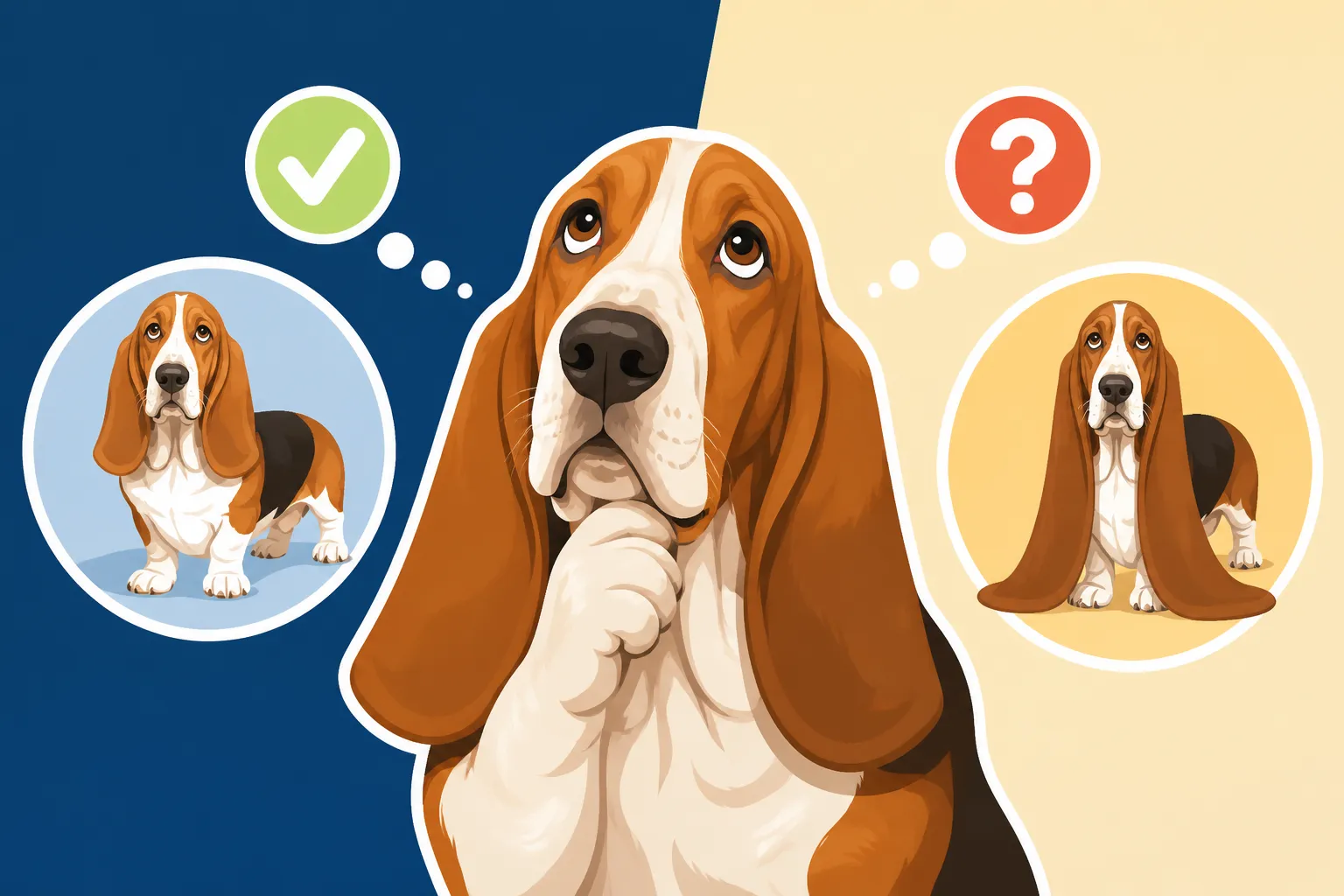
Whether the Basset Hound Standard Sets an Ear Length
A Basset Hound’s ears can look impressively long, but breed standards generally do not prescribe a fixed measurement in inches. They describe how the ears should be set, shaped, textured, and proportioned to the head. This guide explains what that language means, how standards vary by kennel organization, and what an owner should—and should not—do with those long, low-set ears.
Does the Basset Hound standard set an exact ear length
What the standard describes instead of a measurement
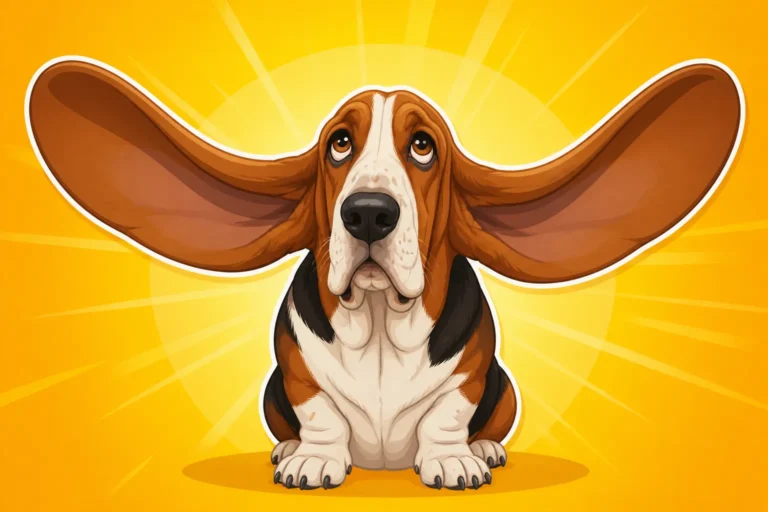
In commonly used Basset Hound breed standards, ear length is described in relation to the dog’s muzzle rather than by a number of inches. The wording typically says the ears are long and low-set, reaching beyond the tip of the muzzle when brought forward. The standard also describes features such as the ear’s texture and shape.
That distinction matters. A description like “reaching beyond the muzzle” gives judges a visual reference that works across dogs with different head sizes. It does not mean every Basset Hound must have ears of identical length. Nor does it mean a dog falls outside the standard simply because its ears measure fewer or more inches than another dog’s.
If you have heard that Basset Hounds should have twelve-inch ears, treat that as a familiar shorthand, not a universal rule written into every breed standard. The phrase may help people picture the breed’s distinctive look, but it is not a substitute for the wording of the standard used by a particular registry. For more on where the number comes from, see The Twelve Inch Ears a Basset Hound Was Given on Purpose and Whether a Basset Hound's Ears Reach Twelve Inches.
How ear length is judged in proportion to the muzzle
When a standard says the ears should reach beyond the muzzle, it describes a relationship between two parts of the dog. A judge is assessing whether the ears look appropriately long for that dog’s head—not checking an isolated measurement without regard to the rest of the animal.
For example, imagine two Basset Hounds standing side by side. One has a slightly longer muzzle and somewhat longer ears; the other is smaller overall. Their ears might measure differently, yet both could show the characteristic low-set, long-eared outline. A fixed measurement alone would miss that proportion.
The wording also does not mean that an owner should pull an ear taut or stretch it to see how far it reaches. If you are simply curious, you can gently bring the ear forward without tugging, but there is no need to measure it at home. For a closer look at typical variation, see How Long a Basset Hound's Ears Are.
Why you may see different wording across kennel organizations
Breed standards are published by specific kennel organizations, and their wording is not always identical. A standard used in one country may describe ear length, placement, or shape somewhat differently from another organization’s version. Some standards emphasize that the ears should extend well beyond the muzzle; others add detail about how they hang or curl.
That is why an online quote about “the Basset Hound standard” may be incomplete if it does not name the registry. If you are preparing for a conformation show, checking a breeder’s claims, or comparing a dog against a written standard, use the current standard from the organization relevant to that event or registration. The judge will assess the dog according to that organization’s description, not a general internet measurement.
For everyday owners, the difference is usually less consequential. A Basset Hound does not need show-ring-perfect ears to be a healthy, beloved companion. Ear length is one visible breed characteristic; it is not a standalone measure of health, temperament, or quality of care.
What the standard means by low-set, long ears
Ear placement is part of the characteristic outline
“Low-set” refers to where the ears attach to the head. Basset Hound ears sit low, contributing to the breed’s familiar expression and silhouette. Their position is distinct from their length: a dog can have long ears that are not correctly set for the breed, just as a low-set ear is not automatically long enough to match a particular standard.
The combination of a low attachment and a long, hanging flap creates the soft, drooping look people associate with Basset Hounds. When judging a dog, the ear is considered as part of the head and overall outline rather than as a detached feature. A photograph can be misleading, too: an ear caught in motion, folded back, or partly hidden may look shorter than it is.
The ears also have a practical side in daily life. They can drag through water, food, mud, or damp grass, and their position can make them less airy than the ears of an upright-eared dog. That does not make every Basset Hound’s ears unhealthy, but it does explain why owners often build simple ear checks into grooming.
Shape and texture matter alongside length
Breed descriptions often mention qualities beyond how far the ear reaches. The ears may be described as fine or velvety in texture and as hanging close to the head, sometimes with an inward curl. These details help define the breed’s characteristic appearance; they are not instructions to reshape or manipulate a pet’s ears.
A dog’s ears may also look different depending on posture. When the dog is alert, sniffing, or moving, the flaps can shift position. A still photograph may show an ear lying neatly against the cheek, while another image of the same dog shows it turned outward. One pose should not be mistaken for a permanent difference in length or structure.
It is also worth separating appearance from function. The Basset Hound’s ears contribute to its distinctive head shape, and the breed’s scenting ability is associated with its overall anatomy and hunting heritage. It is common to hear that the ears help waft scent toward the nose, but the standard’s description of ear length is primarily about breed type and conformation. You can explore the broader idea in Why a Basset Hound's Ears Help It Smell.
Length varies between individual dogs
Even within one breed, individual dogs vary. The size of the head, the width of the skull, the length of the muzzle, and the way the ears hang can all affect how long the ears appear. Age and posture can change the look, too, especially as a puppy grows into its adult proportions.
That variation can catch new owners off guard. A puppy may have ears that seem oversized for its face, then look more balanced as the head and muzzle mature. Another dog may have ears that appear shorter in casual photos because they are folded back or held away from the muzzle. None of those impressions alone tells you whether the dog meets a particular show standard.
| Feature | What breed-standard language generally refers to | What it does not mean |
|---|---|---|
| Ear length | The ears extend beyond the muzzle when brought forward | Every dog must have the same number of inches |
| Ear set | The ears attach low on the head | Long ears are automatically correctly set |
| Ear texture | The ears are described as fine or velvety in some standards | Owners should apply products to change the texture |
| Ear carriage | The ears hang close to the head in the characteristic way | The ears must look identical in every photo |
| Health | The ears need routine observation and appropriate care | A particular length guarantees healthy ears |
Ear length and everyday care are different questions
Long ears can collect dirt without being a problem
A Basset Hound’s ear flaps may brush the ground, dip into a water bowl, or pick up debris on a walk. If that happens, gently wipe away visible dirt with a soft, damp cloth and dry the ear afterward. Check the ear canal and the skin around the flap during regular grooming, but avoid poking cotton swabs or other objects into the canal.
Owners often find it useful to keep basic grooming supplies in one place. Retailers such as Chewy carry general pet-care items, but the right product depends on the dog and on any instructions from a veterinarian. If the ear is irritated or has a strong odor, do not assume a routine wipe or an over-the-counter cleaner will solve the cause.
A quick check can become an ordinary part of life rather than a wrestling match. Choose a calm moment, lift the ear gently, look for visible redness, swelling, unusual discharge, or a change in smell, and reward the dog for staying relaxed. If your Basset Hound resists because the ear seems painful, stop and contact a veterinarian rather than forcing the inspection. For practical hygiene details, see Whether a Basset Hound's Ears Need Washing Separately and Whether a Basset Hound's Ear Odor Is Normal.
Do not trim ears to change their length
A breed standard is not a grooming instruction. Trimming a Basset Hound’s ears to make them shorter does not improve the dog’s health or make its ears more correct. Likewise, an owner should not cut, tape, or otherwise alter the ear to create a particular shape for appearance.
If the hair around the ear is matted or the ear flap has a wound, ask a veterinarian or an experienced groomer what is appropriate. The skin and tissue of the ear flap can be delicate, and a dog that suddenly reacts to handling may be uncomfortable. A sudden change is a reason to investigate, not an invitation to reshape the ear.
For the same reason, avoid plucking hair or applying drying agents just because the ears are long. Not every Basset Hound needs the same routine, and unnecessary interventions can irritate sensitive skin. If you are wondering about cosmetic trimming, Whether a Basset Hound's Ears Should Ever Be Trimmed explains why the answer is different from simply wiping away dirt.
Recognize signs that call for veterinary advice
Ear length itself is not a diagnosis, but ear discomfort deserves attention. Repeated head shaking, persistent scratching, tenderness when the ear is touched, redness, swelling, unusual discharge, or a strong new odor are reasons to contact a veterinarian. These signs can have different causes, so guessing at home may delay the right care.
A familiar, mild smell after a wet walk is not the same as a persistent or worsening odor accompanied by discomfort. Similarly, a little dirt on the outer flap is different from discharge coming from the canal. Note when the problem started, whether one or both ears are affected, and whether your dog has recently been swimming or bathed; those details can help the veterinary team.
If your dog has recurring ear trouble, ask for a care plan tailored to that dog rather than relying on a fixed cleaning schedule copied from another owner. A product purchased from a retailer such as Chewy should only be used as directed and should not replace an examination when symptoms are present. For more on what can go wrong, read The Signs a Basset Hound's Ear Has Gone Bad.
How to interpret ear length when choosing or showing a Basset Hound
Ask which standard is being used
If a breeder, handler, or show entry discusses ear length, ask which kennel organization’s standard they mean. That small question can clear up confusion when people use different wording or repeat the twelve-inch figure as if it were a formal requirement everywhere.
For a puppy buyer, ear length should not be the only feature considered. Ask about health testing, the dogs’ overall structure and temperament, and how the breeder raises the litter. A dramatic ear length may catch your eye in a photograph, but it cannot tell you whether a puppy is a good fit for your home or what health care it may need.
If you already share your home with a Basset Hound whose ears seem shorter or longer than expected, there is no need to compare them against a ruler. The written standard is most useful in the context of judging and breed type. For a pet, comfort, soundness, and routine care matter much more than a specific tape-measure result.
Separate show-ring evaluation from pet ownership
A conformation judge evaluates how closely a dog matches its breed standard, including its head, ears, body, movement, and overall balance. That is a specialized assessment, and a single feature rarely explains the whole result. A dog may be a wonderful companion without matching every detail preferred in the show ring.
Owners sometimes worry that an unusual-looking feature means something is wrong. With ears, appearance can be affected by angle, posture, coat, and individual variation. If the ears are comfortable and there is no concerning change in their condition, a difference in apparent length is usually a question of appearance rather than an emergency.
If you are entering a show, consult the rules and standard used by that show and ask an experienced breed mentor to explain the language in person. If you are simply trying to care for your dog, focus on gentle handling, keeping the ears clean when needed, and noticing changes. The standard can explain why the ears look the way they do; it does not require a home ruler or a special routine based solely on inches.
A simple way to think about the standard
The practical takeaway is straightforward: Basset Hound standards generally describe ears that are low-set and long enough to extend beyond the muzzle when brought forward, but they do not establish one universal ear length in inches. The precise wording depends on the organization, and the dog’s proportions matter.
So if someone asks whether the Basset Hound standard sets an ear length, the clearest answer is: it describes the length in relation to the muzzle, rather than setting a fixed number. For everyday owners, that is useful context—not a measurement target. Keep your dog comfortable, check the ears as part of normal care, and seek veterinary guidance when you notice persistent irritation or a sudden change.
Disclaimer
This article is for general informational purposes only and does not constitute professional advice. Laws, prices and regulations vary by location and change over time. Consult a qualified professional for guidance on your specific situation.