Why a Basset Hound Stops Hearing You When It Smells Something
It's a familiar scenario for any Basset Hound owner: you're out on a leisurely stroll, your floppy-eared companion by your side, when suddenly their nose hits a scent, their tail goes rigid, and your voice might as well be the wind for all the attention they pay. This isn't stubbornness, nor is it a personal slight; it's the very essence of what makes a Basset, a Basset. This guide will dive deep into understanding why your Basset Hound becomes 'deaf' to your commands the moment a captivating smell takes hold, and how you can work with, rather than against, their incredible natural instincts.
Understanding the Basset Hound's Olfactory World
Imagine a world where every single leaf, every blade of grass, every patch of sidewalk tells a story, a complex tapestry woven from countless scents. That's the world your Basset Hound lives in, a universe far richer and more detailed than anything we humans can perceive. Their entire existence is often dictated by the information they gather through their phenomenal sense of smell, and it's this very trait that makes them such unique and, at times, challenging companions.
The Anatomy of a Scent Machine
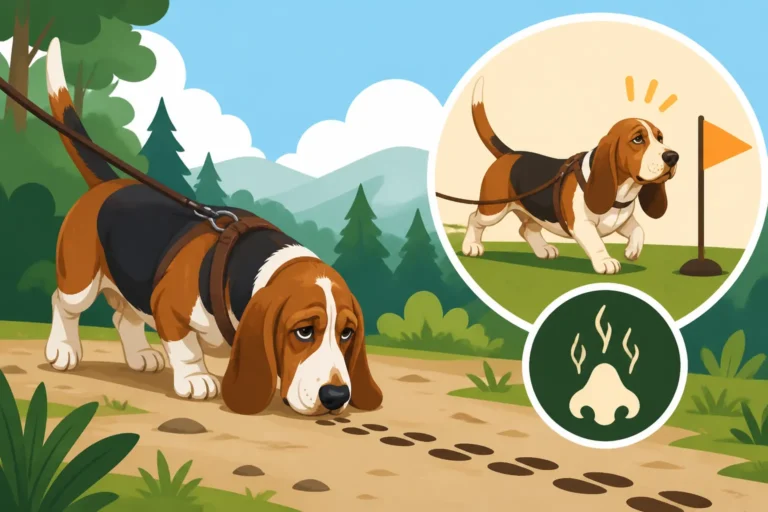
When you look at a Basset Hound, you see those long, velvety ears, the deep wrinkles, and the heavy dewlap. These aren't just charming aesthetic features; they are all perfectly evolved components of an unparalleled scent-tracking machine. Their elongated ears don't just hang there; they act like natural sweepers, pushing ground-level scents up towards their nose, concentrating the odor particles for a clearer reading. It's like having built-in scent radar dishes. The loose skin around their face and neck, known as the dewlap, also plays a role, trapping scent particles close to their nose, ensuring no detail is missed.
Beyond the visible adaptations, it's what's inside their head that truly sets them apart. Basset Hounds possess an astonishing number of olfactory receptors – the specialized cells that detect scent – far more than most other breeds, and certainly exponentially more than humans. Their brain dedicates an enormous portion of its processing power to analyzing these scents, making it a supercomputer for all things olfactory. This isn't just a strong nose; it's a primary sensory organ that fundamentally shapes their perception of the world. How Good a Basset Hound's Nose Actually Is delves deeper into the specifics of their incredible sniffing power.
How Scent Dominates Their Brain
For a Basset Hound, a scent isn't just a fleeting smell; it's a compelling narrative, an urgent broadcast demanding their full and undivided attention. When they lock onto a trail, it's not a choice to ignore you; it's an involuntary, deeply ingrained response that overrides almost all other stimuli. Think of it like a human seeing an incredibly vivid, sudden flash of light or hearing a deafening clap of thunder – your immediate, reflexive response is to focus entirely on that sensation, to the exclusion of everything else around you.
Their brains are hardwired for scent work. This means that when a Basset Hound's nose detects an intriguing smell, a cascade of neurological events takes over. The part of their brain responsible for processing scent essentially takes command, pushing other sensory inputs, like your voice, into the background. It's not malicious, it's not stubbornness; it's a biological imperative. They are literally following their instincts, fulfilling the purpose for which their ancestors were bred over centuries. The world shrinks to that single scent, and your gentle (or even exasperated) calls become mere background noise, barely registered.
The Instinctive Drive: Why They Follow Their Nose
To truly understand why your Basset goes "deaf," we need to look back at their origins. Basset Hounds weren't bred to be obedience champions or agility stars. They were crafted by centuries of selective breeding to be the ultimate scent hounds, designed for a very specific job that relies entirely on their nose.
Bred for the Trail, Not the Treat
The Basset Hound's lineage traces back to French monastic orders and noble hunters who needed a slow, methodical scent hound. These dogs were designed to hunt small game, primarily rabbit and hare, in thick underbrush where faster hounds would miss crucial scent trails. The hunters often followed on foot, and a dog that could meticulously pick apart a cold trail, moving at a manageable pace, was invaluable. Their entire physical structure – low to the ground, heavy bone, ponderous gait – all serves this singular purpose.
Their ability to track a scent for long distances, sometimes over varied terrain and many hours, was paramount. This meant that ignoring distractions and focusing solely on the scent line was a highly desirable trait. They weren't rewarded for quick recalls or heeling perfectly; they were celebrated for their tenacity on a trail. This genetic blueprint is still incredibly strong in today's Basset Hounds. Whether a Basset Hound Still Hunts explains more about their enduring connection to their historical role. When your Basset puts its nose to the ground, it's not being disobedient; it's simply doing what generations of its ancestors did, a deep-seated behavioral pattern that is profoundly satisfying for them to enact.
The 'Deaf' Ear is Really Focused Nose
When your Basset Hound tunes you out, it can feel personal, but it's important to reframe this behavior. Their "deaf ear" isn't a sign of disrespect; it's a demonstration of absolute, laser-like focus on the task their genetics compel them to perform. Imagine trying to have a conversation with someone while they are intensely concentrating on solving a complex puzzle, or navigating a challenging video game. Their ears might be open, but their brain is elsewhere.
For a Basset, the scent trail is that complex puzzle, that challenging game. Every sniff is a clue, every turn in the trail a new level. Their motivation isn't to be stubborn, but to follow through on the incredible sensory information their nose is providing. It's an internal drive so powerful that it overwhelms external commands. They are literally in a different mental space, a world dominated by odors and the story they tell. Understanding this shift in their perception can help you adjust your expectations and your training strategies, moving from frustration to acceptance and effective management.
The Frustration is Real: When Your Basset Goes "Selectively Deaf"
Let's be honest, it's incredibly frustrating when you're calling your Basset Hound, perhaps with increasing urgency, and they simply don't respond. You might see their tail wagging gently as they nose through a clump of grass, completely oblivious to your presence. This common Basset trait can lead to real annoyance, and sometimes, genuine fear for their safety.
The Silent Scream of the Overlooked Owner
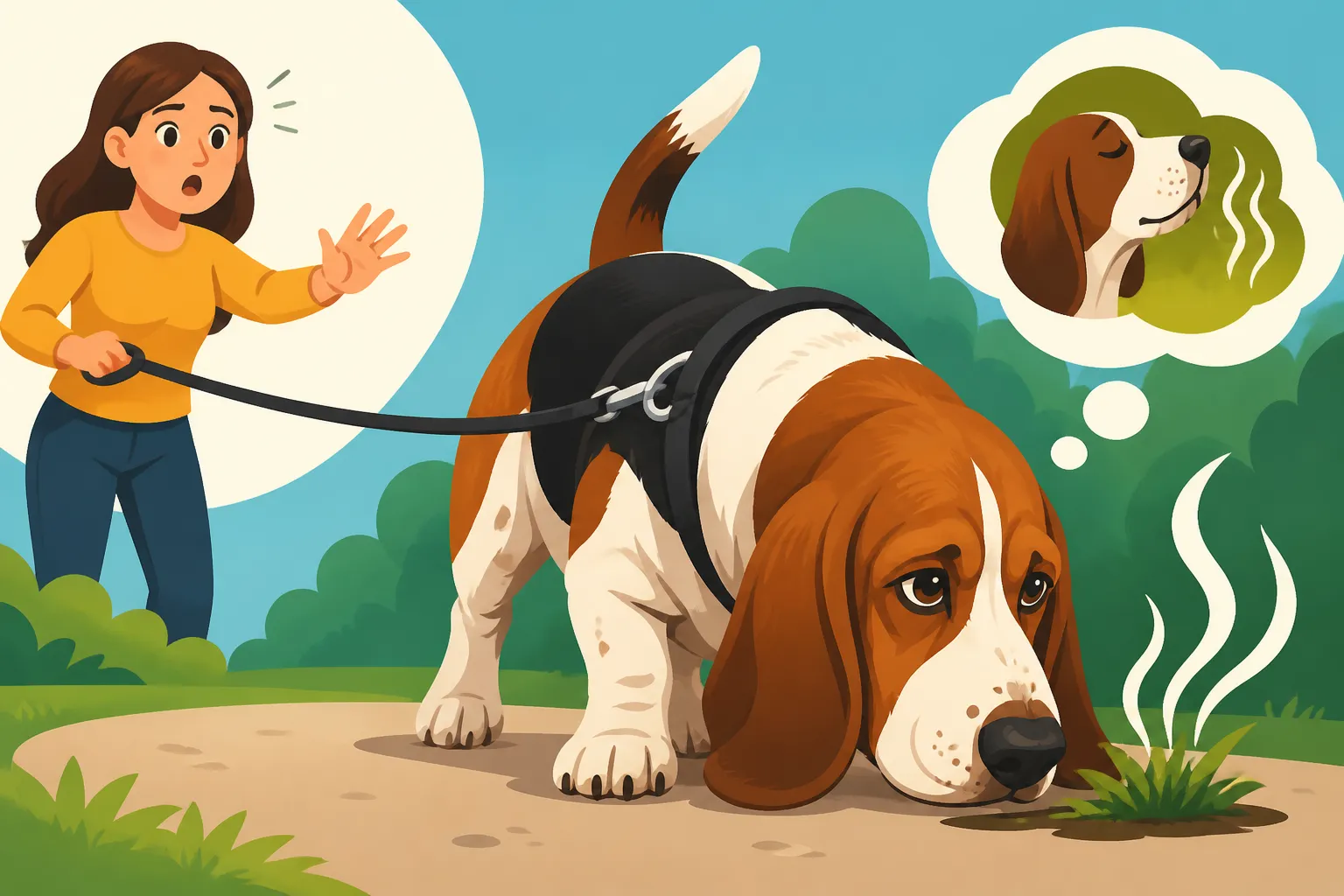
The scene is probably too familiar: you're at the park, or on a walk, and your Basset has picked up a fantastic scent. Their nose is glued to the ground, those long ears sweeping, and their gait, usually a leisurely amble, becomes an unstoppable trudge in pursuit of the elusive odor. You call their name, once, twice, maybe a third time with a sharper tone. Nothing. You clap your hands. Still nothing. You might even resort to that slightly embarrassing high-pitched squeak you reserve for only the most dire of situations. And your Basset? They might flick an ear, but their nose remains steadfastly anchored to the ground.
It feels like they're doing it on purpose, doesn't it? Like they're actively choosing to ignore you. But the truth, as we've discussed, is far more complex. It's not a choice; it's an immersion. The world of human voices, leashes, and walk schedules simply fades into insignificance against the compelling mystery of a rabbit's trail or a squirrel's recent passage. This can leave you feeling unheard, unimportant, and frankly, a bit foolish standing there calling into the void. This sense of being "overlooked" by your own dog is a very real frustration that many Basset owners experience regularly.
Safety Concerns and Disappearing Acts
Beyond the annoyance, a Basset Hound's single-minded pursuit of a scent can quickly become a serious safety concern. Their low-slung bodies might make them look slow and harmless, but they can move with surprising speed when a particularly strong scent takes hold. A Basset with its nose to the ground is a Basset oblivious to traffic, open gates, or other potential dangers. They simply do not look up or acknowledge their surroundings in the same way other breeds might.
This is precisely why we often say Whether a Basset Hound Should Ever Be Off Leash is a resounding "no" for most of them. The risk of them wandering off, following a scent for miles, or trotting right into harm's way is simply too great. Many a Basset owner has recounted tales of their dog "disappearing" mid-walk, only to be found hours later, many blocks away, still diligently tracking an invisible trail. It's a terrifying experience that highlights just how powerful their olfactory drive truly is, and why managing it is not just about convenience, but about protecting your beloved companion.
Training Against Instinct: Managing the Scent Drive
While you can't erase a Basset Hound's natural instincts, you can certainly train them to better manage their scent drive and improve their responsiveness. It requires immense patience, consistency, and a deep understanding of what truly motivates them. This isn't about breaking their spirit; it's about channeling their natural abilities and building a stronger communication bridge.
Building a Stronger "Come" Than the Smell
Training a reliable recall for a Basset Hound isn't like training one for a Border Collie. You're not just competing with a squirrel visual, you're competing with an entire invisible world of sensory data. The key is to make coming back to you the most rewarding thing in their entire universe, even more rewarding than that amazing smell. This means using high-value treats – think bits of cooked chicken, cheese, or hot dogs – something truly irresistible. Standard kibble usually won't cut it when they're on a hot trail.
Start recall training in a low-distraction environment, like your backyard, and gradually introduce more tempting scents. Practice frequently, rewarding lavishly every single time they come, even if you have to gently guide them to you at first. Make "come" a party, a joyous occasion associated with the best treats and praise. Utilize games like hide-and-seek, where you hide and call them, making the recall a fun, engaging puzzle for their nose to solve to find you. Online training programs, such as those offered by BAXTER & Bella, often emphasize positive reinforcement techniques that are excellent for breeds like the Basset, focusing on building desire for interaction rather than forcing compliance.
The Role of a Long Line and Secure Spaces
Given their powerful drive, Whether a Long Line Is Enough for a Basset Hound is often a crucial question. A long line – a leash ranging from 15 to 50 feet – is an invaluable tool for safely giving your Basset a sense of freedom while maintaining control. It allows them to explore scents more widely than a standard leash, satisfying some of that innate tracking desire, without the risk of them disappearing entirely. Always use a harness with a long line, never just a collar, to prevent neck injury if they hit the end of the line while in pursuit.
Even with the best training, a Basset Hound on a compelling scent can still be unpredictable. Therefore, secure physical spaces are paramount. A solid, escape-proof fence is non-negotiable for a Basset owner. Remember, these dogs are adept at squeezing through small gaps and digging under fences if the scent on the other side is strong enough. Regular checks of your fencing are essential. For walks, always use a sturdy leash and harness. Consider going to fully enclosed, private dog parks (if they are calm and secure enough) or renting time in a Sniffspot-type location, which offers secure, private spaces where your Basset can indulge its nose without the omnipresent dangers of traffic or getting truly lost.
Utilizing Scent Work to Your Advantage
Instead of fighting their scent drive, why not embrace it? Channeling your Basset's natural abilities into structured activities can be incredibly enriching for them and strengthen your bond. Scent work, also known as nose work, is a fantastic way to do this. This sport teaches dogs to identify and alert to specific odors, mimicking detection dog work. Your Basset will absolutely thrive on this kind of mental stimulation. Whether Nose Work Tires a Basset Hound Out is a definite yes; it’s mentally exhausting in the best way possible.
You can start simple at home with games like "find it" using treats hidden around the house or in a snuffle mat. As they progress, you can introduce specific essential oils (like birch, anise, or clove, commonly used in nose work competitions) on cotton swabs and teach them to search for these target odors. This provides an acceptable, constructive outlet for their powerful nose, fulfilling their deep-seated desire to track and discover. It's a wonderful way to engage their brains and bodies, often leaving them tired and content, and less likely to be overwhelmed by every random scent on their next walk.
Tools and Aids for Managing a Scent-Driven Basset
Living with a Basset Hound means recognizing their unique needs and finding the right tools to keep them safe and happy. From what they wear on walks to how they get around your home, thoughtful choices can make a big difference.
Harnesses, Leashes, and Tracking Collars
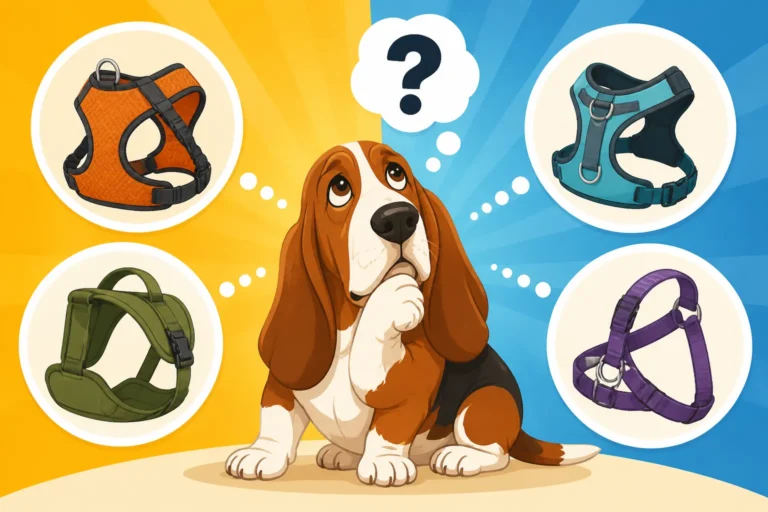
Given a Basset Hound's propensity to pull when a scent is detected, and their delicate neck structure, a well-fitting harness is absolutely essential. Avoid attaching a leash directly to their collar, as this can put undue pressure on their throat and spine, especially with their low center of gravity and powerful pulling ability. Look for harnesses that distribute pressure across their chest and shoulders. Many owners find front-clip harnesses helpful, as they redirect a pulling dog back towards you, making it harder for them to gain momentum. Some popular brands offer excellent options for Basset's unique shape, which you can easily find on platforms like Amazon.
When it comes to leashes, a sturdy, comfortable leash that gives you a good grip is vital. Retractable leashes are generally not recommended for Basset Hounds, as they offer little control and can be dangerous if the dog suddenly bolts after a scent. For added security and peace of mind, especially if you have a known "escape artist," consider a GPS tracking collar. While it won't prevent them from running off, it can be a lifesaver in helping you locate them if they do get lost on a particularly compelling trail. What a Harness for a Basset Hound Costs can vary greatly, but it's an investment in their safety and your peace of mind.
Enrichment Toys and Puzzle Feeders
A Basset Hound's mind, much like its nose, needs to be engaged. Boredom can lead to destructive behaviors, or an even stronger drive to find "fun" (i.e., scents) outside of your control. Enrichment toys that involve their nose and problem-solving skills are ideal. Kong-type toys filled with frozen wet food or peanut butter can keep them occupied for extended periods. Snuffle mats, where treats are hidden within fabric strips, are perfect for tapping into their natural foraging instincts.
Puzzle feeders, which require your Basset to manipulate parts of the toy to release food, are another excellent way to engage their minds and make mealtime last longer. This mental work is just as important as physical exercise for a Basset. Providing these outlets helps to satisfy their innate drive to 'work' with their nose, which in turn can make them more settled and less prone to bolting after every outdoor scent. A good selection of these mental enrichment tools can be found on Amazon, making it easy to keep your Basset mentally stimulated.
Living with a Scent-Obsessed Basset Hound
Ultimately, successfully coexisting with a Basset Hound means accepting and even celebrating their incredible, albeit sometimes inconvenient, nose. It's about adjusting your expectations and integrating their natural instincts into your daily life in a way that is safe and fulfilling for everyone.
Embracing Their Unique Trait
Your Basset Hound's incredible nose and resulting scent obsession are not flaws; they are defining characteristics of the breed. Trying to eradicate this trait is like trying to stop a fish from swimming – it's simply part of who they are. Instead, shift your perspective from frustration to fascination. Observe how meticulously they track, how utterly absorbed they become. It's truly an amazing thing to witness.
Embrace the slower pace of walks. A walk with a Basset is less about covering distance and more about exploring a sensory landscape. Allow them time to sniff, to follow a small segment of a trail. Think of it as their equivalent of reading the newspaper or catching up on local gossip. While you still need to keep them safe and under control, giving them designated "sniff time" can go a long way in making walks enjoyable for both of you. This acceptance is the first step towards a harmonious relationship with your scent-driven companion.
Creating a Safe and Stimulating Environment
A Basset-proof home and yard are essential. As discussed, a secure fence is non-negotiable. Inside the home, consider their low stature. Counter surfing might be less of an issue, but they are masters at finding dropped crumbs or forgotten snacks. Secure trash cans and keep tempting food items out of reach.
For mental stimulation, integrate scent games into their daily routine. This could be as simple as hiding a few pieces of their kibble around the house for them to find, or rotating their puzzle toys. Even if you live in an apartment, Whether a Basset Hound Suits an Apartment can be a yes, provided you are committed to regular, engaging outings and mental enrichment. Providing a variety of textures and safe chew toys also helps keep their minds busy and reduces destructive behaviors. Remember, a tired Basset (mentally and physically) is a good Basset.
The Importance of Patience and Consistency
Training a Basset Hound, particularly when it comes to recall and impulse control around scent, is a marathon, not a sprint. You will need boundless patience and unwavering consistency. There will be days when they seem to forget everything they've learned, especially if a particularly potent scent crosses their path. Don't get discouraged. Revert to basics, reinforce heavily, and remember that every successful recall, every moment they choose you over a smell, is a victory.
Work with a positive reinforcement trainer if you're struggling. They can provide tailored strategies and support to help you build a stronger bond and more effective communication with your Basset. Celebrate their successes, no matter how small, and understand that their "selective deafness" is a manifestation of their incredible, unique nature. With understanding, proper management, and consistent effort, you can enjoy all the wonderful qualities of your Basset Hound, floppy ears, powerful nose, and all.
Disclaimer
This article is for general informational purposes only and does not constitute professional advice. Laws, prices and regulations vary by location and change over time. Consult a qualified professional for guidance on your specific situation.