What Actually Motivates a Basset Hound
You stand in the backyard holding a handful of standard treats, calling your Basset Hound with the sweetest, most enthusiastic voice you can muster, only to watch them turn their back, press their nose into a tuft of damp grass, and ignore you completely. It is a scene played out in thousands of homes every single day. Basset Hound owners often feel bewildered, embarrassed, or entirely defeated by a breed that seems immune to traditional dog training techniques.
The core issue is rarely a lack of intelligence; rather, it is a complete mismatch between what human handlers offer and what actually drives this remarkable scent hound. In this guide, we will break down the biological, psychological, and sensory triggers that govern your hound’s mind, helping you transform daily frustration into clear, cooperative communication.
The Unique Mindset of a Scent-Driven Hound
Biological Wiring Versus Human Expectations
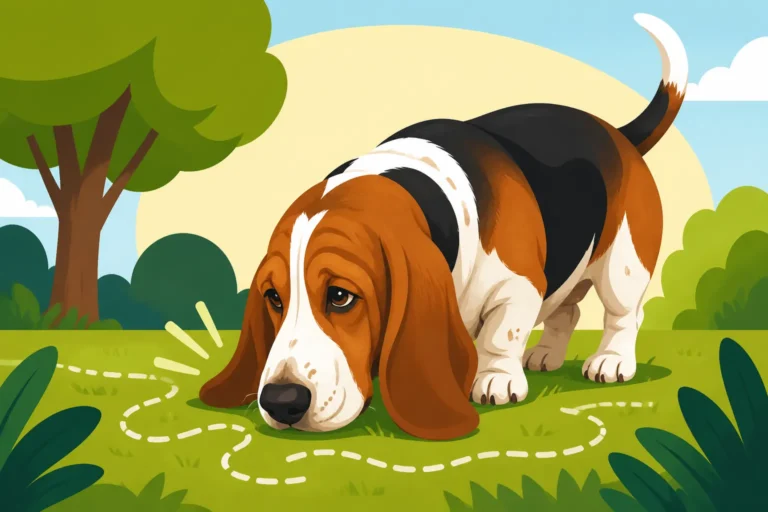
To understand how to motivate a Basset Hound, you must first accept that you are living with a dog whose brain is fundamentally organized around scent. Where a Golden Retriever or a German Shepherd might look to a human face for non-verbal cues and emotional feedback, a Basset Hound’s primary portal to the universe is tucked firmly against the ground. Their physical structure—from the drooping facial skin that traps floating scent particles to the long ears that sweep odor upward toward their nasal passages—was explicitly engineered to make scent processing the highest possible priority.
When you ask a hound to look at you, sit instantly on command, or heel along a concrete sidewalk, you are asking them to suppress millions of years of predatory and tracking instincts. Human handlers often expect instant compliance because we view dog training through the lens of modern companion breeds. When we ask How Good a Basset Hound’s Nose Actually Is, we begin to realize that our auditory commands are competing against a rich, four-dimensional scent tapestry that we cannot even perceive.
Understanding this biological reality removes the personal offense from the equation. Your hound is not ignoring you out of spite, anger, or simple disrespect. They are operating in a sensory realm where a three-day-old rabbit trail carries significantly more weight than a human saying the word “sit” for the fifth time in a row. When you align your training strategies with their biological wiring rather than fighting against it, true motivation becomes possible.
The Misunderstood Concept of Hound Stubbornness
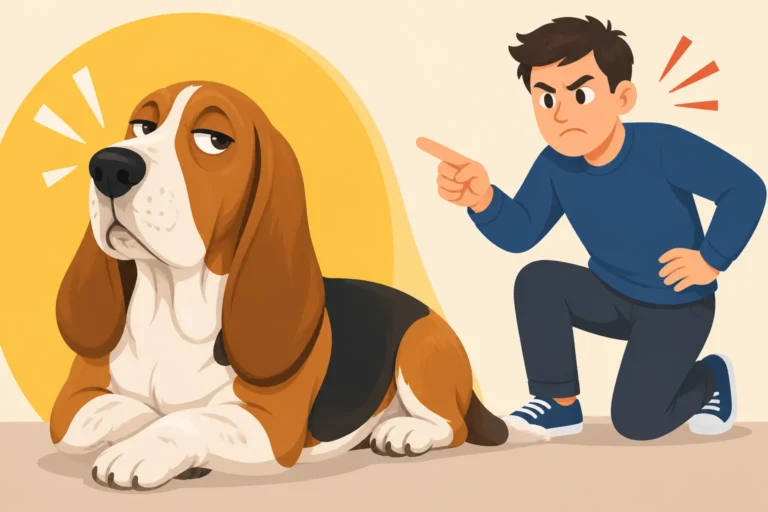
If there is one word overused in relation to this breed, it is “stubborn.” Owners, neighbors, and even conventional dog trainers frequently label the hound as dense or willfully disobedient. However, when examining Whether a Basset Hound Is Stubborn or Just Not Interested, a very different psychological picture emerges. What looks like stubbornness is almost always a total lack of meaningful incentive or an overload of competing sensory information.
Basset Hounds possess an extraordinary capacity for independent problem-solving, a trait deliberately cultivated by European breeders who needed hounds capable of tracking game far ahead of human hunters. A dog bred to make autonomous decisions in the field is naturally going to ask a simple, logical question when presented with a command: What is in this for me? If the answer provided by the handler is weak, boring, or nonexistent, the hound simply chooses the more rewarding option, which usually involves sniffing a patch of moss or taking a nap.
Reframing stubbornness as an incentive problem changes how you approach every interaction. When your hound plants their feet and refuses to move, they are giving you immediate feedback about their current motivational state. They are telling you that the reward structure currently on offer is insufficient to overcome their immediate environment, their physical fatigue, or their instinctual desires.
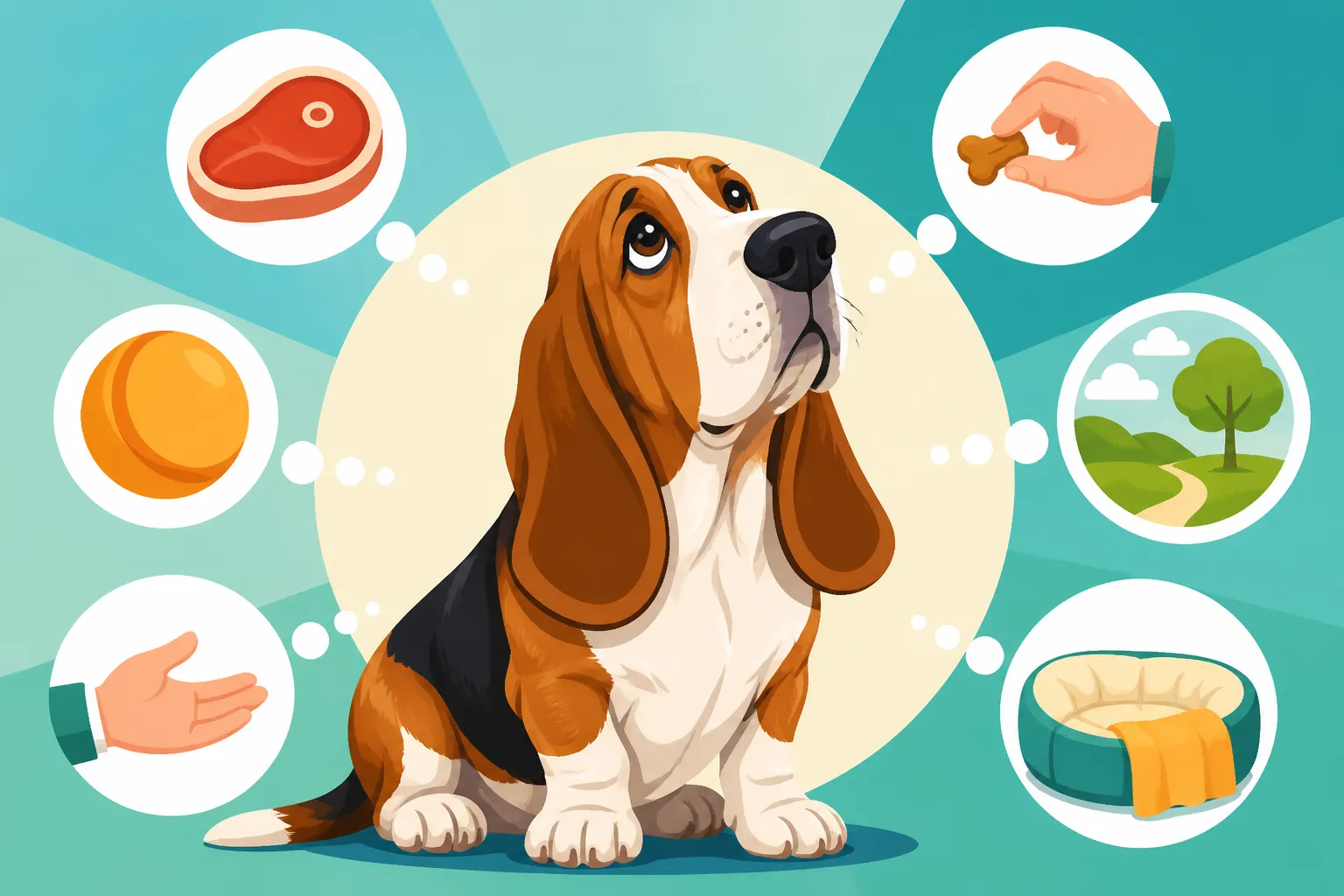
BASSET HOUND MOTIVATION MATRIX
| Incentive Category | Drive Level | Best Used For | Primary Risk |
|---|---|---|---|
| High-Value Food | Exceptional | New Behaviors | Caloric Overload |
| Olfactory Rewards | Very High | Engagement/Heel | Loss of Control |
| Comfort/Rest | High (Senior/Tired) | Stationary Cues | Lethargy |
| Social Praise | Low to Moderate | General Bonding | Disinterest |
Why Conventional Obedience Methods Fail
Traditional obedience frameworks often rely heavily on repetition, vocal enthusiasm, spatial pressure, or physical guidance. While these methods may yield fast results with working or herding breeds, they tend to cause a Basset Hound to completely shut down or tune out. Repeating a verbal command six times with increasing volume does not make the command more enticing; it simply teaches the hound that human vocalizations are meaningless background noise.
Similarly, physical coercion—such as pushing down on a hound’s rump to force a sit—frequently triggers an instinctive opposition reflex. Because a Basset Hound is heavily built, low to the ground, and possesses substantial bone mass, leaning into pressure is second nature to them. If you push down on their hindquarters, they will automatically push back up against your hand with equal or greater force.
To succeed with this breed, handlers must abandon the traditional command-and-control paradigm in favor of an economic paradigm. You are not an officer issuing orders to a soldier; you are an employer offering a highly lucrative contract to a very selective independent worker. By utilizing structured step-by-step digital platforms like BAXTER & Bella, owners can learn how to apply positive reinforcement concepts specifically adapted for low-drive, scent-obsessed dogs, ensuring that training remains a fun, cooperative game rather than a battle of wills.
Food as the Ultimate Currency
High-Value Treats Versus Daily Kibble
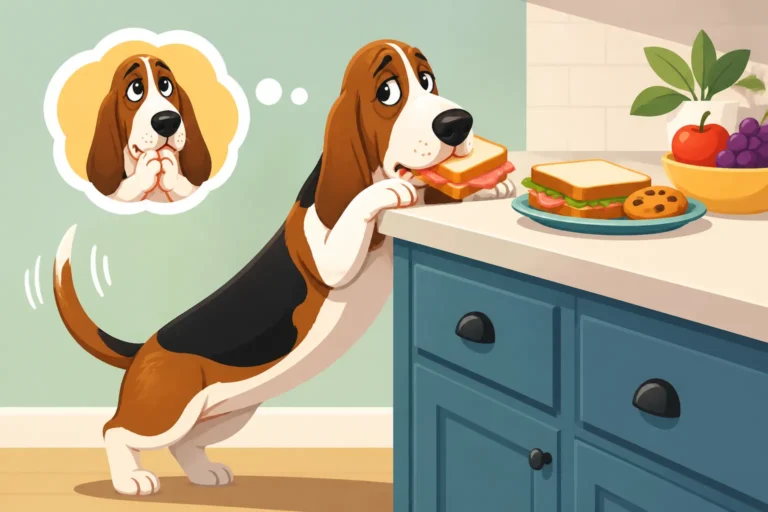
While scent is their primary passion, food is almost universally the quickest pathway to a Basset Hound’s brain. However, expecting a hound to work for a piece of dry, generic daily kibble in a high-distraction environment is a common beginner mistake. When considering Whether a Basset Hound Works for Food Only, it becomes clear that while food is their most effective primary reinforcer, the type and value of that food dictate the level of focus you will receive.
High-value rewards for a hound must appeal directly to their olfactory senses. Dry biscuits rarely cut it when competing with outdoor smells. Instead, successful handlers rely on smelly, moist, high-protein options such as freeze-dried liver, small pieces of cooked chicken, low-sodium hot dog slices, or commercial squeeze-cheese. The goal is to produce an aroma so compelling that it instantly interrupts the hound’s internal scent-processing loop.
TREAT VALUE TIER FOR TRAINING
| Value Tier | Example Food Items | Ideal Training Scenario |
|---|---|---|
| Low Value | Standard Dry Kibble | Indoor quiet practice, low distraction |
| Medium Value | Commercial Biscuits | Known cues indoors, suburban yard |
| High Value | Freeze-Dried Liver | New cues, outdoor distraction |
| Ultra-High Value | Warm Roast Chicken | Recall, highly distracting parks |
It is also vital to vary the reward delivery. If a hound knows exactly what is in your pocket every single time, the reward becomes predictable and loses some of its psychological punch. By creating a “trail mix” of high-value treats or randomly introducing an extraordinary jackpot reward for a exceptional response, you tap into the dopamine hit of variable reinforcement, keeping your hound curious, engaged, and eager to see what comes next.
Managing Motivation Without Weight Gain
The obvious challenge with using food as your primary motivational driver is the physical build of the breed. Basset Hounds are exceptionally prone to rapid weight gain, and their unique skeletal structure makes excess weight a severe health hazard. When examining Keeping a Basset Hound at Its Correct Weight, handlers must balance effective training rewards with strict daily caloric management.
To prevent your training sessions from creating a heavy hound, every single treat used during the day must be accounted for in their total daily food allowance. If you plan an intense twenty-minute training session in the afternoon, you must reduce their morning or evening meal portion accordingly. Using tiny, pea-sized treats allows you to deliver dozens of individual reinforcements throughout a session without adding hundreds of unneeded calories.
Another clever strategy is using soft, highly aromatic treats that can be broken down into microscopic bits, or using lickable squeeze tubes filled with plain wet food or pureed pumpkin mixed with a little peanut butter. A single lick from a squeeze tube offers immediate olfactory and gustatory satisfaction, reinforces the correct behavior, and takes up virtually no room in the hound’s daily caloric budget.
CALORIC MANAGEMENT DURING TRAINING
| Strategy | Practical Implementation |
|---|---|
| Meal Deduction | Measure daily kibble, set aside 25% for training use. |
| Micro-Sizing | Cut soft treats down to the size of a single pea. |
| High-Volume Hydr. | Use moist foods (cooked turkey, pumpkin) over dense dry. |
| Lick Rewards | Use squeeze tubes so reward is measured in licks, not g. |
Pacing and Delivery in Reward-Based Training
The physical way you present a food reward to a Basset Hound drastically impacts how quickly they learn. Because of their heavy lips, droopy flews, and long, low frame, bringing a treat up to human chest height forces the dog to sit or strain awkwardly, which can break their concentration. Rewards should generally be delivered low, close to the hound’s natural head height, and directly in line with their nose.
Speed of delivery is equally critical. The bridge between the correct behavior and the reward must be razor-sharp. Using a clicker or a clear marker word like “Yes!” pinpoints the precise second the hound makes the right choice—whether that is looking away from a squirrel or lowering their hips to the floor. The reward must follow within one to two seconds, before the hound’s nose drops back to the carpet to inspect a new smell.
Furthermore, consider the pacing of your rewards during complex behaviors. A Basset Hound holding a stay or walking nicely on a leash needs a high frequency of reinforcement initially. If you wait too long between rewards, the hound will assume the exercise is over, disengage, and seek out their own reinforcement elsewhere. Start with rapid delivery to build momentum, then gradually fade the frequency as the behavior becomes second nature.
Harnessing Olfactory Rewards and Scent Games
Using Scent as the Reward Itself
Food is an effective reinforcer, but scent itself can be an equally potent reward if handlers know how to harness it. Many owners battle their hound on walks, constantly pulling them away from fire hydrants, grass tufts, and tree trunks. This creates a perpetual power struggle where the dog becomes increasingly frustrated and determined to smell the environment.
Instead of fighting the nose, turn access to scent into the ultimate functional reward. Use the Premack Principle: a high-probability behavior (sniffing) can reinforce a low-probability behavior (walking nicely on a loose leash). Walk a few paces with your hound maintaining focus by your side, marker-word the good position, and then give a release command like “Go Sniff!” while stepping over to the exact patch of grass the hound was eyeing.
By structuring environmental sniffing as a earned reward rather than an unauthorized self-reward, you transform the world from a source of distraction into a giant training tool. The hound quickly realizes that paying attention to you is not the end of sniffing; it is actually the fastest, most reliable way to get access to all the wonderful smells in the neighborhood.
Structuring At-Home Scent Work and Puzzle Toys
You do not need to wait for daily walks to utilize olfactory motivation. Bringing structured scent games into your living room provides intense mental enrichment while teaching your hound that working with you yields incredible fun. When exploring Whether Nose Work Tires a Basset Hound Out, most owners are delighted to discover that fifteen minutes of active scent searching burns more mental energy than a an hour-long physical stroll.
Simple hide-and-seek games are an ideal starting point. Place your hound in a stay or have a family member gently hold them while you hide high-value treats around the room—behind chair legs, under cardboard boxes, or on low shelves. Release the hound with a clear cue like “Find It!” and celebrate enthusiastically when they locate each reward. Over time, you can transition from visible treats to scented target odors like birch or clove oils.
In addition to interactive hiding games, introducing interactive puzzle toys or snuffle mats provides independent olfactory problem-solving. Searching for a reputable snuffle mat on Amazon gives you a great tool to slow down fast eaters and channel anxious energy into focused, rewarding nose work. When a hound learns that finding hidden smells is a structured activity provided by their human, their overall engagement with you skyrockets.
HOME SCENT WORK PROGRESSION MODEL
| Level | Activity | Setup & Rules |
|---|---|---|
| Level 1: Beginner | Snuffle Mat | Food visible on top of fabric folds. |
| Level 2: Intermediate | Box Searches | Hide treats inside 3-4 open boxes. |
| Level 3: Advanced | Blind Room Search | Hide treats under/behind furniture. |
| Level 4: Expert | Target Scent Work | Distinguish specific scented oils. |
Balancing Trail Curiosity With Leash Focus
The moment a Basset Hound steps outside, the sheer volume of olfactory data can make human handlers feel invisible. Finding the balance between allowing natural curiosity and maintaining leash safety requires clear rules and consistent boundary management. When considering Whether a Basset Hound Follows Its Nose Into Traffic, it becomes clear that an unmanaged hound on a scent trail is entirely oblivious to spatial dangers.
To build leash focus without breaking your hound’s spirit, establish clear operational zones. Use a standard non-retractable leash and a well-fitted harness, reserving long-line walks for open, safe fields where exploration is unrestricted. On standard sidewalk walks, alternate explicitly between “work mode” (walking near your hip for high-value food treats) and “sniff mode” (exploring a specific area on your command).
If your hound drops their nose and attempts to drag you toward a scent trail, immediately stop and become a human anchor. Do not pull back violently or yank the leash; simply hold your ground, anchor your arm against your core, and wait. The moment the hound slackens the tension on the leash, even for a fraction of a second, click or mark the release of pressure, reward them close to your leg, and then purposefully walk together to inspect the scent.
Environmental Reinforcers and Life Rewards
Turning Sniffing Breaks Into Powerful Training Drives
Beyond simple leash walks, every routine event in your hound’s day can serve as an effective training reinforcer. Life rewards are real-world items or activities your dog desires in the moment, used strategically to reinforce polite behaviors before those desires are granted. This approach turns everyday life into an ongoing, low-stress motivation game.
Consider the simple act of going out the back door. Most Basset Hounds want to burst through the door the moment it cracks open to check the yard for overnight animal activity. By asking for a calm sit-stay before the door opens, you turn access to the yard into the direct reward for sitting quietly. If the hound stands up or lunges forward, the door gently closes, marking the loss of reinforcement.
EVERYDAY LIFE REINFORCEMENT SETUP
| Desired Activity | Prerequisite Cue | Environmental Reward Delivered |
|---|---|---|
| Backyard Access | Calm Sit at Door | Door opens, free access to yard. |
| Dinner Bowl Down | Wait / Eye Contact | Bowl placed on floor for eating. |
| Getting on Couch | Paws on Floor/Sit | Invited up onto soft furniture. |
| Unlocking Leash | Wait at Gate | Leash unclipped for free running. |
Applying this philosophy across all resources—meal bowls, sofa privileges, back-porch access, and car rides—builds a hound that naturally looks to you whenever they want something. They stop trying to take what they want by force or stubborn persistence, recognizing that offering polite, focused attention is the universal key that unlocks every reward in their environment.
Comfort, Lounging, and Soft Surfaces as Rewards
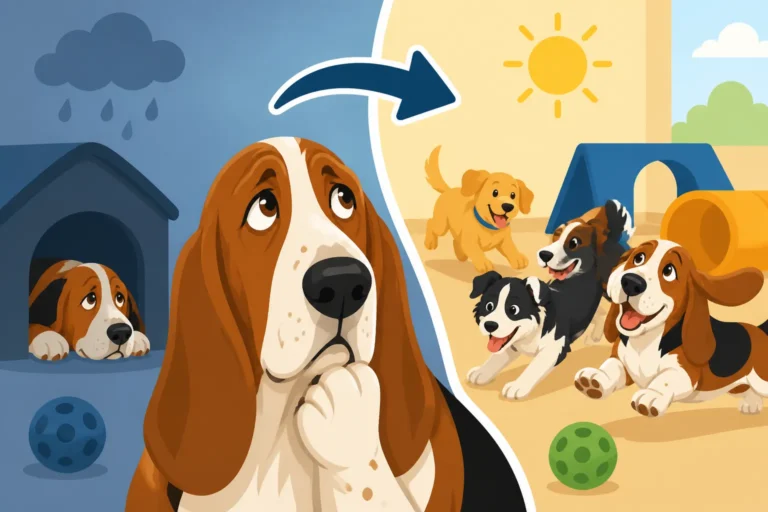
It is no secret to anyone living with a Basset Hound that they possess an intense love for physical comfort. Despite their origins as hardy hunting dogs, modern hounds are relentless seekers of plush dog beds, warm sunbeams, thick blankets, and, above all, the family sofa. Understanding this physical drive allows you to use comfort as a legitimate motivational tool.
When evaluating Helping an Old Basset Hound Onto the Couch, handlers can integrate furniture access directly into their training plans. Teaching a solid “place” command—where the hound goes to a designated, highly comfortable orthopedic bed and stays there—is easily achieved when the bed itself is viewed by the hound as a luxurious sanctuary rather than a place of restriction.
Use soft surfaces to build motivation for stationary behaviors like “stay,” “down,” or calm waiting during family dinner hours. If your hound loves sleeping on a specific couch, place a step or ramp leading up to it and require a soft verbal cue or eye contact before allowing them to climb up. By treating physical comfort as a precious resource managed by you, you tap into one of the hound’s strongest non-food drives.
Social Validation and Hand Contact
A common question among new hound owners is Whether a Basset Hound Cares About Praise. The answer depends entirely on the context and the dog’s personal relationship with their handler. While a enthusiastic “Good boy!” will rarely convince a hound to abandon a fresh rabbit scent, social validation and affectionate physical contact can be very meaningful secondary reinforcers when paired correctly with primary rewards.
Basset Hounds generally appreciate long, low-arousal physical touch—such as slow chest scratches, gentle ear rubs, or firm strokes along their shoulders—rather than rapid patting on the top of the head, which many dogs find intrusive. When you combine warm, calm verbal praise with soothing hand contact at the end of a successful training exercise, you build an emotional reservoir that enhances your overall working relationship.
Over time, this emotional connection creates a dog that genuinely enjoys your presence and participation in their daily games. While praise alone may never completely replace food or scent as a primary driver, it adds a rich layer of social motivation that makes your training sessions feel like a warm, shared partnership rather than a cold transaction.
Managing the Iconic Hound Resistance
Navigating the Sudden Mid-Walk Strike
Every veteran owner knows the scenario: you are half a mile from home, the weather is fine, and suddenly your Basset Hound sits down on the pavement, locks their front legs, and refuses to move another inch. When analyzing Whether a Basset Hound Refuses to Move, handlers must realize that this “strike” is rarely random. It is usually caused by environmental sensory overload, physical exhaustion, sore joints, or a complete drop in motivation.
The worst reaction in this scenario is engaging in a physical pulling contest. Yanking on the leash simply activates the opposition reflex, causes neck or back strain, and solidifies the hound’s determination to stay put. Dragging a heavy, low-slung dog across concrete is impossible, embarrassing, and counterproductive to your training goals.
MID-WALK RESISTANCE ACTION PLAN
| Step | Immediate Tactical Action |
|---|---|
| 1. Stop Pulling | Release tension on leash immediately; lower your energy. |
| 2. Physical Check | Check paws, pads, and joints for signs of heat/soreness. |
| 3. Change Angle | Step 90 degrees to the side rather than straight forward. |
| 4. Value Reset | Produce a smelly, ultra-high-value treat at nose level. |
Instead of pulling, change the geometry and energy of the situation. Drop your energy, turn 90 degrees away from the direction you were walking, and take a few light steps to the side while rustling a pocket containing high-value treats. If physical pain is ruled out, breaking the linear tension by changing direction disrupts the hound’s mental deadlock. Mark the very first step they take toward you, reward generously, and keep the momentum moving in short, fun bursts.
Minimizing Environmental Overload and Sensory Distractions
Because a hound’s sensory world is so incredibly detailed, taking a young or untrained Basset Hound directly into a noisy, smell-saturated environment—like a busy suburban park or a farmers market—is a recipe for motivation failure. When their brain is flooded with competing olfactory and auditory inputs, their ability to process human requests drops to zero.
To maintain high motivation, build your training in strict sensory zones:
- Zone 1: Indoor Living Room. Zero scent competition, minimal noise. Use low-value kibble or standard treats to teach basic mechanics and build understanding.
- Zone 2: Enclosed Backyard. Moderate distraction, familiar home smells. Introduce medium-value treats to practice focus and basic recall.
- Zone 3: Quiet Residential Sidewalk. High distraction, fresh neighborhood scents. Step up to smelly, ultra-high-value treats like chicken or hot dogs.
- Zone 4: Parks and High-Traffic Areas. Extreme sensory overload. Use functional scent rewards, variable jackpot treats, and keep session lengths very short.
By systematically moving up this ladder only after your hound shows consistent focus at the lower tier, you prevent sensory burnout and ensure your hound always experiences high success rates during sessions.
Timing and Micro-Sessions for Maximum Focus
One of the most frequent mistakes handlers make is running training sessions that are far too long. Basset Hounds do not possess the endless, high-drive focus of working breeds. Pushing a hound through twenty consecutive minutes of precise obedience will result in a dog that loses interest, slows down, sniffing the floor, and eventually lying down in protest.
When evaluating Whether Short Sessions Suit a Basset Hound, the answer is an overwhelming yes. Micro-sessions lasting anywhere from two to three minutes—or even ninety seconds—are far more effective than long, grueling workouts. Five tiny, high-energy sessions scattered throughout the day will keep your hound enthusiastic, eager, and wondering when the next game is going to begin.
Always end every single micro-session while your hound is still engaged, successful, and begging for another treat. Stopping the game at the absolute peak of their motivation leaves a lasting psychological impression. The hound walks away from the interaction feeling victorious, associating training with high-energy fun rather than low-energy boredom.
Designing a Daily Motivation and Training System
Integrating Reward Protocols into Everyday Life
Building a motivated Basset Hound is not something that happens in a isolated thirty-minute block once a week; it is built through the small, consistent interactions that occur from the moment your dog wakes up until they drop off to sleep. Integrating clear reward protocols into your standard daily routine eliminates the need for formal, stressful training sessions.
Start by auditing your daily life to identify every single moment your hound wants something from you. Does your hound whine to go out into the garden? Require three seconds of quiet eye contact before opening the latch. Are they eager for dinner? Ask for a quick touch cue against your palm before setting the bowl down. Do they love greeting you when you return home? Teach them to fetch a specific plush toy before receiving their favorite chin scratches.
DAILY INTEGRATED MOTIVATION SCHEDULE
| Time of Day | Daily Context | Integrated Motivation Opportunity |
|---|---|---|
| Morning | Breakfast Time | Hand-fed training kibble / Touch cue |
| Late Morning | Backyard Release | Sit-stay threshold control at door |
| Afternoon | Daily Walk | Loose leash alternated with Go Sniff |
| Early Evening | Family Relax Time | Scent puzzle toy / Snuffle mat fun |
| Evening | Dinner Prep | Place command on orthopedic bed |
When you turn daily routines into a series of small, enjoyable transactions, training stops feeling like a chore for you and stops feeling like an arbitrary demand for your hound. It simply becomes the natural, smooth language through which your household operates.
Essential Gear and At-Home Training Setups
Having the right physical tools on hand makes delivering motivation vastly easier. Attempting to manage a strong, low-slung hound with improper equipment can lead to physical discomfort for both handler and dog, ultimately destroying the positive energy needed for training.
When considering Which Harness Suits a Basset Hound, look for options specifically constructed to accommodate their unique proportions: a deep chest, thick neck, and prominent sternum. A poorly fitted harness that rubs under their front legs or restricts shoulder movement will cause physical discomfort, leading directly to leash refusal and strike behaviors. Pairing a well-fitted harness with a comfortable, multi-length leash gives you optimal control without putting unnecessary pressure on their sensitive airway.
RECOMMENDED BASSET TRAINING TOOLKIT
| Tool Type | Key Functional Feature |
|---|---|
| Y-Shaped Harness | Padded chest plate, wide neck opening, no chafing points |
| Silicon Treat Pouch | Quick-access magnetic closure, easy to clean moist treats |
| Snuffle Mat | Dense fabric strips for hiding small aromatic treats |
| Squeeze Tube | Refillable soft silicone tube for lickable high-value food |
| Orthopedic Bed | Low-profile memory foam bed for “Place” command work |
A quick search on Amazon reveals an incredible variety of silicone, quick-access treat pouches that clip directly onto your belt. Having high-value treats readily available in a dedicated pouch prevents you from fumbling through jacket pockets, ensuring that your marker word and reward delivery happen with lightning precision. Furthermore, structured online resources such as BAXTER & Bella offer detailed video guides on setting up home environments to encourage calm behavior, prevent furniture jumping, and manage threshold boundaries effectively.
Long-Term Consistency and Realistic Goal Setting
Training a Basset Hound is a marathon, not a sprint. Success is measured not in rapid, flash-in-the-pan tricks, but in steady, reliable habits built over months and years of positive, consistent reinforcement. Setting realistic expectations based on the breed’s natural tendencies protects you from frustration and ensures your hound remains confident.
Accept that there will be days when environmental smells overwhelm your hound’s focus, or when their physical energy is simply low. On those days, scale back your demands, lower the criteria, increase the reward value, and focus on simple, winning interactions. Never let a session end on a note of frustration or anger.
By celebrating small victories—a three-second eye contact hold near a busy scent spot, a clean recall across the backyard, or a beautiful loose-leash stretch down the block—you build a lasting bond based on mutual understanding and respect. When you truly understand what motivates your Basset Hound, you unlock a deeply rewarding relationship with one of the most magnificent, charming, and loving breeds in the world.
Summary Comparison of Motivation Strategies
To help you quickly reference the most effective motivational approaches for your Basset Hound, use this simple guide to match training scenarios with the best reinforcer:
| Incentive Type | Secondary Trigger | Best Applied To | Key Handler Action |
|---|---|---|---|
| High-Value Food | Smelly, soft meats (chicken, hot dogs) | Teaching new mechanics, complex cues, recall | Keep pieces tiny; deduct calories from daily meal portions |
| Olfactory Access | “Go Sniff” release cues | Loose-leash walking, heel position, environmental focus | Use sniffing access as a reward for walking nicely on leash |
| Comfort/Rest | Soft beds, couch access | “Place” command, stay duration, calm waiting | Require a quiet sit or eye contact before granting couch access |
| Life Rewards | Doorways, yard access, meal placement | Threshold manners, patience, impulse control | Open doors or drop meal bowls only when hound offers calm behavior |
| Micro-Sessions | Jackpot rewards, rapid delivery | Overcoming strikes, maintaining high engagement | Limit training bursts to 2–3 minutes; end on a high note |
Disclaimer
This article is for general informational purposes only and does not constitute professional advice. Laws, prices and regulations vary by location and change over time. Consult a qualified professional for guidance on your specific situation.