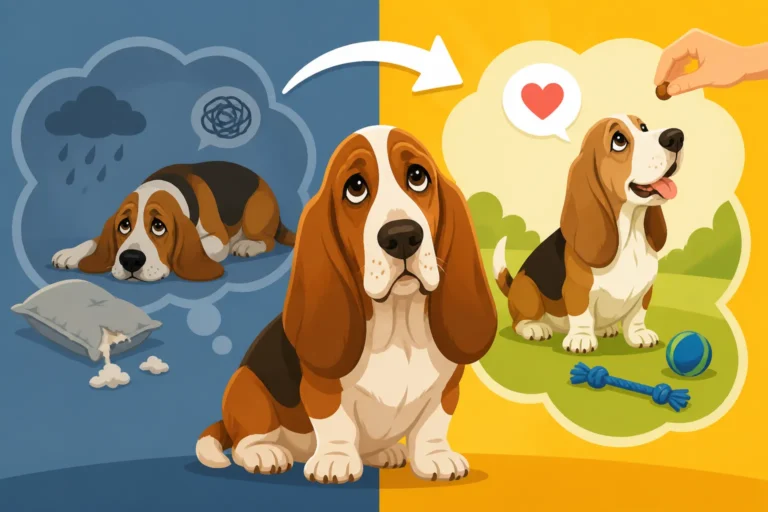
Whether a Basset Hound Sleeps All Day
It's a common scene: a Basset Hound, splayed out across the floor, perhaps letting out a gentle snore, looking like the picture of canine contentment. This image often leads people to wonder if Basset Hounds are truly built to sleep all day, or if there's more to their relaxed demeanor. While these lovable hounds certainly cherish their rest, the idea that they do nothing but sleep is a bit of a myth, and understanding their true activity and sleep needs is crucial for their well-being. This guide will help you unpack the reality of a Basset Hound's sleep patterns and how to ensure they're getting the right balance of rest and engagement.
The Basset Hound's Energy – More Than Meets the Eye
The widespread perception of a Basset Hound as a perpetually sleepy, low-energy dog can be quite misleading. While they are undoubtedly champions of napping and possess a serene, calm presence in the home, this breed carries a rich working heritage that dictates a nuanced approach to their energy levels. They aren't inherently lazy, but rather incredibly efficient with their energy, reserving it for tasks that truly ignite their passion – typically, anything involving their extraordinary nose.
The Myth of the Perpetual Sleeper vs. Reality
Let's face it, many of us have admired a Basset Hound luxuriating in a sunbeam, seemingly melting into a puddle of doggy bliss, and assumed that's their default state. They are undeniably expert nappers, capable of finding comfort in the most unlikely spots and drifting off into deep slumber with ease. This impressive ability to relax is often misconstrued as an indication of extreme laziness or constant sleep, sometimes leading prospective owners to underestimate the genuine need for activity and mental stimulation that lies beneath their placid exterior. They truly are masters of conserving their energy.
However, beneath that tranquil, often sleepy facade beats the heart of a dedicated scent hound. Bassets were meticulously bred for their unwavering ability to track game over extensive distances, meaning their minds and bodies are inherently wired for concentrated, enduring effort when a compelling scent captures their attention. Your Basset might appear utterly comatose on the living room rug, but let a tantalizing aroma waft in from the kitchen or a fresh trail blow through the garden, and you’ll witness an instantaneous transformation into an alert, driven, and surprisingly energetic hunter. This isn't a dog that sleeps nineteen hours a day; it's a dog that intelligently conserves its energy for what it deems truly important – typically, following a fascinating smell.
Unpacking Their Natural Inclinations and Activity Needs
A Basset Hound's true activity level isn't about ceaseless running or agile jumping; it's profoundly rooted in their drive for focused, scent-based exploration. Their most powerful asset and primary motivator is their incredible sense of smell. Provide a Basset Hound with a rich scent trail, and they can diligently work for hours, meticulously deciphering every subtle nuance, often appearing entirely oblivious to the human world around them. This is precisely where their authentic energy comes to the forefront, demanding both physical stamina and immense mental concentration. Neglecting this fundamental aspect of their breed can result in a Basset that appears "lazy" but is, in fact, merely bored, restless, or even prone to destructive behaviors indoors, simply because their innate, deeply ingrained needs for olfactory engagement are not being adequately met.
To better understand them, consider this: a Basset Hound isn't built for a fleeting, high-speed sprint, but they are absolutely perfectly designed for a prolonged, methodical sniffing expedition. A lengthy, unhurried walk where they are genuinely permitted to explore a myriad of scents, perhaps through a local park or along a quiet, dog-friendly trail, is infinitely more stimulating and genuinely tiring for them than a quick, obligatory trot around a manicured, scent-sparse backyard. This specific type of activity, which actively engages their powerful nose and ancestral instincts, is utterly critical for their overall well-being. Without such fulfilling outlets, they might indeed withdraw into periods of excessive napping, not because they are inherently lazy, but because they lack stimulating physical and mental engagement. How Good a Basset Hound's Nose Actually Is cannot be overstated, and it plays a huge role in their daily activity needs.
Understanding Basset Hound Sleep Patterns and Quality Rest
Every living creature, dogs included, requires a substantial amount of sleep to maintain health and vitality. Basset Hounds are certainly no exception to this rule. However, what might strike us as "sleeping all day" is often a complex blend of deep, restorative sleep, lighter napping phases, and simply being in a relaxed, low-energy state. For Basset owners, a critical skill is learning to discern between a healthy, normal amount of canine rest and genuine lethargy that could potentially signal an underlying health issue. A clear understanding of their typical sleep cycles is invaluable for recognizing when something might genuinely be amiss.
How Much Sleep is Normal for a Basset Hound?
Generally speaking, most adult dogs typically sleep anywhere from 12 to 14 hours over a 24-hour cycle. Basset Hounds, with their unique physiology and disposition, tend to lean towards the upper end of this range, frequently requiring closer to 14-16 hours of sleep each day. It’s important to clarify that this isn't a single, uninterrupted stretch of sleep; rather, it’s a mosaic of solid overnight sleep complemented by several shorter naps interspersed throughout their waking hours. Puppies and senior Basset Hounds, predictably, will demand even more sleep. A growing Basset puppy, absorbing vast amounts of new information and undergoing rapid physical development, might easily log 18-20 hours of sleep per day, waking only for brief, energetic bursts of play, feeding times, and necessary potty breaks. Similarly, an older Basset, especially one contending with The Old Basset Hound That Cannot Get Off the Floor or other age-related discomforts like joint pain, will find immense comfort and necessity in longer, more frequent periods of rest.
The focus should always be on both the quality and the timing of their sleep. A Basset Hound will typically experience deep, restorative sleep during the nighttime hours, much like humans. However, during the day, their naps can fluctuate from light snoozes, where they are still vaguely aware of their surroundings, to profound, REM-filled dreams, often accompanied by adorable little barks, whimpers, and twitching paws! Consistently observing your Basset's sleep patterns can provide significant insights into their overall health and emotional well-being. A Basset Hound that is properly exercised and adequately mentally stimulated will settle into these naps with a palpable sense of contentment, a stark contrast to a dog that simply lies around out of sheer boredom or a lack of alternative engagement.
The Difference Between True Sleep and "Zoning Out"
There are many instances when what an owner perceives as a Basset Hound "sleeping all day" is, in reality, them simply chilling out or engaging in what we might call "zoning out." In these moments, they might be lying perfectly still, perhaps with eyes half-closed or even fully open but with a distant gaze, yet they remain subtly aware of their immediate environment. This state isn't characterized by deep, unconscious sleep, but rather by a profound state of relaxed awareness. Bassets are particularly adept at being present and absorbing their surroundings without needing to be actively engaged, often content to simply exist within the calm rhythm of a quiet household. They can exhibit remarkable stillness and patience, especially if they sense the potential for a dropped food crumb or anticipate a forthcoming gentle pat.
You can almost think of it as their unique canine interpretation of mindful meditation – or, perhaps more accurately, an extreme form of patient anticipation. While their bodies might be resting, their phenomenal nose could still be subtly working, processing distant scents from outside, or meticulously dissecting the various aromas emanating from the kitchen. This isn't true, deep sleep, but it undeniably provides a significant period of rest and recuperation for both their physical body and their ever-active mind. This relaxed state is often particularly pronounced after a satisfying sniffing walk or a dedicated session of Giving a Basset Hound's Nose Something to Do with interactive puzzle toys. Having thoroughly engaged their primary sense, they then require a period of calm processing and recovery.
Cultivating a Balanced Lifestyle for Your Basset Hound
The ultimate secret to raising a happy, thriving Basset Hound isn't to discourage them from sleeping, but rather to ensure that their periods of deep rest are genuinely earned after they've had sufficient and appropriate physical and mental activity. A truly content Basset is one whose distinctive breed-specific needs have been consistently met, allowing them to relax deeply and genuinely without experiencing the frustration of under-stimulation or pervasive boredom. Establishing and maintaining a well-structured, balanced daily routine is therefore absolutely paramount for these unique and endearing hounds.
Activities That Engage a Basset Hound's Body and Mind
Given their deeply ingrained heritage, activities that specifically harness and utilize a Basset Hound's extraordinary sense of smell are not just beneficial, they are absolutely invaluable. Consistent scent work, engaging tracking games, or even just regular, unhurried, leisurely walks where they are explicitly permitted to follow and investigate interesting odors at their own deliberate pace are immeasurably more beneficial than attempts at forced jogging or high-impact running, for which their distinctive physique is simply not designed. It’s a good idea to invest in a comfortable, well-fitting harness, perhaps one you can find easily on Amazon, to ensure their delicate necks are protected during these immersive sniffing expeditions. The question of Whether a Basset Hound Should Jog With You typically yields a pretty definitive "no" for most Bassets and their structural well-being!
Furthermore, incorporating puzzle toys, snuffle mats, and engaging games where you hide treats around the house can provide exceptional mental stimulation. These activities effectively tap into their innate problem-solving abilities and their fundamental desire to hunt and forage for food or intriguing scents. Even short, consistent training sessions, perhaps just 5-10 minutes a couple of times a day, can play a significant role in keeping their intelligent minds sharp and engaged. While Basset Hounds sometimes unfairly carry a reputation for being "stubborn," the reality is that What Actually Motivates a Basset Hound is often high-value food, making these training interactions highly rewarding and productive. And, of course, after a day of purposeful sniffing and exploration, a comfortable, supportive orthopedic dog bed is crucial for their long-term joint health.
Balancing Rest with Adequate Activity
Achieving the perfect equilibrium for your Basset Hound is truly an art form. It's an ongoing, delicate dance between fully respecting their profound need for ample rest and diligently ensuring they don't transform into a furry, sedentary fixture due to insufficient engagement. An ideal daily regimen might commence with a leisurely, sniff-filled walk in the morning, followed by a mid-day session involving a stimulating puzzle toy or a brief training exercise. This could be capped off with another exploratory walk or supervised backyard sniff-around in the afternoon, leading into a calm, quiet evening spent relaxing harmoniously with the family. This type of thoughtful, structured approach actively works to prevent boredom-induced destructive behaviors while simultaneously satisfying their deeply ingrained natural drives.
It's also profoundly important to always bear in mind that a Basset Hound's unique body, while robust in its own way, is unequivocally not engineered for constant, high-impact physical exertion. Their characteristic long backs and relatively short, sturdy legs predispose them to certain orthopedic challenges, such as The Back Trouble a Basset Hound Is Built Into. Therefore, while regular, appropriate activity is absolutely essential, careful moderation and selecting the right types of exercise are paramount. Instead of prolonged, intense games of fetch, consider opting for a slower-paced, richly enriching walk in a novel environment, allowing them the luxury of thoroughly investigating every single captivating scent. After such an expedition, they will settle down for a long, well-deserved nap with genuine contentment – they've truly earned it!
When "Sleeping All Day" Becomes a Concern
While Basset Hounds are undeniably fond of their creature comforts and ample sleep, there exists a crucial distinction between a dog that is naturally relaxed and one whose excessive lethargy might genuinely indicate an underlying health issue. As devoted and responsible owners, it is absolutely vital to be attuned to the subtle signs that suggest your Basset's increased inclination for sleep isn't merely characteristic hound behavior, but rather a potential symptom that warrants immediate attention from a veterinary professional.
Identifying Red Flags in Your Basset Hound's Sleep Habits
If your Basset Hound, who previously maintained a respectable level of activity (at least for a Basset!), suddenly begins to sleep significantly more than usual, appears noticeably reluctant to move, or exhibits a general lack of interest in activities they once thoroughly enjoyed, it is a clear signal that something might be amiss. Any abrupt or persistent changes in their established sleep patterns, particularly when these are observed alongside other concerning symptoms such as a diminished appetite, noticeable limping, vocalizations indicative of pain, or obvious difficulty rising from a resting position, are potential red flags that should never be ignored. For example, a sudden increase in napping coupled with a pronounced reluctance to get up could be a sign of discomfort stemming from conditions like Why One Basset Hound in Seven Has Bad Elbows or more serious spinal issues.
It's crucial to always trust your intuition as an owner; you intimately understand your dog's normal behavior better than anyone else. A Basset that typically greets you with enthusiastic, rumbling bays and vigorous tail wags, but now merely lifts its head languidly before settling back down, is communicating a clear change in its state. This isn't just about them being a "lazy Basset"; it represents a significant behavioral shift that absolutely necessitates a veterinary assessment. Never dismiss persistent lethargy as simply a quirk of the breed – it could be indicative of conditions such as Whether a Basset Hound Gets Hypothyroidism, which is known to cause pronounced sluggishness and unexplained weight gain.
Creating an Engaging and Supportive Environment
To proactively ensure that your Basset Hound isn't resorting to excessive sleep merely out of boredom or physical discomfort, you must actively cultivate an environment that both encourages appropriate activity and thoughtfully supports their unique physical structure. This involves consistently providing ample opportunities for stimulating sniffing adventures, engaging playtime, and challenging mental exercises. Interactive toys that expertly dispense treats, readily available from retailers like Amazon, can keep their minds occupied and encourage problem-solving. Consider enrolling in online puppy or basic obedience classes, perhaps through a platform like BAXTER & Bella, which offers structured learning experiences that can effectively combat boredom and instill positive habits from an early age.
Beyond mental stimulation, it is equally crucial to ensure their living space is as gentle and supportive as possible for their delicate joints. Thoughtfully chosen orthopedic beds, strategically placed The Ramps, Beds and Gates a Basset Hound Needs to prevent jumping, and non-slip rugs laid over slick flooring surfaces can collectively make an enormous difference, particularly for older or arthritic Bassets. Encouraging gentle stretching exercises or incorporating shorter, more frequent walks throughout the day can also significantly aid in maintaining their mobility without risking overexertion. The overarching goal is to make activity both inviting and physically comfortable, rather than a burdensome chore. A truly well-adjusted Basset Hound will demonstrate a healthy, happy balance between periods of enthusiastic engagement and blissful, genuinely well-deserved slumber. They absolutely adore their long naps, but they also thrive on moments of active exploration and meaningful connection with their human companions.
| Activity Type | Description | Mental Stimulation | Physical Exertion | Ideal Frequency |
|---|---|---|---|---|
| Sniffing Walks | Leashed walks in varied environments, allowing ample time for sniffing and exploring scents. | High | Medium | 1-2 times daily, 30-60 minutes each |
| Puzzle Toys | Toys that dispense treats when manipulated, engaging their problem-solving skills. | High | Low | Daily, 15-30 minutes |
| Scent Games | Hiding treats or toys for them to find, either indoors or in a fenced yard. | High | Low-Medium | Several times a week, 15-20 minutes |
| Obedience Training | Short, positive reinforcement sessions for basic commands or new tricks. | Medium-High | Low | Daily, 5-10 minutes, multiple times if desired |
| Gentle Play | Short sessions of rolling a ball, tug, or interacting with other calm dogs. | Medium | Low-Medium | Daily, 15-30 minutes |
| Relaxation | Uninterrupted quiet time for napping and resting in a comfortable, supportive bed. | Low | Low | Throughout the day, as needed |
Disclaimer
This article is for general informational purposes only and does not constitute professional advice. Laws, prices and regulations vary by location and change over time. Consult a qualified professional for guidance on your specific situation.