Whether a Basset Hound’s Front Legs Are Meant to Bow
It's completely normal to gaze at your Basset Hound's adorable, short, and undeniably bowed front legs and wonder, "Is that supposed to look like that?" Many new and even experienced Basset owners fret over this unique conformation, sometimes mistaking a perfectly healthy breed characteristic for a serious orthopedic issue. This comprehensive guide will delve deep into why Basset Hounds have their distinctive bowed front legs, what's considered normal, and when that bow might signal something more concerning that requires veterinary attention.
Understanding the Basset Hound's Unique Skeletal Structure
The Basset Hound's appearance, from its long, droopy ears to its low-slung body and those characteristic bowed legs, is not a genetic accident; it's the result of centuries of selective breeding for a specific purpose. Their entire build is designed to be a ground-hugging scent machine.
The Achondroplastic Trait
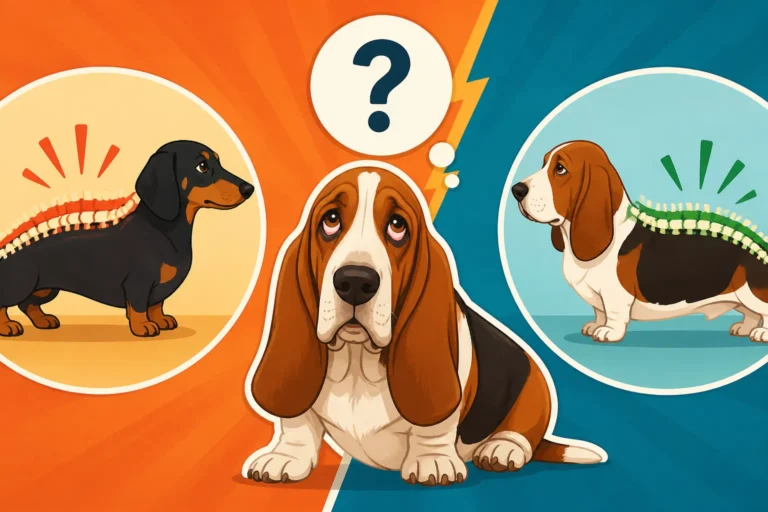
At the heart of the Basset Hound's unique physique is a genetic condition known as achondroplasia, sometimes referred to as dwarfism. Now, don't let the word "dwarfism" alarm you; in Basset Hounds and other breeds like Dachshunds and Corgis, it's a desired and defining characteristic, not a defect in the same way it might be in other species. This trait affects the growth plates of the long bones, particularly in the legs, causing them to stop growing prematurely compared to the rest of the skeleton.
What this means is that while a Basset Hound has a body size that's quite substantial – often as heavy as a Labrador, despite its short stature – its legs remain disproportionately short. The bones themselves are dense and heavy, but their limited growth causes them to curve or bow, especially in the front legs. This bowing is primarily due to the ulna and radius (the two bones in the lower foreleg) growing at slightly different rates, causing one to bow as the other continues to grow, albeit slowly. It’s an integral part of what gives a Basset Hound its distinctive silhouette.
Purpose Behind the Bow
You might think bowed legs would be a hindrance, but for the Basset Hound, they were an ingenious evolutionary advantage specifically engineered for hunting. These dogs were bred in France centuries ago to track game like rabbits and deer. Unlike larger, faster hounds, Bassets were developed to be slow and methodical, allowing hunters to follow them on foot.
The bowed front legs, coupled with their long, heavy bodies, keep their noses incredibly close to the ground, maximizing their ability to pick up and follow even the faintest scent trail. Their massive paws, often splayed slightly, provide stability and traction over uneven terrain. Imagine a low-slung tank, designed to trundle relentlessly through underbrush, its nose glued to the ground, unaffected by obstacles. The bowed legs contribute to this robust, unwavering posture, allowing them to navigate dense cover for hours without tiring, truly living up to the historical lineage of the Abbey Hounds a Basset Hound Descends From. They're built for endurance and scent work, not speed or agility, and their legs are perfectly adapted to that role.
What "Normal" Bowing Looks Like
It's crucial for any Basset Hound owner to understand the visual cues of a healthy, characteristic bow, as distinct from something that might be problematic. Their conformation is unique, and what might look "wrong" in another breed is often perfectly normal for a Basset.
Visual Cues of a Healthy Bow
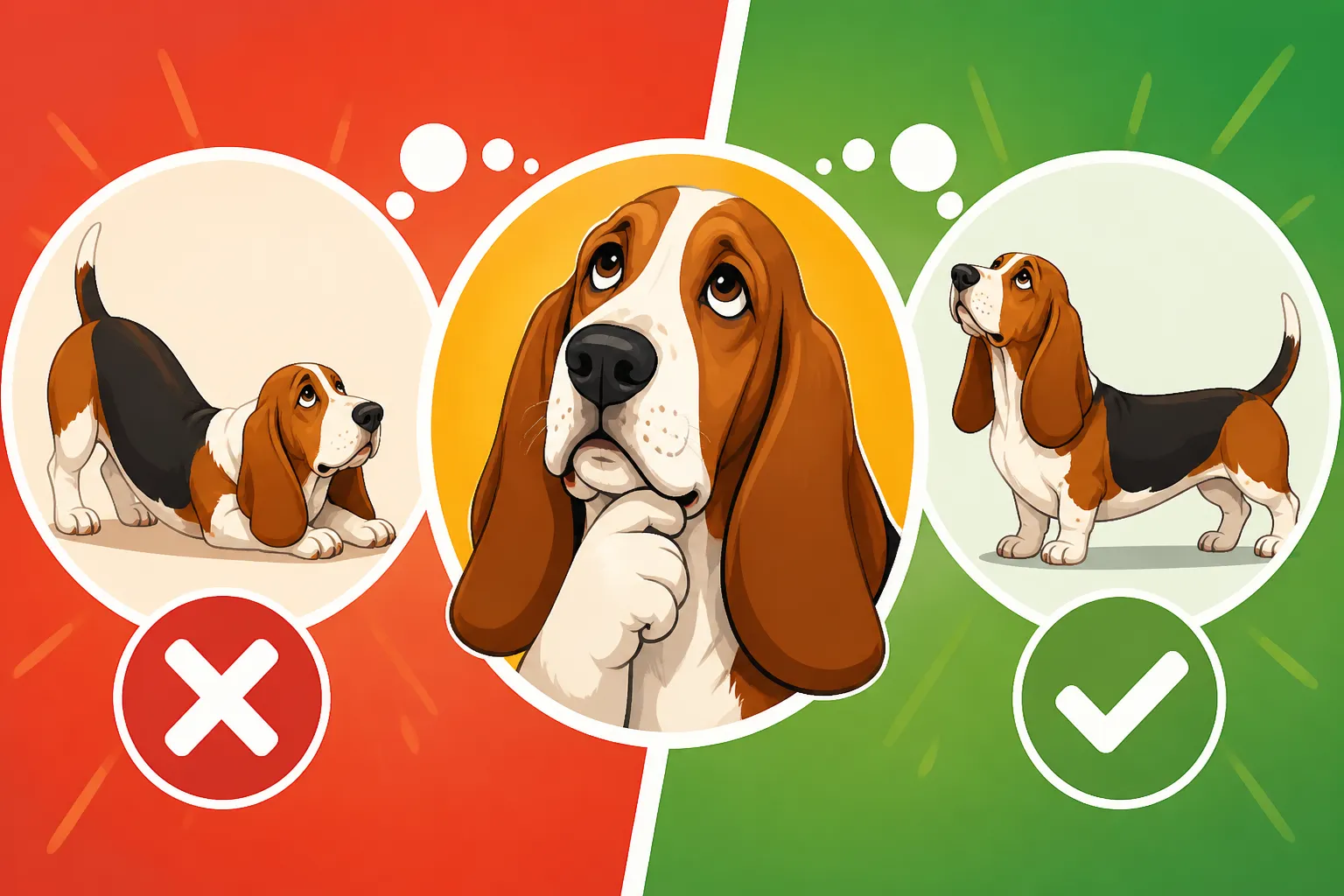
A healthy Basset Hound's front legs will typically appear sturdy and substantial, with significant bone density. When viewed from the front, you'll notice a distinct outward turn of the forelegs and feet, often described as having a "crooked front." The American Kennel Club (AKC) breed standard itself acknowledges this, describing the forelegs as "short, powerful, and heavily boned, with the elbows turned neither in nor out." It goes on to specify that the "forelegs are bowed, but not so much as to prevent free action or to cause the elbows to be turned out." This means the bow should be uniform, presenting a strong, stable foundation. The paws might appear large and slightly splayed, offering excellent grip on varied terrains, again, a functional trait for their historical role as scent hounds.
When you observe your Basset walking, the movement should be deliberate and powerful, without any obvious signs of pain or stiffness. Their gait is a rolling, unhurried one, reflective of their low center of gravity and strong bone structure. There shouldn't be any excessive limping, favoring of a leg, or difficulty putting weight on a particular limb. If you’re unsure, observing The Crooked Front a Basset Hound Is Built On can provide more visual details.
When to Expect the Bow to Develop
The characteristic bowing in a Basset Hound's front legs isn't something they're necessarily born with in its fully pronounced form. Instead, it develops and becomes more evident as they grow from a clumsy puppy into a mature adult. In very young puppies, their legs might appear relatively straight, or only subtly bowed. This is because the growth plates are still active and the bones are still forming.
As they reach adolescence, typically between 6 months and a year of age, and as their long bones continue their unique, asynchronous growth, the bowing will become more defined and pronounced. By the time they reach their full adult size, usually around 18-24 months, their leg structure will be fully established. It's a gradual process, and observing this development is part of the fascinating journey of owning a Basset Hound. If you notice any sudden, dramatic changes, or the bowing appears asymmetrical or painful at any stage, that would be a signal to consult your veterinarian.
Potential Problems and Red Flags
While a certain degree of bowing is natural and characteristic for a Basset Hound, it's vital to recognize when that bowing crosses the line from breed-specific quirk to a genuine health concern. Ignoring these subtle signs can lead to discomfort and long-term issues for your furry friend.
Distinguishing Normal Bow from Deformity
The key to distinguishing a normal, healthy bow from a deformity lies in observation and symmetry. A normal bow, as discussed, is generally uniform on both front legs and does not impede comfortable movement. Your Basset should be able to walk, stand, and lie down without apparent pain or excessive stiffness. However, signs of concern include:
- Asymmetry: One leg appears significantly more bowed or angled than the other.
- Pain or Lameness: Your Basset shows reluctance to put weight on a leg, limps, whines when touched, or struggles to get up or down. This is a primary indicator that something is amiss.
- Swelling or Heat: Any swelling around the joints or warmth to the touch can point to inflammation or injury.
- Sudden Changes: If the bowing appears to worsen rapidly, or if your adult Basset suddenly develops a pronounced new bend, it warrants investigation.
- Abnormal Gait: Beyond their typical lumbering walk, look for signs of a stiff, awkward, or shuffling gait that seems forced or painful.
If you observe any of these red flags, don't hesitate to contact your veterinarian. Early detection and intervention can make a significant difference in your Basset's comfort and long-term mobility.
Common Orthopedic Issues Linked to Bowed Legs
While the bowed legs themselves are normal, the unique skeletal structure of Basset Hounds can predispose them to certain orthopedic conditions, or make these conditions more challenging. It's not that the bow causes the problem, but rather that the underlying genetics or the stress on these specific joints can lead to issues.
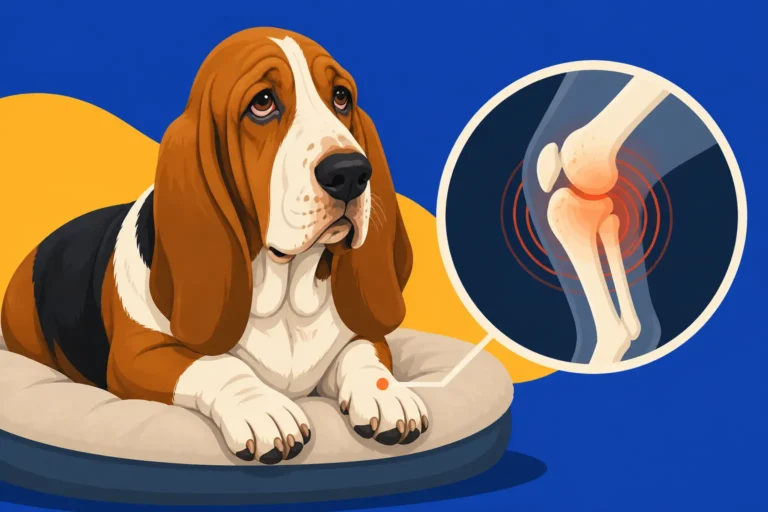
One of the most common concerns is elbow dysplasia. This is a complex condition involving abnormal development of the elbow joint, often leading to arthritis and pain. Given the stress on a Basset's forelegs, several manifestations of elbow dysplasia are common, such as fragmented coronoid process (FCP) and ununited anconeal process (UAP). These are conditions where small pieces of bone or cartilage break off within the elbow joint, causing pain, inflammation, and lameness. It's a sad reality that Why One Basset Hound in Seven Has Bad Elbows is a topic often discussed amongst owners, highlighting how prevalent these issues can be. If your Basset Hound is showing signs of lameness or stiffness in its front legs, especially after exercise, elbow dysplasia should be high on your vet's diagnostic list.
Another related issue can be osteochondrosis dissecans (OCD), where cartilage fails to develop properly or separates from the bone, particularly in the shoulder or elbow. Again, while not directly caused by the bow, the genetic factors that produce the unique leg structure can also influence joint health. Furthermore, their long, heavy bodies and short legs mean extra strain on their spines, making them susceptible to The Back Trouble a Basset Hound Is Built Into, which, while not a front leg issue, is another significant orthopedic concern related to their overall structure.
The Impact of Weight on Leg Health
This point cannot be stressed enough: extra weight is arguably the biggest enemy of a Basset Hound's musculoskeletal system. Their heavy bones and naturally stocky build already place considerable stress on their joints, especially those uniquely structured elbows and short, bowed legs. When you add excess weight into the equation, this stress is multiplied exponentially.
Even a few extra pounds can lead to significant problems. Imagine carrying a heavy backpack all day, every day – that's what being overweight feels like for your Basset's joints. It accelerates the degeneration of cartilage, exacerbates existing conditions like elbow dysplasia, and significantly increases the risk of developing arthritis at a younger age. An overweight Basset is also more likely to experience discomfort, reduced mobility, and a poorer quality of life overall. This is why discussions around What Extra Weight Does to a Basset Hound are so critical for Basset owners. It's not just about aesthetics; it's about preserving their joint health and ensuring they can enjoy their lives without chronic pain.
Supporting Your Basset Hound's Leg Health
Proactive care and a thoughtful approach to your Basset Hound's lifestyle can make a world of difference in preventing and managing leg health issues. It's about working with their unique anatomy, not against it.
Proper Nutrition and Weight Management
Given the incredible stress that extra weight places on a Basset Hound's joints, proper nutrition and meticulous weight management are paramount. It's not just about avoiding obesity; it's about maintaining a lean, healthy body condition throughout their lives. Basset Hounds are notorious for their love of food and their ability to convince you they haven't eaten in weeks. This can make Keeping a Basset Hound at Its Correct Weight a real challenge, but it's one of the most impactful things you can do for their leg and overall health.
Work with your veterinarian to determine the ideal weight range for your individual Basset and establish a feeding plan that provides all necessary nutrients without excess calories. High-quality dog food, portion control, and limiting treats are key. Look for foods that support joint health, often containing glucosamine and chondroitin, or consider adding these supplements after consulting your vet. Remember, every pound counts when it comes to easing the burden on those unique front legs.
Appropriate Exercise and Activity Levels
Basset Hounds aren't built for marathons or agility courses, but they still need regular, moderate exercise to maintain muscle tone and joint flexibility. The trick is to choose activities that are low-impact and won't put undue strain on their bowed legs and long backs. Think gentle, consistent walks rather than intense running or jumping.
Two to three shorter walks a day, perhaps 20-30 minutes each, are often more beneficial than one long, strenuous outing. Focus on sniffing and exploring, which is what Bassets love most. Leash walks are crucial, as their powerful noses mean The Recall a Basset Hound Will Never Reliably Give You when an enticing scent is found. Avoid activities that involve repetitive jumping or hard landings, such as fetching a ball thrown vigorously, as these can easily injure their joints. Swimming can be an excellent, low-impact exercise if your Basset enjoys it, as it builds muscle without joint stress. However, be mindful that Whether a Basset Hound Swims is often a tricky question, as many tend to sink like stones. Understanding How Far a Basset Hound Should Walk is key to preventing overexertion and potential injury.
Environmental Modifications for Joint Protection
Making simple changes around your home can significantly protect your Basset Hound's joints from unnecessary wear and tear. Their short legs and long backs mean that jumping on and off furniture, or navigating stairs frequently, can cause cumulative damage over time.
Investing in ramps or pet steps is highly recommended, especially for accessing beds, couches, or cars. This eliminates the jarring impact of jumping down, which is particularly hard on their elbows and spine. Even if they can jump, it doesn't mean they should. This practice directly addresses the concern of Keeping a Basset Hound Off the Furniture It Should Not Jump From. Similarly, consider using baby gates to block access to stairs, or supervise them carefully when they need to ascend or descend. Non-slip rugs on hard floors can also provide better traction, preventing slips and falls that could lead to injury. An orthopedic dog bed with good support can also offer comfort and support for their joints during rest. Essentially, modifying your home to be Basset-friendly can prevent many future aches and pains. Many owners find Whether a Basset Hound Should Use Ramps at Home is a crucial consideration for their long-term health.
Veterinary Care and Early Intervention
Even with the best preventative care, Basset Hounds can still develop orthopedic issues. Regular veterinary check-ups and prompt attention to any signs of discomfort are essential for their well-being.
Regular Check-ups and Screening
Routine veterinary visits are the cornerstone of proactive health management for any breed, but especially for Basset Hounds with their predisposition to certain joint and back problems. Your vet can monitor their weight, assess their gait, and perform physical examinations to check for early signs of stiffness, pain, or reduced range of motion in their joints.
For breeds known for orthopedic issues, some vets might recommend periodic screenings, such as X-rays, as your Basset ages, even if they aren't showing overt signs of lameness. This can help detect conditions like elbow dysplasia or early arthritis before they become severe, allowing for earlier intervention. It's also important to discuss their overall health and any subtle changes you've noticed. For example, a Basset Hound owner might consider asking about Whether a Basset Hound Needs a Yearly Eye Pressure Check as part of a comprehensive health plan, showcasing vigilance beyond just their legs.
Diagnostic Tools and Treatment Options
If your Basset Hound does show signs of lameness or discomfort related to its legs, your veterinarian has a range of diagnostic tools at their disposal. Typically, this starts with a thorough physical examination, including palpation of the joints and assessment of their range of motion. If something suspicious is found, X-rays are usually the next step. These can reveal changes in bone structure, joint space narrowing, or signs of arthritis. In some cases, more advanced imaging like MRI or CT scans may be recommended for a detailed view of soft tissues or complex joint issues, especially for conditions like Intervertebral Disc Disease in a Basset Hound.
Treatment options will vary depending on the specific diagnosis and severity. For many joint issues and early arthritis, management often involves:
- Pain management: Anti-inflammatory medications (NSAIDs) prescribed by your vet can help reduce pain and inflammation.
- Joint supplements: Glucosamine, chondroitin, and Omega-3 fatty acids can support cartilage health.
- Physical therapy: Targeted exercises, hydrotherapy (under supervision), and therapeutic massage can improve strength, flexibility, and range of motion.
- Weight management: As mentioned, maintaining an ideal weight is crucial for reducing stress on affected joints.
- Surgical intervention: For severe cases of elbow dysplasia, torn ligaments, or other structural problems, surgery might be necessary. This can be costly, making pet insurance a wise consideration. Providers like Healthy Paws are often a lifeline for owners facing unexpected surgical expenses.
This proactive approach, supported by regular vet visits and, if needed, advanced diagnostics, is key to giving your Basset the best chance at a comfortable life.
When to Seek Specialist Opinions
While your primary veterinarian is an invaluable resource, there are times when seeking the opinion of a veterinary orthopedic specialist is the most prudent course of action. These specialists have advanced training and experience in diagnosing and treating complex musculoskeletal conditions, often with access to specialized equipment and surgical techniques.
You should consider a referral to an orthopedic specialist if:
- The diagnosis is unclear: Your vet is struggling to pinpoint the exact cause of your Basset's lameness.
- Standard treatments aren't working: Your Basset isn't responding well to initial pain management, supplements, or physical therapy.
- Surgery is being considered: For complex surgeries, particularly those involving joints, a board-certified orthopedic surgeon is usually the best choice.
- The condition is rare or unusual: If your Basset has an uncommon orthopedic issue that requires specialized knowledge.
- You want a second opinion: It's always okay to seek a second expert opinion, especially for chronic or severe conditions.
A specialist can offer alternative diagnostic approaches, discuss advanced treatment options, and provide a more nuanced prognosis. This extra layer of expertise can be incredibly valuable when navigating the challenges of a Basset Hound's unique skeletal health. Given the potential costs, comprehensive pet insurance plans from companies like Healthy Paws can provide peace of mind if specialist care becomes necessary.
Breeding Considerations and Responsible Ownership
The distinctive bowed legs and other Basset Hound characteristics are deeply ingrained genetically. Responsible breeding plays a critical role in ensuring these traits are associated with health, not chronic problems.
Ethical Breeding Practices for Leg Health
For anyone considering bringing a Basset Hound into their family, understanding ethical breeding practices is paramount. A responsible breeder will prioritize the health and temperament of their dogs above all else, which includes screening for genetic predispositions to orthopedic conditions. This means actively working to produce Bassets whose bowed legs are structurally sound and not prone to crippling issues.
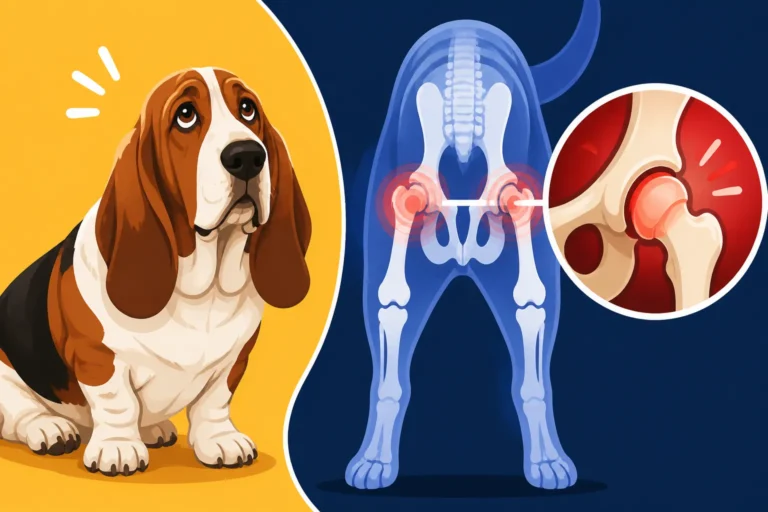
Ethical breeders will health test their breeding stock for conditions like elbow dysplasia, which can be influenced by genetics. This often involves X-rays to assess the elbows and hips, with results submitted to organizations like the Orthopedic Foundation for Animals (OFA) for evaluation. Clearances from these organizations provide objective evidence that the parent dogs have healthy joints. A reputable breeder will be transparent about these health clearances and be able to show you the documentation. They will also be knowledgeable about the health history of their dog's lineage, looking for patterns of issues like The Ear Infections That Never Really Leave a Basset Hound or glaucoma in their lines. If a breeder avoids discussing health testing or can't provide verifiable results, it's a major red flag. Always ask about The Health Tests a Basset Hound Breeder Should Run and be prepared to review documentation like Whether a Basset Hound Breeder Should Show Elbow Scores.
Understanding Genetic Predispositions
The achondroplastic dwarfism that gives the Basset Hound its bowed legs is a genetic trait. While this gene is desired, responsible breeding aims to ensure that the expression of this trait does not lead to debilitating secondary conditions. It's about finding the balance between maintaining breed type and ensuring functional soundness.
Breeders should select for dogs with correct conformation – meaning legs that are bowed in the characteristic manner but are strong, sturdy, and allow for free, comfortable movement. They are actively trying to avoid individuals with excessively malformed limbs that could lead to severe lameness or discomfort. This also involves careful consideration of other genetic factors that might contribute to joint laxity or poor cartilage development, which can exacerbate the impact of their unique leg structure. Understanding that your Basset Hound's genetics play a significant role in their long-term health emphasizes the importance of choosing a puppy from a breeder who has made health a top priority, rather than just focusing on appearance. This foresight can save a lot of heartache and vet bills in the long run, costs that, if they do arise, a robust pet insurance plan like those offered by Healthy Paws can help mitigate.
Comparative Table: Normal Bow vs. Problematic Leg Issues
To help clarify the distinction, here's a table summarizing the differences between a healthy Basset Hound leg bow and signs that might indicate a problem.
| Feature / Condition | Normal Basset Hound Leg Bow | Potentially Problematic Leg Issue |
|---|---|---|
| Appearance | Uniform, symmetrical outward turn of forelegs and feet. Sturdy, heavily boned. | Asymmetrical bowing, severe inward or outward turning, twisted appearance. |
| Gait/Movement | Deliberate, powerful, unhurried roll. No limping or favoring of a leg. | Limping, favoring a leg, stiffness, reluctance to move, altered gait. |
| Pain/Discomfort | None apparent. Easily stands, sits, and lies down. | Whining, yelping, reluctance to be touched, aggression when manipulated. |
| Swelling/Heat | None. | Swelling around joints (elbows, wrists), warmth to the touch. |
| Age of Onset | Gradually develops and becomes pronounced during adolescence (6-18 months). | Can appear at any age, but pathological issues often worsen over time. |
| Response to Activity | May tire after long walks, but generally recovers well. | Lameness worsens after exercise, difficulty getting up after rest. |
| Breed Predisposition | Characteristic of the breed (achondroplasia). | Exacerbation of elbow dysplasia, arthritis, ligament tears. |
| Vet Intervention | Routine check-ups to monitor overall health. | Immediate vet visit, diagnostics (X-rays, MRI), treatment plan. |
Disclaimer
The information provided in this article is for educational and informational purposes only, and does not constitute veterinary medical advice. Always consult with a qualified veterinarian for any health concerns or before making any decisions related to your pet's health and treatment.