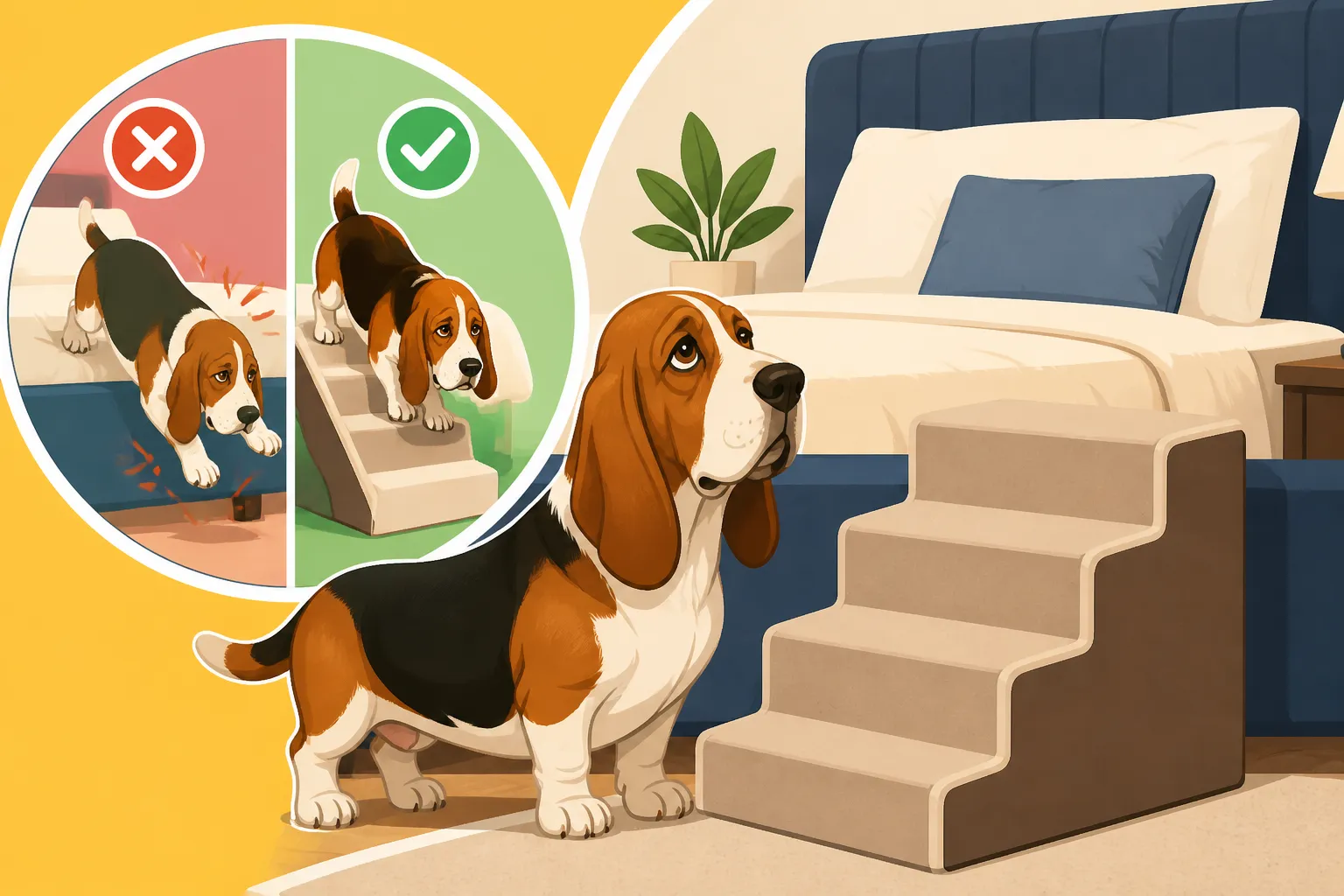
Whether Steps to the Bed Suit a Basset Hound
It’s a common scenario for Basset Hound parents: you’re curled up in bed, cozy and ready for sleep, and your floppy-eared companion is staring longingly from the floor, wanting to join the snugglefest. While it’s tempting to let them hop up, the unique build of a Basset Hound makes jumping a real concern for their long-term health. This guide will dive deep into whether pet steps are a safe and suitable solution for your beloved Basset, and what other options might keep them comfortable and pain-free.
The Basset Hound's Unique Physiology and Jump Risks
Our Bassets are built like no other dog breed, and it’s this very charm that makes them vulnerable to certain injuries, particularly when it comes to activities like jumping. That low-slung, sturdy body, those adorably short legs, and that surprisingly heavy bone structure are a recipe for trouble if not properly protected from impact.
Why Jumping is a Problem for Basset Hounds
Imagine carrying a heavy log with short legs – that's somewhat akin to what your Basset Hound's spine experiences when they jump. Their long, heavy backs are designed for endurance on a scent trail, not for sudden vertical movements or impacts from landing. Each jump, whether it's off the sofa, out of the car, or onto your bed, puts tremendous strain on their intervertebral discs. These discs are the cushions between the vertebrae in their spine, and they are incredibly susceptible to herniation or "slipping" in breeds like Basset Hounds. This condition, known as Intervertebral Disc Disease (IVDD), can range from mild pain to full paralysis, and it's a constant worry for Basset owners. Beyond the spine, those short, stocky legs mean their joints – especially elbows and hips – also absorb a significant shock with every landing, accelerating wear and tear that can lead to arthritis down the line. It's not just about one big jump, it's about the cumulative stress over years.
The Hidden Dangers of Repeated Impact
Many owners understandably think, "Oh, it's just a small jump, they do it all the time!" But that's precisely where the hidden danger lies. Even seemingly insignificant jumps, repeated multiple times a day, year after year, take a toll. It’s like repeatedly tapping a fragile piece of glass – eventually, it will crack. For a Basset Hound, this means microscopic damage to their spinal discs and cartilage in their joints. This insidious wear and tear often goes unnoticed until a major problem arises, like a sudden inability to move their back legs or acute, debilitating pain. One wrong landing, one awkward twist mid-air, or even just the cumulative stress of daily small jumps, can trigger an acute episode of IVDD. It’s not just about avoiding catastrophic injury; it’s about preventing the slow, gradual deterioration that can severely impact their quality of life as they age. Many older Basset Hounds struggle with mobility issues, and minimizing jumping throughout their lives can genuinely contribute to their comfort in their senior years. This is why understanding The Back Trouble a Basset Hound Is Built Into is so vital for every owner. When those discs give way, the result can be truly heartbreaking, and managing Intervertebral Disc Disease in a Basset Hound becomes a primary concern.
Are Pet Steps a Viable Solution for Basset Hounds?
Given the inherent risks associated with jumping, pet steps or ramps often come up as a fantastic alternative for allowing your Basset Hound to safely access elevated surfaces like your bed or sofa. They offer a controlled, low-impact way for your dog to satisfy their desire to be close to you without putting their precious back and joints at risk.
The Benefits of Using Pet Steps
The primary benefit of pet steps for a Basset Hound is simple: they reduce impact. Instead of launching themselves into the air and landing with a thud, your Basset can ascend and descend in a controlled manner, distributing their weight and minimizing stress on their spine and joints. This preventative measure can significantly lower the risk of acute injuries like a slipped disc and delay the onset or severity of chronic conditions such as arthritis in their elbows and hips. Beyond the physical protection, steps also offer a wonderful sense of independence for your dog. They no longer have to wait for you to lift them, allowing them to join you for cuddles or retreat for a nap on their own terms. For owners, this translates into invaluable peace of mind, knowing you’re actively protecting your dog’s long-term health while still allowing them to be an integral part of your family's daily life. It’s particularly helpful as your Basset ages, ensuring they can still comfortably get to their favorite spots without you constantly having to worry about Helping an Old Basset Hound Onto the Couch.
What Makes Good Basset Hound Steps?
Not all pet steps are created equal, especially when you're looking for the right fit for a Basset Hound. Their unique proportions demand a bit of careful consideration.
First and foremost, consider the height and depth of the steps. Basset Hounds are long and low, so you need steps that are not too high, allowing for a gentle incline, and deep enough for their long bodies to comfortably place all four paws on a step before moving to the next. Shallow, steep steps will still force them to jump or strain. Look for steps where the rise (height) of each step is relatively low, perhaps no more than 6-8 inches, and the tread (depth) is generous.
Secondly, stability is non-negotiable. A Basset Hound is a weighty dog, and you don't want steps that wobble or slide on your floor. Look for steps with a wide base and non-slip feet. The surface of the steps themselves should also be non-slip – carpeted treads or a textured material are ideal to prevent accidental slips and falls, especially when your Basset is moving quickly or excitedly.
Finally, material matters. You'll find steps made from foam, plastic, and wood. Foam steps are lightweight and soft, often a good choice for smaller or very frail dogs, but for a hefty Basset, ensure the foam is high-density and firm enough to support their weight without collapsing. Plastic steps can be sturdy but sometimes lack the necessary grip; look for textured surfaces. Wood steps tend to be the most robust and stable, often offering carpeted treads for grip. When shopping, whether you're browsing options on Chewy or looking for variety on Amazon, always check the weight capacity and customer reviews specific to larger, heavier breeds to ensure the steps will hold up to your Basset's bulk.
Teaching Your Basset Hound to Use Steps
Getting your Basset Hound to adopt a new routine, especially one involving steps, requires a good deal of patience and positive reinforcement. Remember, Bassets are famously independent thinkers, so "stubborn" might be a word that comes to mind, but really, they just need to be convinced it's their idea and worth their while.
Start by placing the steps next to the bed or sofa, but don't force them immediately. Let your Basset explore them at their own pace. Once they're comfortable with the steps being there, you can begin the training. Use high-value treats – something truly irresistible to your Basset – and lure them up the steps one by one. Place a treat on the first step, then the second, and so on. As they successfully take each step, offer enthusiastic praise and another treat. Keep these initial sessions short and positive, ending on a high note.
Consistency is key. Every time you want them on the bed, use the steps. Avoid picking them up and placing them on the bed, as this can confuse them and make them think the steps are optional. If they hesitate, go back to luring with treats. Some Bassets might need you to lead them up and down several times a day for a week or two before it becomes second nature. Make it a fun game, not a chore. Just like with Teaching a Basset Hound to Have Its Ears Handled, positive association makes all the difference. Never scold them for not using the steps; simply redirect and encourage. Over time, with consistent, gentle guidance, most Basset Hounds will happily use their steps to get to their favorite resting spots.
Alternatives to Bed Steps for Your Basset Hound
While pet steps are a fantastic solution for many Basset Hounds, they aren't the only option, nor are they always suitable for every dog or living situation. Sometimes, an alternative approach is needed to keep your Basset safe and comfortable.
Ramps: A Smoother Transition
For some Basset Hounds, particularly those already showing signs of joint stiffness, advanced arthritis, or recovering from spinal surgery, a ramp can be an even better choice than steps. A ramp eliminates any 'step up' or 'step down' movement, providing a completely smooth, continuous incline that places zero impact on their joints or spine. This can be especially beneficial for an older Basset who finds even low steps challenging, or for a dog that needs to be extra careful with their back. Ramps are also excellent for larger Basset Hounds who might find steps a bit too cramped for their long bodies.
However, ramps do have their considerations. They typically take up more floor space than steps due to their necessary gentle incline. A ramp for a bed usually needs to be quite long to prevent it from being too steep for a Basset. When looking for a ramp, prioritize those with a wide, non-slip surface, similar to what you'd look for in steps. Portability might also be a factor if you plan to move it between rooms or take it in the car. Many pet supply retailers, including Chewy and Amazon, offer a good selection of quality pet ramps suitable for Bassets. It's worth considering Whether a Basset Hound Should Use a Ramp as a primary solution.
Orthopedic Beds and Floor Level Comfort
Sometimes, the simplest solution is the best one: bringing the comfort down to their level. If steps or ramps aren't practical for your space, or if your Basset Hound genuinely prefers sleeping on the floor, investing in a high-quality orthopedic dog bed can make a world of difference. These beds are specifically designed to provide superior support for joints and spines, often made with memory foam or dense, supportive batting that cradles your dog's body and relieves pressure points.
Placing a plush, supportive orthopedic bed right next to your own bed allows your Basset to still feel close to you without any of the jumping risks. It fulfills their desire for companionship while ensuring their physical well-being. Look for beds that are adequately sized for your Basset – they need room to stretch out – and have removable, washable covers for easy cleaning. Many brands focus on orthopedic support, and a quick search on Amazon or Chewy will reveal a plethora of options. Even if your Basset has an existing bed, upgrading to a truly supportive orthopedic model, as discussed in What a Bed That Suits a Basset Hound Costs, can be a fantastic preventative measure and a comfort multiplier.
Managing the Bedroom Environment
Beyond steps, ramps, or dedicated beds, sometimes managing the environment itself is the key to preventing unwanted jumping. If your Basset Hound simply cannot be trusted not to jump on and off furniture when you're not supervising, or if you prefer them not to be on the bed at all, then careful management of your home becomes essential.
This could involve using baby gates to block off access to the bedroom when you're not present, or keeping bedroom doors closed. While this might sound less appealing than having them by your side, it's a responsible choice to protect their health if other methods aren't working or are not feasible. Consistent training is also paramount. If you've decided the bed is off-limits, then it needs to be always off-limits. Using commands like "off" or "place" to direct them to their own bed, and rewarding them heavily for staying there, can be effective. This kind of consistent boundary setting is similar to controlling access to stairs, as explored in Whether a Basset Hound Should Be Blocked From Stairs, ensuring their safety through careful environmental control and clear rules.
Long-Term Health and Lifestyle Considerations
Protecting your Basset Hound’s back and joints isn't just about managing access to elevated surfaces; it's an ongoing, holistic commitment that encompasses their entire lifestyle. Steps and ramps are excellent tools, but they are part of a larger picture of proactive care.
Proactive Joint Care Beyond Steps
Steps and ramps are fantastic for mitigating impact, but true joint health for a Basset Hound involves much more. Diet and weight management are paramount. An overweight Basset Hound carries extra strain on every single joint and their spine, exacerbating existing conditions and accelerating the development of new ones. Keeping your Basset at their ideal weight, where you can easily feel their ribs without seeing them, is one of the most impactful things you can do for their longevity and comfort. For more on this, check out Keeping a Basset Hound at Its Correct Weight.
Beyond diet, many Basset owners consider joint supplements. Ingredients like glucosamine, chondroitin, and Omega-3 fatty acids (often from fish oil) are commonly recommended by veterinarians to support joint cartilage and reduce inflammation. While not a cure-all, they can be a valuable addition to a preventative regimen. Always consult your vet before starting any supplements to ensure they are appropriate for your specific dog. Finally, consistent, appropriate exercise is crucial. This doesn't mean vigorous running or jumping activities, but rather regular, moderate walks on varied, soft terrain to build and maintain muscle strength, which in turn supports their joints and spine. Gentle, controlled movement is far more beneficial than sporadic bursts of activity. This aligns with the advice in Whether a Basset Hound Needs Any Real Exercise, emphasizing quality over intensity.
Regular Vet Check-ups for Early Detection
Perhaps the most important aspect of long-term joint and spinal health for your Basset Hound is regular veterinary care. Our Bassets are often stoic, and they may hide discomfort until a problem is quite advanced. Routine check-ups, ideally once a year for adult dogs and more frequently for seniors, allow your vet to assess their mobility, gait, and overall physical condition. They can identify subtle signs of pain or stiffness that you might miss at home and recommend interventions before issues become severe.
If you ever notice changes in your Basset's movement – reluctance to jump (even with steps), stiffness after resting, limping, changes in appetite, or a shift in their usual happy-go-lucky demeanor – it's crucial to contact your vet immediately. Early detection of conditions like IVDD or arthritis can significantly improve the prognosis and allow for less invasive, more effective treatments. Your vet can provide tailored advice on diet, exercise, supplements, and potential medications to keep your Basset Hound as comfortable and active as possible throughout their lives. Understanding What Basset Hounds Are Most Often Treated For can help you be proactive about common health challenges. Ultimately, being vigilant and working closely with your veterinarian is your best defense against the mobility challenges that can affect this wonderful breed. If your older Basset is starting to show signs of struggling, resources like The Old Basset Hound That Cannot Get Off the Floor can offer further insights.
| Feature / Consideration | Pet Steps | Pet Ramps | Orthopedic Floor Bed |
|---|---|---|---|
| Primary Benefit | Reduces jumping impact, promotes independence | Eliminates jumping entirely, smooth transition | Provides joint support, no elevation risk |
| Space Requirement | Moderate (vertical stack) | High (long incline) | Moderate (horizontal footprint) |
| Impact on Joints | Low (reduced impact) | Zero (no impact) | None (on floor) |
| Suitability for IVDD | Good for prevention, mild cases | Excellent for prevention, active cases, recovery | Excellent for prevention, active cases, comfort |
| Stability Needs | High (non-slip base & treads) | High (non-slip surface & feet) | Minimal (stays put) |
| Aesthetics | Varies, can blend with furniture | Can be bulky, more functional look | Varies, can be stylish |
| Training Required? | Yes, for proper use | Yes, for proper use | Minimal, just acceptance |
| Ideal for | Most Bassets, younger dogs, general use | Seniors, post-op, very frail Bassets | All Bassets, especially those preferring ground level |
Disclaimer
This article is for general informational purposes only and does not constitute professional advice. Laws, prices and regulations vary by location and change over time. Consult a qualified professional for guidance on your specific situation.