Whether Two Basset Hounds Are Easier Than One
It’s a common fantasy for Basset Hound owners, isn't it? You look at your beloved, long-eared companion, perhaps snoozing peacefully or, let’s be honest, giving you "the look" for more treats, and you think, "Wouldn't a second one be just perfect? They could keep each other company, play together, and maybe even tire each other out." This guide is here to gently peel back that romantic notion and explore the very real considerations, challenges, and yes, sometimes even greater joys, that come with adding another Basset Hound to your family.
The Romantic Idea vs. The Reality of Two Bassets
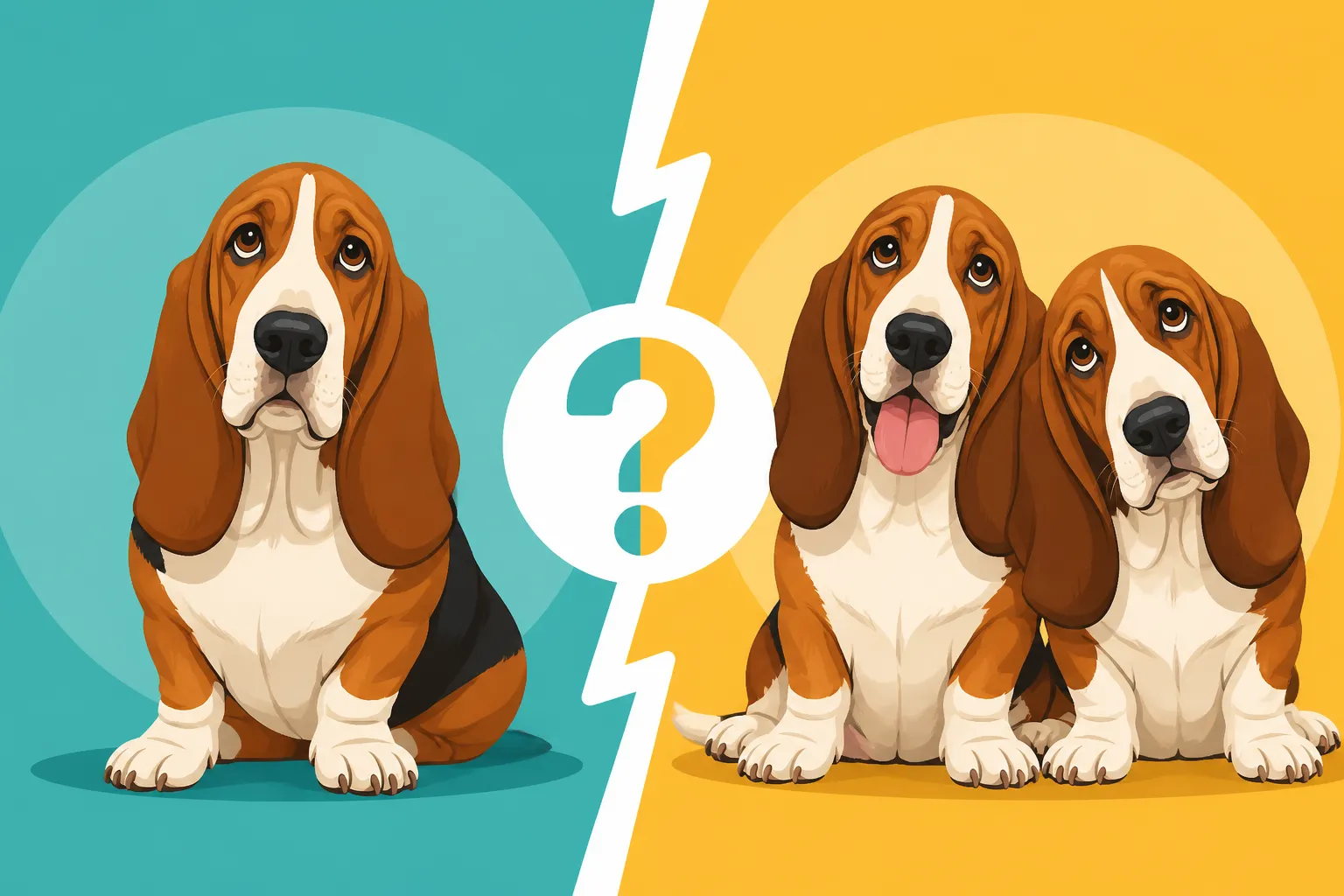
The image of two Basset Hounds curled up together, sharing a bed, or trotting side-by-side on a walk is certainly endearing. It often stems from a desire to provide even more happiness and companionship, not just for us, but for our existing dog. However, the reality of managing two Bassets introduces a whole new layer of complexity that can surprise even experienced dog owners.
The Myth of "Less Work" with a Companion
Many people imagine that a second dog will be less work because the dogs will entertain each other, reducing the need for constant human interaction or mitigating separation anxiety. While it's true that two dogs can certainly amuse each other and provide valuable companionship, this rarely translates to less work for you. In fact, it often means a different kind of work, and frequently, more work overall.
Imagine you're trying to train one Basset not to counter-surf. It's already a battle of wills, isn't it? Now, imagine two Bassets, one egging the other on, or one successfully grabbing something while your back is turned, and the other quickly learns from the "master criminal." Instead of a single focus, you're now managing two highly motivated, scent-driven individuals who might just teach each other bad habits faster than you can teach them good ones. The idea that they'll simply self-manage their play and training often overlooks the strong pack dynamics and the potential for a "bad influence" dog.
The Initial "Honeymoon" Phase and Beyond
When a new Basset Hound arrives, there's often an initial "honeymoon" period. Everyone is excited, the existing dog might be curious, and the new puppy or adult dog is trying to figure out its place. This phase can lull owners into a false sense of security, believing that the transition will be seamless. You might see adorable pictures of them napping together, which fuels the "it's easier with two!" narrative.
However, as the new dog settles in, their true personality emerges, and the established dynamics of your home will inevitably shift. The existing Basset might suddenly find its favorite spot taken, or its mealtime routine disrupted. The novelty wears off, and the real work of integration begins. This isn't just about managing two individual dogs, but managing the relationship between them, which can be as nuanced and complex as human family relationships. Sometimes, what seems like smooth sailing at first can quickly become choppy waters as personalities clash or new routines are resisted.
Practical Implications: More Than Just Double the Fun
The practical side of having two Basset Hounds really adds up. It's not just about doubling everything; it's about exponential increases in certain areas, particularly when it comes to space, supervision, and managing their distinct needs.
Space Requirements and Household Harmony
You might think your house is plenty big for one Basset, but two can quickly make it feel cramped. Basset Hounds are sturdy dogs, and while they aren't vertically challenging, they take up a surprising amount of horizontal space, especially when they stretch out for a nap. Suddenly, what was a cozy dog bed for one becomes too small for two. You might need multiple beds, or a significantly larger one, and finding prime napping spots (often on your couch or bed) can become a quiet competition.
Consider the common areas of your home. If two Bassets decide to play a rambunctious game of chase, your furniture, décor, and even your own legs might become obstacles. Their long ears and loose skin can easily get caught on things, or they might bump into delicate items. It's not just about floor space; it’s about creating enough personal space for each dog to feel secure and have their own retreat, especially during rest times. This often means adjusting your living environment more dramatically than you initially anticipated.
Double the Training, Double the Distractions
Training a single Basset Hound can be a delightful exercise in patience and negotiation. Their selective hearing, especially when a good scent wafts by, is legendary. Now, imagine trying to teach "sit" or "stay" to two Bassets simultaneously. One might get it, while the other is more interested in the dropped crumb from the table, or worse, distracted by the first Basset's movements. This isn't to say it's impossible, but it demands significantly more focus, consistency, and often, separate training sessions.
Walking two Bassets can be a masterclass in leash handling. One Basset might pull in one direction, nose to the ground, while the other suddenly stops for a sniff in the opposite direction. What starts as a pleasant stroll can quickly devolve into a tangle of leashes and frustrated owners. Building reliable The Recall a Basset Hound Will Never Reliably Give You with one Basset is already a huge undertaking; with two, you’re not just training one to ignore distractions, but training both to ignore each other as a distraction. It's a whole different ballgame and requires a solid understanding of What Actually Motivates a Basset Hound for both dogs individually.
Managing Feeding Frenzies and Resources
Feeding time can be a prime example of how two Bassets introduce complexities. If one Basset is a fast eater and the other is a slow, methodical diner, you might have to feed them in separate rooms to prevent the fast eater from "cleaning up" after the slower one. Food guarding can become an issue, even if it wasn't present with a single dog, as resources become shared.
Beyond food, consider other high-value resources like toys, chews, or even preferred sleeping spots. A new dog, especially one still finding its place, might challenge the existing dog for these items. This can lead to tension, growling, or even skirmishes. It means you, as the owner, need to be hyper-aware of these dynamics, actively manage resource distribution, and potentially provide duplicates of everything to minimize conflict. Even water bowls need careful consideration; some Bassets slobber more than others, and a shared bowl can quickly become a hygiene challenge.
The Social Dynamics of a Multi-Basset Household
Bringing a second dog into the home isn't just about managing two individuals; it's about nurturing a new social ecosystem. This can be incredibly rewarding, but it also comes with potential pitfalls related to rivalry, attachment, and managing distinct personalities.
Sibling Rivalry and Attention Sharing
Just like human siblings, Basset Hounds can develop a form of rivalry. This isn't necessarily aggressive, but it can manifest as subtle competition for your attention, for prime spots on the sofa, or for the first treat. Your existing Basset, who has been the undisputed king or queen of the castle, might resent sharing your affection or resources. This can lead to behavioral changes, such as increased demand barking, destructive behavior, or even a sudden regression in house training.
You'll need to make a conscious effort to give individual attention to each dog, ensuring they both feel loved and secure. This might mean separate cuddle sessions, individual training time, or specific playtimes tailored to each dog's preferences. It's important to remember that even if they adore each other, their primary bond is still with you, and that bond needs to be nourished individually. Failing to do so can lead to insecurity in one or both dogs, potentially fostering negative behaviors.
Different Personalities and Play Styles
Even within the Basset Hound breed, personalities can vary wildly. One might be a couch potato who only perks up for food or a sniff-walk, while the other might be a playful, boisterous goofball. These differing play styles can sometimes lead to misunderstandings or frustration between the dogs. A high-energy Basset might constantly try to engage a more sedate one, leading to annoyance, or vice versa.
It's your job to understand these individual personalities and mediate their interactions. Sometimes, it means encouraging gentle play, other times it means intervening to give one dog a break from the other. You might find yourself needing to take them on separate walks or provide different types of enrichment activities to cater to their unique needs. For example, one might love a challenging puzzle toy, while the other prefers a simple squeaky ball. Understanding A Basset Hound Meeting the Dog You Already Have is crucial.
The Value of Companionship and Pack Mentality
Despite the challenges, there's an undeniable joy and richness that two Basset Hounds can bring. Many Bassets thrive in the company of another dog, often displaying a clearer sense of purpose or contentment. They might enjoy chasing each other around the yard, sharing quiet moments on a dog bed, or simply knowing there's another warm body nearby. This can be especially true if your Basset Hound exhibits Whether a Basset Hound Gets Separation Anxiety when left alone, as a companion can sometimes help alleviate loneliness.
For breeds like Basset Hounds, who traditionally hunted in packs, having a canine companion can tap into their natural instincts and fulfill a deep-seated need for social interaction that a human, no matter how loving, cannot entirely replicate. Observing their unique bond, their shared snores, and their conspiratorial glances as they plot their next counter-surfing adventure can be incredibly heartwarming. You might even find that Whether a Basset Hound Prefers a Pack is indeed true for your hounds.
Preparing for the Financial & Time Investment
Let's be brutally honest: doubling your Basset Hound family means significantly increasing your financial and time commitments. This isn't just about food; it's about vet care, supplies, and unexpected emergencies.
Doubling Down on Ongoing Costs
Every single ongoing cost for one Basset Hound needs to be considered for two. Food, treats, parasite prevention, toys, grooming supplies – it all adds up. If you're buying premium food, the monthly grocery bill for two Bassets can be substantial. Brands like Chewy and Ollie offer convenient delivery services, but the volume will naturally increase the cost.
- Food: Your monthly food bill will double, at a minimum. If one Basset has dietary sensitivities, you might end up buying two different types of food, which can be more expensive.
- Treats & Chews: These vanish twice as fast. And if one Basset is a power chewer, you'll be replacing durable toys more frequently.
- Routine Vet Care: Annual check-ups, vaccinations, and preventatives double. Don't forget nail trims and ear cleanings – if you can't do them yourself, professional grooming costs will also rise. What a Basset Hound's Yearly Vet Bill Looks Like will give you a good idea of typical expenses, and you'll need to multiply that.
A great way to manage these routine costs is to anticipate them and set aside funds. Some owners find Whether a Basset Hound Is an Expensive Breed to Own to be true even with one, let alone two!
The Reality of Emergency Vet Bills
This is where the costs can really skyrocket. If one Basset gets sick or injured, it's already a significant financial strain. If you have two, the chances of one of them needing emergency care increase, simply because you have two dogs. Think about common Basset ailments: ear infections, back trouble, eye issues. The Ear Infections That Never Really Leave a Basset Hound and The Back Trouble a Basset Hound Is Built Into are unfortunately common.
Imagine one Basset suddenly develops a severe ear infection requiring multiple vet visits, special medication, and possibly an ear culture. That's one bill. Now imagine the other Basset decides to eat something it shouldn't, leading to an emergency clinic visit. These are not hypothetical scenarios; they are real possibilities. This is where pet insurance from providers like Healthy Paws can be a lifesaver, covering a significant portion of unexpected veterinary expenses for both dogs, but it's another monthly premium to budget for. Insuring a Basset Hound Against Eyes, Ears and Backs provides further insight into pet insurance specifics for the breed.
A table outlining typical cost considerations for one versus two Bassets might look like this:
| Expense Category | One Basset Hound | Two Basset Hounds |
|---|---|---|
| Food & Treats | Moderate monthly cost, depending on brand | Doubles, potentially more if special diets are needed |
| Routine Vet Care | Annual check-ups, vaccinations, preventatives | Doubles; two sets of appointments, tests, and medications |
| Emergency Vet Care | Unpredictable, can be high for a single incident | Probability of incident doubles; potential for simultaneous issues |
| Pet Insurance Premiums | Single policy cost | Two policies or a multi-pet discount (still higher than one) |
| Grooming Supplies | Shampoo, ear cleaner, nail clippers | Replenished twice as fast, higher consumption |
| Dog Beds/Crates | One main bed, possibly one crate | Needs multiple distinct sleeping areas, potentially two crates |
| Toys & Enrichment | Moderate cost | Doubles or triples due to shared play and wear |
| Boarding/Daycare | Cost for one dog | Cost for two dogs, often with a slight discount for multiples |
Time: The Most Precious Resource
Time is the one resource that doesn't just double, it often feels like it quadruples. Every task you do for one Basset now takes more time, or requires doing it twice.
- Walks: What was a 30-minute walk with one Basset might become a 45-minute tangled adventure with two, or require two separate walks.
- Feeding: Preparing two meals, supervising two diners, and cleaning up two drool puddles.
- Training: Individual training sessions or carefully managed joint sessions.
- Vet Visits: Scheduling two appointments, transporting two dogs, and waiting for two examinations.
- Grooming: Cleaning two sets of ears, wiping two sets of facial folds, brushing two coats. The Twice Weekly Ear Ritual a Basset Hound Owner Signs Up For becomes two twice-weekly rituals.
Beyond the basics, think about cuddles, play, and just sitting quietly together. You have two hearts vying for your affection, and ensuring both feel equally loved and attended to takes a conscious effort. When you consider What Twelve Years With a Basset Hound Comes To, imagine that commitment multiplied.
Making an Informed Decision for Your Family and Hounds
Deciding to bring a second Basset Hound into your life is a huge decision, and it's essential to approach it with realism and thorough preparation. It's not about whether you can do it, but whether it's the right fit for everyone involved, especially your existing Basset.
Assessing Your Current Basset Hound
Before you even think about another dog, take a long, honest look at your current Basset Hound.
- Temperament: Is your Basset generally laid-back and tolerant, or are they prone to anxiety, resource guarding, or being easily stressed by change? Some Bassets thrive with a companion, while others are truly "only dog" personalities.
- Health: Is your Basset in good health? Introducing a new, possibly energetic, puppy to an older or ailing Basset can cause stress or exacerbate existing conditions. The Old Basset Hound That Cannot Get Off the Floor might not appreciate a bouncy new friend.
- Training Level: Is your current Basset well-trained and stable? A solid foundation in basic obedience will make introducing a second dog much smoother. If your current Basset has behavioral issues, adding another dog will almost certainly magnify them.
- Desire for Companionship: Does your Basset seem lonely or bored when you're busy? Do they enjoy meeting other dogs on walks? Some Bassets genuinely seem to yearn for a canine buddy.
Observe your Basset carefully when they encounter other dogs. Are they playful and welcoming, or do they show signs of stress, fear, or aggression? This insight is invaluable in predicting how they might react to a permanent housemate.
Considering Your Lifestyle and Resources
Now, turn the mirror on yourself and your household.
- Time Commitment: Are you genuinely able to commit double (or more) the time to dog care, training, and attention? This means daily walks, grooming, playtime, and dedicated one-on-one time for each dog.
- Financial Stability: Can you comfortably afford the increased costs for food, routine vet care, and the very real possibility of two major emergency vet bills in a lifetime? Remember, pet insurance helps, but you still need to budget for premiums and deductibles.
- Living Space: Do you have enough physical space, both indoors and outdoors, for two Bassets to live comfortably, have their own beds, and play without constantly being in each other's way? Whether a Basset Hound Needs a Yard is often debated, but for two, outdoor space for sniffing and romping becomes even more beneficial.
- Support System: Do you have friends, family, or a reliable pet sitter who can handle two Bassets if you need to travel or if one needs extra care? Boarding two Bassets can be significantly more expensive and logistically challenging than boarding one.
- Patience and Dedication: Are you prepared for the inevitable challenges that come with multi-dog ownership? There will be messes, squabbles, and times when you feel overwhelmed. A good sense of humor and an abundance of patience are essential.
The Rewards of a Double-Basset Life
While this guide has focused heavily on the challenges, it's crucial to acknowledge the immense rewards. For many, a two-Basset household isn't just double the work, it's double the love, double the laughter, and double the joy. Watching two Bassets communicate, play, and snuggle together can be incredibly fulfilling. Their unique bond offers a different kind of companionship that enriches your home in ways you can't imagine until you experience it.
If you've thoughtfully considered all the practical, financial, and emotional implications, and you're confident you can meet the needs of two hounds, then the decision to expand your Basset family can bring profound happiness. It requires commitment, patience, and a deep understanding of the breed, but for many Basset lovers, the chorus of two soulful bays is truly music to their ears.
Disclaimer
This article is for general informational purposes only and does not constitute professional advice. Laws, prices and regulations vary by location and change over time. Consult a qualified professional for guidance on your specific situation.