Whether a Basset Hound Needs a Long Line
It’s a tale as old as time for Basset Hound owners: you’re out on a lovely walk, enjoying the fresh air, and suddenly, your beloved hound catches a whiff of something utterly fascinating. In that instant, your voice, your treats, your very existence, become secondary to the irresistible pull of that scent. This common frustration leaves many of us wondering how to balance their innate drive with their safety, and for many, a long line emerges as a potential solution. This guide dives into whether a long line is truly a necessary tool for keeping your Basset Hound safe and happy, and how to use one effectively.
The Basset Hound's Nose vs. Your Voice: A Familiar Struggle
We love our Basset Hounds for so many reasons – their soulful eyes, their endearing waddle, and yes, even that incredibly powerful nose. But that same nose, while a marvel of nature, can often feel like our biggest adversary when it comes to off-leash adventures.
Why a Basset Hound's Nose is an All-Consuming Force
Let's be real, your Basset Hound's nose isn't just good; it's a super-powered scent detection system that makes a bloodhound's capabilities look like a casual hobby. They were, after all, bred for centuries to follow scent trails, often for miles, without distraction. When a Basset Hound locks onto a scent, it's not a choice; it's an instinctual, almost primal, response. It’s like they enter a trance. The world around them, including your frantic calls, simply fades into the background. You can scream "Fido, come!" until your throat is raw, but if Fido is on the trail of a particularly intriguing squirrel or an overnight mouse, he genuinely doesn't hear you. He's not being stubborn; he's just doing what generations of his ancestors were selectively bred to do. It's a frustrating reality when you're standing alone in the park, desperately waiting for your hound to resurface from the bushes, but it's important to understand this fundamental aspect of their being. We have a whole article dedicated to Why a Basset Hound Stops Hearing You When It Smells Something if you want to dive deeper into this fascinating, yet challenging, trait.
The Reality of Basset Hound Recall
Given their incredible olfactory prowess, it’s probably not a shocker that a truly reliable off-leash recall for a Basset Hound is often more of a dream than a reality. Many owners spend countless hours trying to teach a bulletproof recall, only to find it crumbles the moment a truly captivating scent crosses their dog's path. This isn't a reflection of your training skills or your Basset's intelligence; it's simply the breed's nature. This lack of reliable recall can be genuinely terrifying. A Basset Hound, head down, following a scent, is completely oblivious to cars, other dogs, cyclists, or even cliffs. The sheer panic of watching your low-rider amble casually towards a busy road is a feeling no dog owner ever wants to experience. This often leads to a restrictive lifestyle, where walks are always on a short leash, limiting their opportunity to explore and sniff to their heart's content. It’s a sad compromise, but one many feel forced into for the sake of their dog's safety. For a deeper look at this challenge, check out The Recall a Basset Hound Will Never Reliably Give You.
How a Long Line Can Be Your Basset Hound's Lifeline
So, if traditional off-leash recall is such a challenge, how can you give your Basset Hound the freedom to explore safely? Enter the long line – a fantastic tool that can bridge the gap between their natural instincts and your need for control.
What Exactly is a Long Line and How Does It Work?
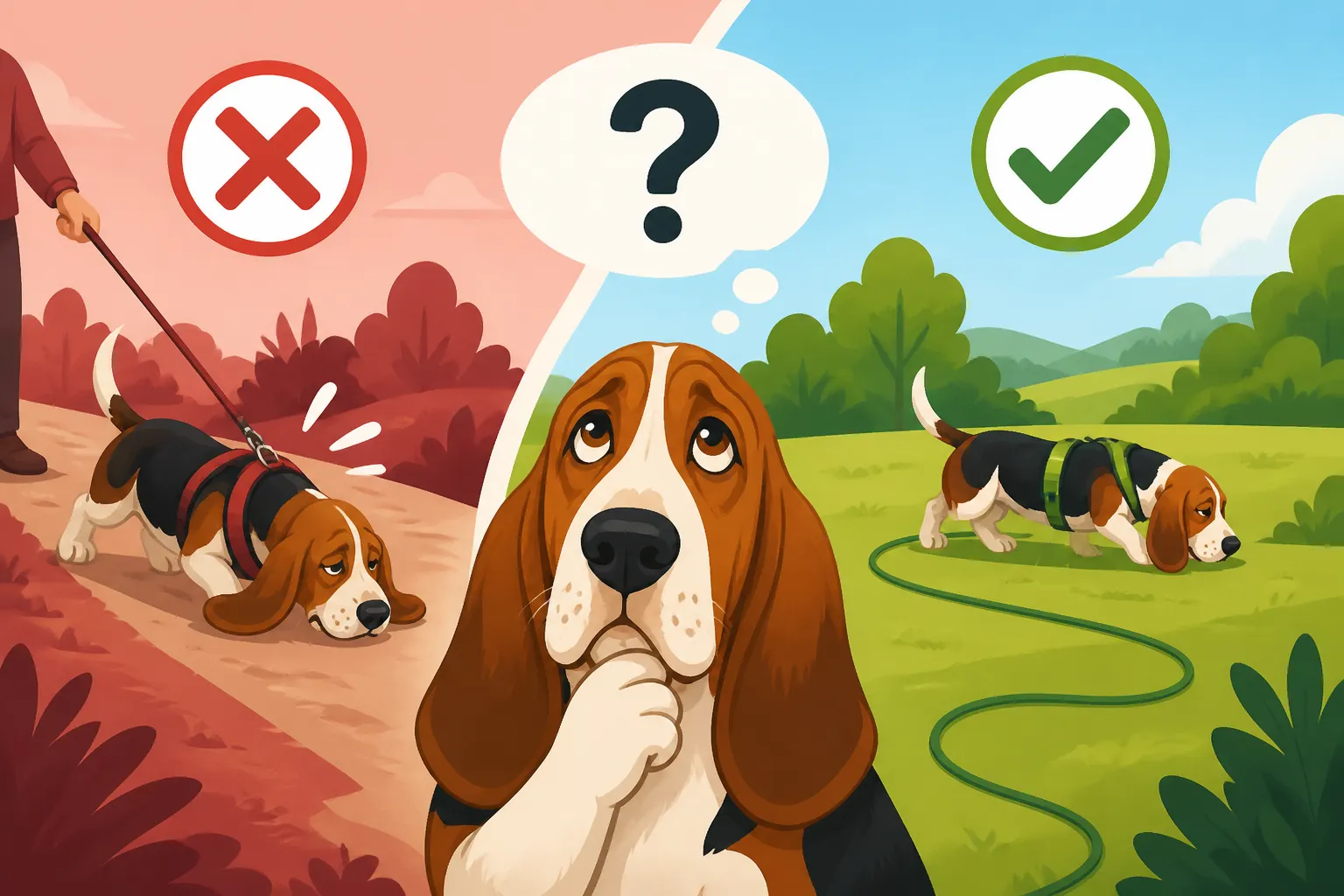
A long line, sometimes called a long leash or training line, is essentially a very long piece of webbing or rope, usually ranging from 15 to 50 feet or even more, with a clip at one end to attach to your dog's harness. It's not meant to be held constantly like a regular leash, but rather to drag behind your dog, allowing them to explore a wider area while still giving you the ability to intervene if they wander too far or head into danger. Think of it as a flexible, invisible boundary that moves with them. It allows your Basset Hound to engage their amazing nose, follow intriguing scents, and enjoy the sensation of "freedom" without the significant risks of being truly off-leash.
When your Basset Hound starts to stray too far, or if you spot a potential hazard, you can simply step on the line, gently reel them in, or use it to reinforce your verbal recall cue. It’s a safety net that lets them be a Basset Hound while still giving you peace of mind.
Training Benefits: Building a Reliable Recall
Beyond safety, a long line is an invaluable training tool, especially for building a more reliable recall with a scent-driven breed like a Basset Hound. The key is to make coming back to you the most rewarding thing ever. Here's how it generally works:
- Start in a safe, low-distraction environment: A quiet park, a large field, or even your backyard are ideal. Attach the long line to your Basset Hound's harness.
- Let them explore: Allow them to wander and sniff, getting accustomed to the length of the line dragging behind them.
- Practice your recall: When they're distracted but not too engrossed, call them enthusiastically. Use a clear, consistent cue like "Fido, come!"
- Gentle guidance: If they don't immediately respond, don't yank. Instead, gather up the line hand-over-hand, gently encouraging them back to you while continuing to use your recall cue. The goal is a gentle reel, not a correction.
- Massive reward: The moment they reach you, make it a party! Shower them with praise, offer their absolute favorite high-value treats (think bits of cooked chicken or cheese – Ollie sometimes offers really enticing, high-quality training treats that work wonders), and engage in a quick, fun game. The idea is to create a strong positive association with returning to you.
- Repeat, repeat, repeat: Consistency is crucial. Practice frequently in various environments, gradually increasing distractions. The long line ensures that even if they "fail" to recall, they don't get the self-reward of successfully chasing a scent into the wild blue yonder. This helps prevent them from learning that ignoring you pays off. For more on keeping them safe, consider reading Whether a Basset Hound Should Ever Be Off Leash.
Safety and Exploration in Unfenced Areas
One of the biggest benefits of a long line for a Basset Hound is the freedom it provides in areas where true off-leash exercise isn't safe or permitted. Picture this: a wide-open field in a local park. With a traditional leash, your Basset is confined to your immediate vicinity, their nose largely underutilized. With a long line, they can cover much more ground, investigating every intriguing smell, zig-zagging to their heart's content, all while you maintain control.
This controlled freedom is vital for their mental and physical well-being. It allows them to express natural behaviors – sniffing, trailing, and moving at their own pace – which is far more enriching than a regimented heel. It also protects them from unforeseen dangers. If another dog approaches unexpectedly, if a child runs by, or if a car comes into view, you have the means to safely guide your Basset away or bring them closer to you. It takes away the terrifying possibility of them bolting and ending up in a dangerous situation. It's peace of mind, allowing both of you to enjoy the outdoors more fully. Even in seemingly safe areas, it's worth understanding Whether a Basset Hound Follows Its Nose Into Traffic to truly appreciate the risks.
Choosing and Using the Right Long Line
A long line isn't a one-size-fits-all solution, and using it correctly is crucial for both its effectiveness and your Basset Hound's safety.
Picking the Perfect Length and Material
When selecting a long line, consider a few factors:
- Length: Common lengths range from 15 to 50 feet.
- 15-20 feet: Great for beginners, smaller yards, or areas where you want a bit more control but still offer some roaming. It's easier to manage and less likely to tangle.
- 30-40 feet: A popular all-around choice. It gives a good amount of freedom in open spaces without being overwhelmingly long to manage.
- 50+ feet: Ideal for very large, open fields or specialized scent work, but can be cumbersome and tangle-prone for everyday use.
For a Basset Hound, a 20-30 foot line is often a fantastic starting point. It provides ample room for sniffing and exploration without making it impossible for you to reel them in.
- Material:
- Nylon: Lightweight, affordable, comes in many colors. However, it can absorb water, get dirty easily, and can cause rope burn if it slides quickly through your hands. It's a good entry-level option, often found on sites like Chewy.
- Biothane (coated webbing): This is often considered the gold standard for long lines. It's waterproof, odor-proof, easy to clean (just wipe it down!), doesn't absorb burrs or mud, and provides a good grip even when wet. It's more expensive than nylon but incredibly durable and kind to your hands.
- Cotton/Fabric: Softer on the hands, but can be a nightmare for collecting debris, absorbing water, and tangling. Generally not recommended for active use with Basset Hounds.
Choose a material that feels good in your hands, is easy to clean, and is durable enough to withstand a Basset Hound's pulling power and penchant for muddy adventures.
| Feature | Nylon Long Line | Biothane Long Line |
|---|---|---|
| Cost | Lower initial cost | Higher initial cost |
| Durability | Good, but can fray or degrade over time | Excellent, very long-lasting |
| Waterproof | No, absorbs water, gets heavy | Yes, completely waterproof |
| Cleaning | Can be difficult, holds dirt and odors | Very easy, wipes clean with a damp cloth |
| Grip | Can cause rope burn, especially when wet | Good grip, less prone to rope burn |
| Weight | Lighter when dry, heavier when wet | Consistent weight, can feel heavier initially |
| Feel | Can be stiff or rough | Smooth, flexible, pliable |
| Best For | Casual use, beginners, drier conditions | Frequent use, all weather, muddy environments |
Essential Safety Tips for Long Line Use
Using a long line effectively and safely requires a bit more vigilance than a standard leash.
- Always attach to a harness: This is non-negotiable for Basset Hounds. Attaching a long line to a collar, especially if they hit the end of it running, can cause serious neck and tracheal injury. A well-fitting harness distributes pressure across their chest, protecting their delicate neck and spine. We’ve discussed this in depth in Whether a Basset Hound Should Wear a Collar or Harness. A sturdy, comfortable harness, especially one that fits their unique Basset body shape, is crucial.
- Supervise constantly: A long line is not a tie-out. Never leave your Basset Hound unattended with a long line, as it can easily get tangled around trees, objects, or even their own legs, leading to injury or strangulation. Your full attention is required.
- Scan your environment: Before letting your Basset explore, scan the area for potential hazards like thorny bushes, sharp objects, steep drops, or bodies of water where the line could get snagged.
- Learn to handle the line: Don't wrap the line around your hand, as a sudden pull could cause severe injury. Instead, learn to gather it in loops or step on it with your foot when needed. Practice handling it so you can quickly and safely shorten the line or stop your dog.
- Avoid dog parks: Long lines and dog parks don't mix. The line can easily tangle with other dogs or people, creating a dangerous situation. Stick to open, less crowded areas.
Integrating the Long Line into Your Basset Hound's Routine
Introducing a long line should be a gradual and positive experience. Start by letting them drag it in a familiar, safe area like your backyard for short periods, getting them used to the sensation. Always pair its use with enjoyable activities – sniffing, exploring, and play. The goal is for them to associate the long line with freedom and fun, not restriction or punishment.
Know when not to use it. Extremely dense brush, very rocky terrain, or areas with a lot of fast-moving water are generally not suitable for long line use due to the high risk of entanglement. Similarly, if your Basset Hound is prone to bolting or reactive behaviors, it's wise to work with a professional trainer before relying heavily on a long line, to ensure you can manage them safely. Choosing Which Harness Suits a Basset Hound is also paramount to their comfort and safety.
Beyond the Long Line: Complementary Strategies for Safety
While a long line is a fantastic tool, it’s just one piece of the puzzle in ensuring your Basset Hound's safety and well-being. A holistic approach combines good training, secure environments, and proactive measures.
Reinforcing Recall with High-Value Rewards
The success of long-line training, and indeed any recall training with a Basset Hound, hinges on motivation. Since their nose is such a powerful motivator, your reward for coming back needs to be even better. Forget bland kibble; we're talking about high-value, irresistible treats. Think small pieces of cooked chicken, cheese, or even specially formulated, extra-tasty training treats. Brands like Ollie often offer fresh, palatable options that dogs go absolutely wild for, making them perfect for recall practice.
When your Basset comes back to you, don't just give them one tiny piece. Make it a "jackpot" – a handful of treats, enthusiastic praise, and maybe a quick game with a favorite toy. This teaches them that ignoring a scent trail for you is incredibly worthwhile. The more you practice making yourself the source of all good things, the stronger your bond and, eventually, their recall will become. Consistency is key; every time they come when called, no matter how reluctantly, reward them generously. Their incredible sense of smell, discussed in How Good a Basset Hound's Nose Actually Is, means you need to be strategic with your rewards.
Importance of Secure Fencing and Tracking
A long line provides controlled freedom, but it's not a substitute for a secure physical environment. For Basset Hounds, who are expert escape artists and driven by scent, a properly fenced yard is critical. They are surprisingly adept at squeezing through small gaps, digging under fences, and sometimes even scaling low ones if the scent on the other side is strong enough. If you have a yard, regularly inspect your fencing for weaknesses.
Even with the best fencing and long line training, accidents can happen. Gates can be left ajar, or a determined hound might find a way out. This is where modern technology offers an invaluable safety net. GPS tracking collars or devices that attach to their harness have become affordable and highly effective. In the unfortunate event that your Basset Hound does get loose, a tracker can dramatically increase your chances of finding them quickly. Products from companies like Fi or Tractive offer real-time location tracking and geofencing capabilities, alerting you if your dog leaves a designated safe area. This is a topic worth exploring further, especially in Whether a Basset Hound Should Wear a Tracker.
Considering Insurance for Those "Just In Case" Moments
Let's face it, Basset Hounds, with their long backs, droopy ears, and often clumsy enthusiasm, can sometimes find themselves in situations that lead to unexpected vet visits. Even with all the precautions in the world – a long line for walks, a secure yard, and a watchful eye – things can happen. They might eat something they shouldn't, take an awkward tumble, or simply develop a health issue common to the breed, like ear infections or back problems. The costs associated with emergency vet care, diagnostics, and ongoing treatments can be substantial.
This is where pet insurance comes in. Companies like Healthy Paws offer plans that can cover a significant portion of unexpected veterinary bills for accidents and illnesses. Having pet insurance can provide immense peace of mind, knowing that if your Basset Hound does encounter an "oopsie" moment on a walk (even with a long line!) or develops a serious condition, you won't have to make difficult financial decisions about their care. It allows you to focus on getting them the best treatment without the added stress of crushing vet bills. It’s an investment in their long-term health and your financial security, giving you one less thing to worry about as you manage their adventurous spirit. For a full picture of financial planning, see Insuring a Basset Hound Against Eyes, Ears and Backs.
Disclaimer
This article is for general informational purposes only and does not constitute professional advice. Laws, prices and regulations vary by location and change over time. Consult a qualified professional for guidance on your specific situation.