Whether Any Color Is a Fault on a Basset Hound
A black-and-tan, lemon-and-white, or red-and-white coat does not automatically make a Basset Hound incorrect. The confusing part is that “fault” can mean different things in a show ring, a breed standard, or a breeder’s description. This guide explains how coat color is judged, which unusual colors deserve a closer look, and why color alone rarely tells you whether a dog is healthy or well bred.
What “fault” means for a Basset Hound’s color
A show fault is not the same as a disqualification
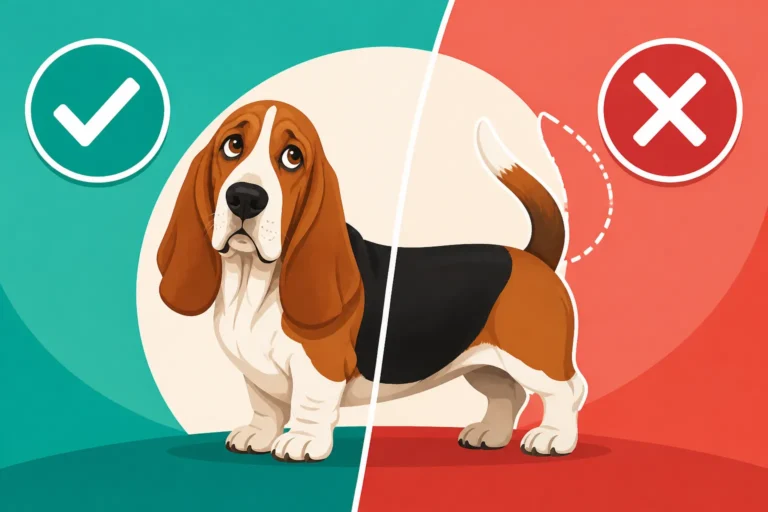
In dog shows, a fault is a feature a judge considers less desirable under the breed standard. A disqualification is a more serious issue that makes a dog ineligible for competition under the rules of a particular organization. Neither term means a dog is unhealthy, unlovable, or unsuitable as a pet.
For Basset Hounds, coat color is generally not treated as a simple pass-or-fail test. Breed standards commonly allow a range of recognized hound colors and patterns. The American Kennel Club standard, for example, allows any recognized hound color, with the distribution of markings considered unimportant. Other kennel organizations may word their standards differently, so the relevant rules depend on where the dog is being shown or registered.
That distinction matters if you are looking at a Basset Hound advertised as “rare,” “incorrect,” or “show quality.” Those labels can be used loosely. A seller’s description does not replace the written standard, and a color that is unusual in your area is not automatically a disqualifying color.
Standards can differ between kennel organizations
If you are asking whether a color is a fault in the show ring, first identify the organization and country. Standards can vary in wording, and judges apply the standard used at their event. A coat that is acceptable under one organization’s rules may be described differently under another’s.
Even where a standard allows a broad range of colors, the final show assessment considers the dog as a whole. Structure, movement, soundness, temperament, and other breed characteristics matter too. Color is one detail, not a shortcut to judging the quality of the entire dog.
For a general overview of expected coats, see The Colors a Basset Hound Comes In. If you are comparing a particular puppy’s markings with a breed description, Whether a Basset Hound Can Be Any Color offers a useful companion topic. The practical takeaway is simple: check the standard for the organization involved rather than relying on a social-media comment or a breeder’s sales language.
Common Basset Hound colors and patterns
Familiar colors are not the only acceptable ones
Many people picture a tricolor Basset Hound, often with black, tan, and white. Lemon-and-white and red-and-white coats are also familiar. Individual dogs can show variation in how much of each color appears and where the patches fall; two littermates may look quite different while both having ordinary Basset Hound coloring.
The word “tricolor” describes a pattern with three colors, not a single fixed arrangement. A dog does not necessarily need perfectly balanced patches or a specific facial marking to count as tricolor. For more detail, see Whether a Basset Hound Can Be Tricolor. Lemon-and-white coloring can also vary in shade, so the word “lemon” may describe a pale golden or yellowish tone rather than a sharply defined color. Whether a Basset Hound Can Be Lemon and White covers that distinction.
Red-and-white coats are another recognized-looking combination that can be confused with darker or lighter shades of tan. Coat color labels are descriptive, and people may use them differently. A breeder, veterinarian, kennel club, and pet owner may not all choose the same everyday word for a particular shade. If you are curious about that combination, Whether a Basset Hound Can Be Red and White explains it further.
An unusual shade is not automatically a fault
A color that is uncommon in a local Basset Hound population can attract attention without being forbidden. At the same time, a claim that a dog is an extremely rare color should prompt sensible questions: What does the breeder mean by that label? Is the color documented in the relevant standard? Are health and temperament being discussed with the same care as appearance?
“Blue” is a particularly useful example. People may use the word to describe a grayish or diluted-looking coat, but labels can be imprecise, and the term alone does not establish a dog’s registration status or health. Check Whether a Basset Hound Can Be Blue before treating the label as proof that the dog is either disqualified or unusually valuable.
There is also a difference between a coat color and a pattern that may not be typical of the breed. If you see unusual mottling, speckling, or a strongly advertised “designer” pattern, ask the breeder how the dog’s color is described in its records and what health testing has been done. A distinctive appearance is not a substitute for sound breeding practices.
| Coat description | What it usually refers to | What to check |
|---|---|---|
| Tricolor | Three colors, often black, tan, and white | The overall pattern, not a precise patch arrangement |
| Lemon and white | A pale yellow or golden tone with white | How the breeder or registry describes the shade |
| Red and white | A reddish coat area with white | Whether the label is being used consistently |
| Blue or grayish | A description that may refer to diluted-looking pigment | The applicable standard and the breeder’s explanation |
| Unusual or mottled | A pattern that may be less familiar in the breed | Registration details, health information, and the exact description |
When coat color raises a health or breeding question
Look beyond the color label
A color by itself is not a diagnosis. If a Basset Hound has itching, recurring skin irritation, hair loss, sore areas, or another change, those signs deserve attention regardless of whether the coat is black-and-tan, lemon-and-white, or an unusual shade. A veterinarian can assess the dog rather than relying on a color name.
It is also worth separating a visible coat feature from a claim that the feature causes a health problem. Some coat-color genes are associated with health concerns in certain breeds, but that does not mean the same risk applies to every breed or every dog with a similar-looking coat. For a blue-looking Basset Hound, Whether a Blue Basset Hound Has Skin Trouble is a more focused starting point than assuming the color itself proves a problem.
When asking a breeder about a puppy, ask about health testing, the health of the parents, and the care the puppies have received. A responsible conversation should not stop at coat shade or whether a puppy is being marketed as “rare.” You can also review The Health Tests a Basset Hound Breeder Should Run when preparing questions.
Color descriptions can change as a puppy grows
Puppy markings may look different as the coat develops. Areas of color can become lighter or darker, and the contrast between patches may shift with age. That does not necessarily mean a puppy was misidentified; it may simply reflect normal coat development and individual variation.
If you are comparing puppy photos with the dog months later, remember that lighting, camera settings, grooming, and seasonal coat condition can all change how a shade appears. The same dog can look more golden in warm indoor light and paler in outdoor shade. Whether a Basset Hound's Markings Change With Age explores what owners may notice as a dog matures.
Nose and eye pigmentation are separate features from coat color. A dog’s coat pattern does not by itself tell you whether its nose pigmentation is typical, so assess those details independently. For that particular question, see Whether a Basset Hound's Nose Is Always Black. If something looks irritated or has changed, get veterinary advice rather than treating a color variation as the explanation.
How to assess a Basset Hound without overvaluing color
Use a practical checklist when speaking with a breeder
If you are choosing a puppy, it is easy to get caught up in markings, especially when one puppy has a striking face or unusual patch pattern. Take a step back and ask questions that help you understand the dog’s background and welfare.
- Ask which standard applies. If the breeder discusses showing or registration, ask which kennel organization’s rules they mean.
- Ask how the color is recorded. A clear, straightforward description is more useful than dramatic labels such as “ultra-rare.”
- Ask about health and temperament. Find out what health screening was done and how the breeder describes the parents’ temperaments.
- Look at the whole dog. Pay attention to how the puppy moves, interacts, and responds to handling, not just the coat.
- Be cautious about appearance-based pressure. A claim that a color makes a puppy exceptionally valuable should not replace clear records and responsible answers.
You may also want to learn about Whether Show and Field Basset Hounds Differ. A dog’s background and intended breeding goals can help explain what a breeder prioritizes, but coat color still does not tell you everything about its health, structure, or suitability for your home.
Choose care products for the dog, not its color
A Basset Hound’s grooming needs are more about the dog’s skin, coat condition, and day-to-day mess than about whether its patches are black, red, or lemon. Use products intended for dogs, and ask your veterinarian before using a medicated shampoo or treatment for a skin concern.
If you are browsing grooming supplies at Chewy, choose items based on the product’s intended use and your dog’s needs, not a promise that it will “correct” a coat color. Whitening products, dyes, or strong fragrances are not necessary just because a dog’s markings look different from a picture online. For ordinary grooming, gentle brushing and checking the skin as you go are more useful than trying to alter the coat’s appearance.
A second example: if food or drool leaves a mess around the muzzle, dog-safe wipes or a soft damp cloth may help with cleanup, but wiping should not involve scrubbing irritated skin. Chewy may be one place owners browse for basic grooming supplies; whatever the retailer, read the label and stop using a product if it seems to irritate your dog. For wrinkles and skin care, see Cleaning a Basset Hound's Face Wrinkles.
If you are choosing a brush or shampoo through Chewy, the coat’s condition and your Basset Hound’s tolerance matter more than the shade listed in an online description. A change in skin, persistent odor, or repeated itching is a reason to seek veterinary guidance, not to shop for a product that claims to make an unusual color look more standard.
The short answer for pet owners
For most owners, a Basset Hound’s color is a matter of appearance, not a reason to consider the dog defective. Breed standards generally permit a variety of recognized hound colors, though exact wording and show rules depend on the organization. A color may be uncommon, described differently by different people, or relevant to a particular registration question without being a health problem.
If you are entering a show, check the applicable standard and ask the show organization or a knowledgeable breed representative how its rules are applied. If you are choosing a family pet, put more weight on health, temperament, responsible breeding, and the dog’s fit with your household than on whether its markings match the most familiar image of the breed.
Disclaimer
This article is for general informational purposes only and does not constitute professional advice. Laws, prices and regulations vary by location and change over time. Consult a qualified professional for guidance on your specific situation.