The Basset Hound Against the Bloodhound
Choosing between a Basset Hound and a Bloodhound can feel like an impossible task when you're looking for a scent-driven companion. Both breeds are undeniably iconic for their incredible noses and distinctive looks, but their differences are vast, extending far beyond superficial appearance. This guide will walk you through the nuances that truly set these majestic hounds apart, helping you understand which one might be the best fit for your home and lifestyle.
A Shared Ancestry: Tracing the Scent Hound Lineage
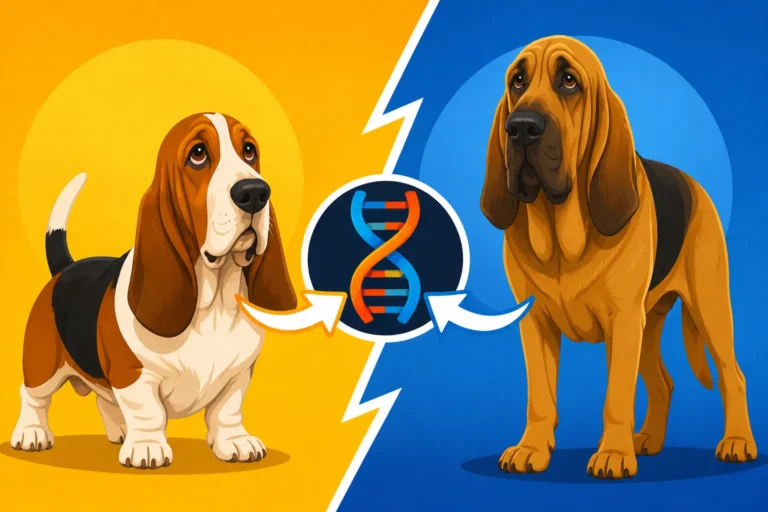
It’s easy to look at a Basset Hound and a Bloodhound and see two completely different animals. One is long and low, the other impressively tall and dignified. Yet, beneath those varied exteriors, there’s a fascinating thread of shared history that binds them as some of the most specialized scent hounds the world has ever known. Understanding this common lineage, and where their paths diverged, is key to appreciating their unique characteristics today.
The Ancient Roots of Scent Hounds
Both the Basset Hound and the Bloodhound can trace their ancestry back to the ancient St. Hubert Hounds, bred by monks in the Ardennes Abbey in Belgium, possibly as early as the 8th century. These original hounds were revered for their unwavering dedication to a scent trail, a trait that became paramount for tracking game and, later, for police work. The monks meticulously bred them, focusing on their olfactory abilities rather than speed or visual hunting prowess, creating the foundation for many of the scent hound breeds we recognize today. This shared origin means that at their core, both breeds carry a profound, innate drive to follow their nose, a trait that makes them both wonderful and challenging companions. You can delve deeper into this by reading The Abbey Hounds a Basset Hound Descends From.
Divergence of Purpose: When Paths Separated
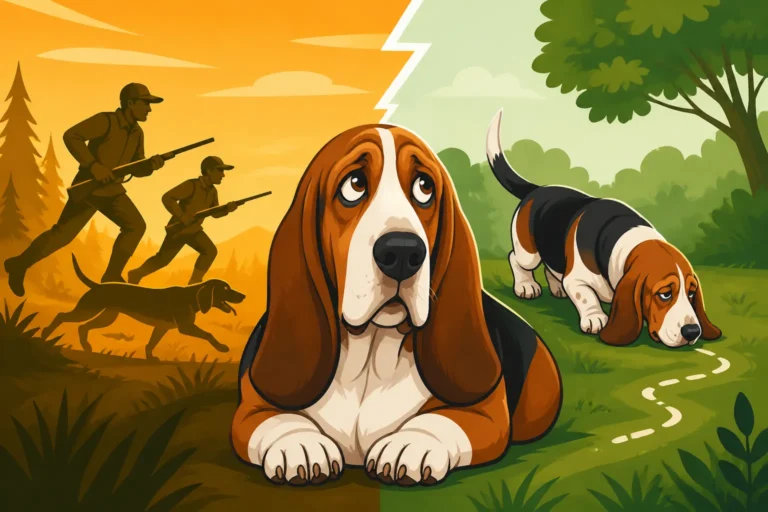
While they share a common ancestor, the breeding goals for the Basset Hound and the Bloodhound began to diverge significantly over centuries. The St. Hubert Hound was imported into France, where selective breeding began to cater to different hunting needs. The Bloodhound was developed to retain the impressive size, power, and relentless tracking ability of its forebears, making it ideal for tracking large game or human quarry over vast distances. Its purpose was serious work, requiring immense stamina and focus.
In contrast, the Basset Hound was specifically bred to be a much slower, foot-hunting hound. French aristocrats and hunters on foot wanted a dog that they could follow easily, one that would methodically work a trail without outrunning them. This selective breeding emphasized short legs and a low-slung body, sacrificing speed for deliberate, close-to-the-ground scenting. This divergence in purpose is why we see such distinct physical and behavioral traits today, even though their fundamental drive to scent remains. Where the First Basset Hounds Came From provides more context on this historical journey.
Nose Knows Best: Unpacking Scenting Abilities
When it comes to sniffing out the truth, both Basset Hounds and Bloodhounds are in a league of their own. They possess an olfactory sense that far surpasses most other breeds, making them legendary trackers. However, the way they utilize this incredible gift, and the mechanics behind it, are subtly different, tailored to their original roles. It's truly fascinating to explore how evolution shaped these two breeds for peak scenting performance.
The Basset Hound's Ground-Level Advantage
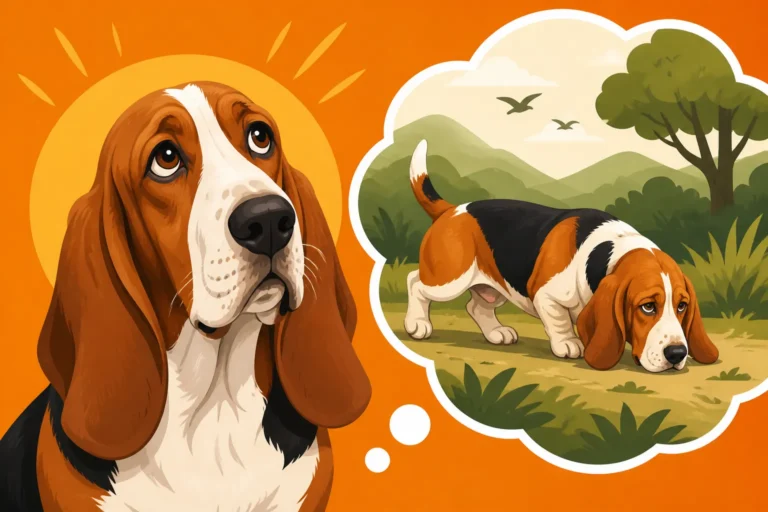
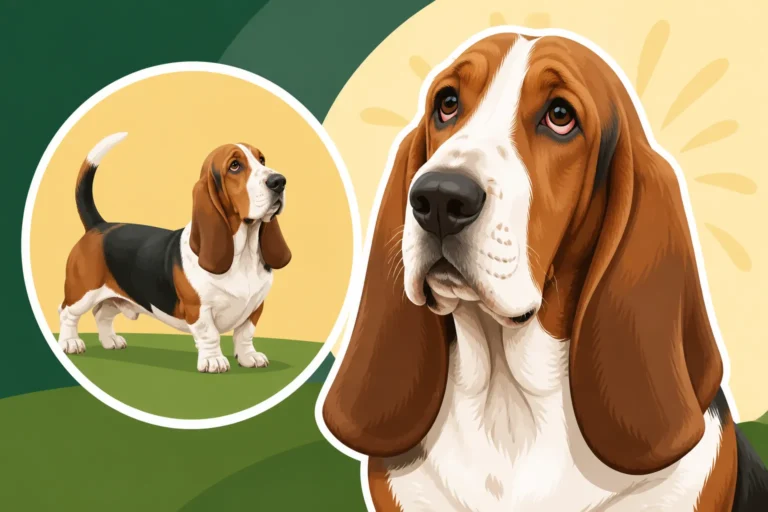
A Basset Hound's entire physical design is a masterclass in ground-scenting. Those incredibly long, heavy ears aren't just for show; they sweep the ground, gathering scent particles and wafting them directly towards the nose. Their loose facial skin and prominent dewlap also serve a purpose, trapping scent and holding it close to their face, creating a kind of "scent bubble" that intensifies the trail. This low stature means their nose is constantly close to the ground, maximizing their exposure to even the faintest of trails. They are built for persistence, methodically following a scent, rather than speed. This is part of Whether a Basset Hound's Ears Sweep Scent Upward.
Imagine your Basset Hound, nose to the ground, moving with that characteristic, unhurried gait. They aren't in a rush; they're dissecting every molecule of scent, piecing together a story. This deliberate approach is what makes them so effective at picking up old or cold trails, allowing them to follow a scent where a faster, less ground-focused dog might miss crucial information. They can become completely absorbed in a trail, seemingly deaf to the world around them – a common frustration for owners trying to call them back!
The Bloodhound's Legendary Tracking Prowess
The Bloodhound, often dubbed the "king of trackers," boasts a nose that is truly unparalleled. While they don't have the Basset's extreme low-slung body, their deep muzzle, massive nasal cavities, and an abundance of olfactory receptors give them an extraordinary ability to detect and differentiate scents. Their loose skin, particularly around the head and neck, also aids in trapping scent molecules, funneling them towards their powerful nose, much like the Basset, but on a grander scale. They are capable of following human scent trails that are days old and have been contaminated by weather or other smells, making them invaluable in search and rescue operations.
Their tracking style is often more robust and driven than a Basset's. A Bloodhound on a trail is a force of nature, driven by an unshakeable focus to reach the source of the scent. While they might appear more agile than a Basset, their focus is equally intense, leading to that famous "selective deafness" when a good scent takes hold. The Nose That Puts a Basset Hound Second to a Bloodhound goes into further detail about this exceptional ability.
Comparing Scent Receptor Capabilities
When we talk about scenting ability, we're really talking about the number of olfactory receptors in a dog's nose. Humans have around 5 million; dogs, generally, have vastly more. Both Bassets and Bloodhounds are at the extreme upper end of the canine spectrum. While specific numbers vary by study and individual dog, Bloodhounds are often cited as having upwards of 300 million olfactory receptors, making them the gold standard for scent detection. Basset Hounds, while perhaps not reaching the absolute pinnacle of the Bloodhound, are still incredibly impressive, often estimated to have around 220 million receptors.
This means that both breeds have an almost incomprehensible capacity to process and interpret scents. It’s not just about detecting a smell, but understanding its composition, its age, its direction, and even its emotional content (like stress hormones). For a Basset, this means expertly untangling the crisscrossing rabbit trails in a field. For a Bloodhound, it means distinguishing the faint scent of a missing person from hundreds of other environmental smells in a complex urban area. Their noses are, quite simply, their entire world, and a major factor in understanding their behavior. You can learn more about this by reading How Good a Basset Hound's Nose Actually Is.
Physical Characteristics and What They Mean
The visual differences between a Basset Hound and a Bloodhound are striking, but these aren't just aesthetic choices. Every physical attribute, from leg length to ear size, serves a purpose rooted in their historical development and utility. Understanding these physical distinctions is crucial for appreciating their unique needs and challenges as companions.
Stature and Build: Low-Rider vs. Lofty Tracker
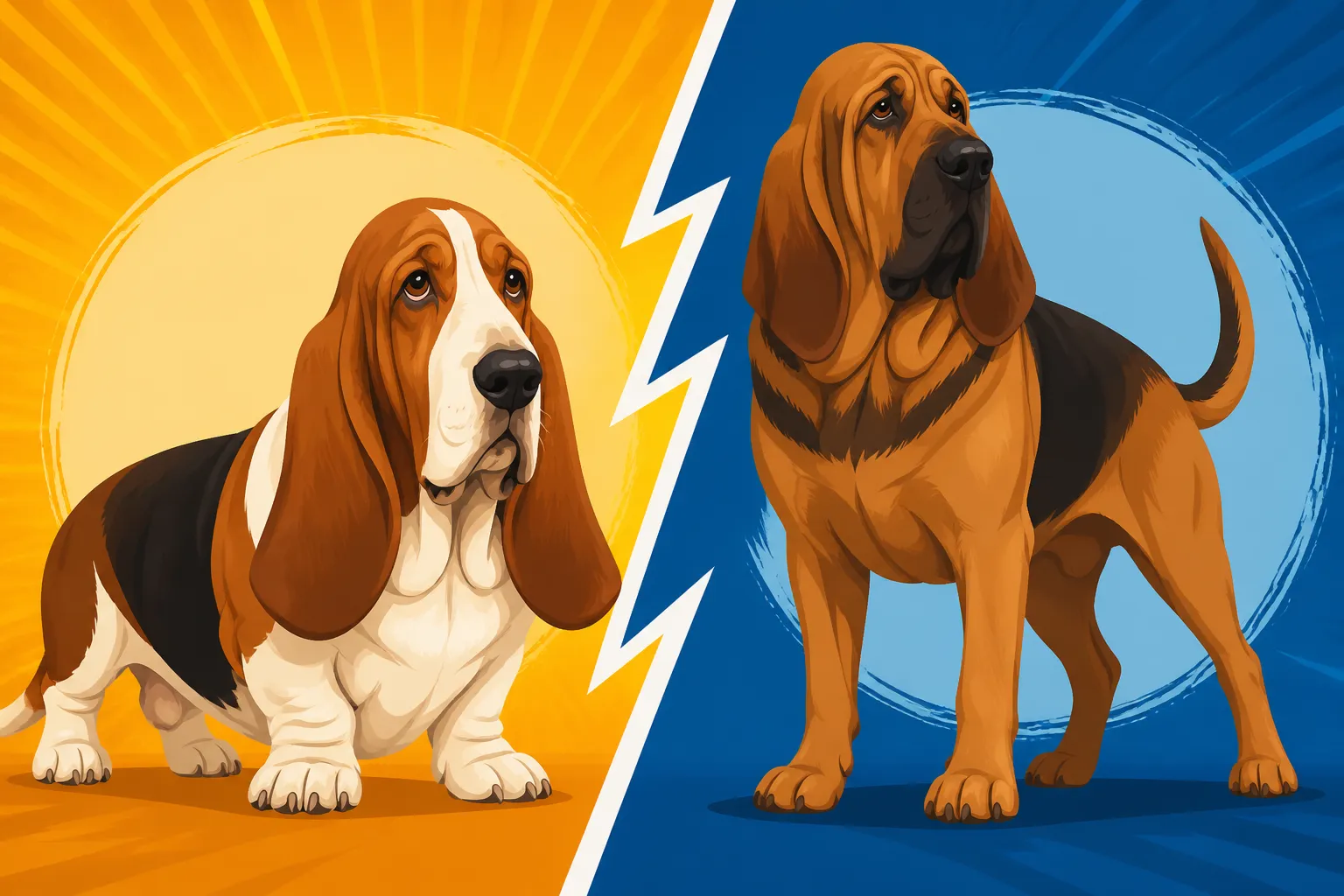
The most obvious difference lies in their overall build. The Basset Hound is renowned for its low-slung body, short, heavy-boned legs, and incredibly long torso. An adult Basset typically stands about 14-15 inches tall at the shoulder but can weigh a surprising 40-65 pounds, giving them a dense, sturdy feel. Why a Basset Hound Weighs as Much as a Labrador might shed some light on this unexpected heft. Their deep chest allows for impressive lung capacity, supporting their endurance on a trail, while their powerful, albeit short, legs are designed for steady, deliberate movement over varied terrain. They are not built for speed or agility in the typical sense; their movement is more of a slow, determined shuffle. This unique physique, however charming, does come with its own set of structural considerations, such as The Crooked Front a Basset Hound Is Built On.
The Bloodhound, on the other hand, is a much taller, more imposing dog, standing 23-27 inches at the shoulder and weighing between 80-110 pounds, sometimes more. They possess a robust, muscular build, designed for covering ground efficiently and with stamina. While they also have heavy bone, their legs are long and powerful, enabling them to navigate diverse landscapes, from dense forests to mountainous regions, with relative ease. Their body is less elongated than the Basset's, giving them a more balanced, athletic appearance, despite their sometimes lumbering gait.
Ear and Skin Design: Function Over Form
Both breeds are famous for their excessive loose skin and pendulous ears, but there are differences in degree and presentation. A Basset Hound's ears are exceptionally long, often reaching past its nose when pulled forward, with a velvety texture. This length is deliberate, designed to drag on the ground and sweep scent upwards, as discussed earlier. The skin on their face is deeply wrinkled, especially around their soulful eyes, and they have a prominent dewlap (the loose skin under the chin and throat). These folds also help trap scent and give them their distinctive mournful expression.
The Bloodhound shares these characteristics but often on a grander scale, particularly the loose skin. Their face is covered in dramatic, deep wrinkles, especially around the forehead and muzzle, creating a wise, aged appearance. Their dewlap is truly impressive, often hanging in substantial folds that not only gather scent but also help dissipate heat. Their ears are also very long, though perhaps not quite as exaggerated in length as some Bassets, but they are thick and fall in heavy folds, framing the face. The purpose of these features in both breeds is undeniably functional: to enhance their already incredible sense of smell. What a Basset Hound's Dewlap Is For explores the function of these features in more detail.
Coat, Color, and Overall Appearance
Both Basset Hounds and Bloodhounds possess a short, dense, and somewhat coarse coat that offers protection from the elements. This type of coat is relatively low maintenance in terms of grooming, requiring regular brushing to remove loose hair and keep it healthy. However, shedding can still be quite noticeable, especially with their substantial body mass.
In terms of coloration, Basset Hounds come in a variety of traditional hound colors, typically combinations of black, white, and tan (tricolor), red and white, or lemon and white. Patches of color can be large or broken, and they often have a white tip on their tail. The vibrancy of these colors can vary, and sometimes their markings can seem to change slightly as they age.
Bloodhounds generally have a more limited range of accepted colors, primarily black and tan, liver and tan, or red. These colors usually appear in a saddle-back pattern, with a darker color covering the back and lighter tan markings on the legs, chest, and muzzle. Like Bassets, they also have short, dense coats. While both breeds embody the classic "hound" look, the Bloodhound's more serious, almost regal, presence contrasts with the Basset's famously comical, endearing appearance.
| Feature | Basset Hound | Bloodhound |
|---|---|---|
| Height (Shoulder) | 14-15 inches | 23-27 inches |
| Weight | 40-65 pounds | 80-110 pounds (sometimes more) |
| Leg Length | Very short, heavy-boned, often bowed | Long, muscular, powerful |
| Body Shape | Long, low-slung, deep chest | Robust, powerful, balanced |
| Ear Length | Extremely long, often past nose, velvety texture | Very long, thick, heavy folds |
| Facial Skin | Deeply wrinkled, especially around eyes | Very deeply wrinkled, especially forehead/muzzle |
| Dewlap | Prominent, aids scent trapping | Very substantial, pronounced folds |
| Coat Type | Short, dense, coarse | Short, dense, coarse |
| Common Colors | Tricolor, Red & White, Lemon & White | Black & Tan, Liver & Tan, Red |
| Primary Movement | Slow, deliberate shuffle | Powerful, enduring stride |
Temperament and Trainability: Living with a Scent Hound
Bringing either a Basset Hound or a Bloodhound into your home means preparing for a companion driven by its nose, often to the exclusion of all else. While both are gentle and affectionate breeds, their unique temperaments and motivations mean their trainability and daily behaviors can be quite distinct. It’s important to manage expectations and understand what makes each breed tick.
The Basset Hound's Affectionate, Stubborn Nature
Basset Hounds are famous for their laid-back, amiable personalities. They are typically wonderful family dogs, known for their patience with children and their ability to get along well with other pets. They are incredibly affectionate and thrive on being part of the family, often seeking out a comfy couch or a lap for a nap. Their low energy levels indoors often belie their outdoor enthusiasm for a scent trail. However, don't let their mellow demeanor fool you; underneath that sweet exterior lies a truly stubborn streak. This isn't out of malice, but pure, unadulterated dedication to their primary instinct: following a scent.
Training a Basset Hound requires immense patience, consistency, and a sense of humor. They are not dogs that live to please in the way some working breeds do. If a Basset finds a scent, the world could end, and they would still follow that trail. This means recall can be notoriously difficult, and off-leash adventures are generally ill-advised unless in a secure, fenced area. Positive reinforcement, especially with high-value treats (as they are incredibly food motivated), is key. They learn slowly, but once something clicks, it usually sticks. For more insight into their quirks, check out Whether a Basset Hound Is Stubborn or Just Not Interested and What Actually Motivates a Basset Hound.
The Bloodhound's Focused, Gentle Demeanor
Bloodhounds, despite their imposing size and serious working reputation, are remarkably gentle, placid, and devoted dogs. They possess a calm, dignified nature, and are surprisingly affectionate with their families, often seeking out cuddles and leaning into their human companions. Like Bassets, they are generally good with children and other animals, though their sheer size means supervision is always wise, especially with toddlers. Their intense focus on scent work in the field translates to a quiet, often reserved demeanor at home.
Training a Bloodhound, while different from a Basset, also requires dedication. They are highly intelligent, but like all scent hounds, their nose is their master. While they might be more eager to please than a Basset when not on a scent, once that nose drops, they become single-minded. Their stamina and drive mean they require a significant amount of mental and physical exercise, often in the form of scent work, to keep them happy and well-adjusted. They respond best to positive reinforcement and clear, consistent commands. It's crucial to understand that a Bloodhound, like a Basset, is not a dog you can easily distract from a compelling trail.
Training Challenges and Motivations
The primary training challenge for both breeds stems from their instinct to follow scent. For a Basset, it might be a fascinating squirrel trail in the park, leading to a sudden stop and refusal to move. For a Bloodhound, it could be the distant scent of a deer, causing them to pull with surprising strength on the leash. Both are prone to selective deafness when their nose takes over. This makes reliable recall incredibly difficult, if not impossible, in an open environment.
| Trait | Basset Hound | Bloodhound |
|---|---|---|
| Affection Level | Very high, loves cuddles | High, devoted, leaners |
| Patience w/ Kids | High, generally very tolerant | High, gentle giants (supervise due to size) |
| Other Pets | Generally good, can live with cats/other dogs | Generally good, can live with cats/other dogs (prey drive lower than some hounds) |
| Stubbornness | High, especially when on a scent | Moderate to high, driven by scent instinct |
| Eagerness to Please | Low to moderate, rewards-driven | Moderate, but scent overrides everything |
| Energy Level (Indoor) | Low, loves napping | Moderate, calm but needs mental stimulation |
| Energy Level (Outdoor) | Moderate, persistent on trail | High, immense stamina for tracking |
| Vocalization | Distinctive baying, howling, often loud | Deep, resonant baying, often loud and mournful |
| Recall Reliability | Very low, almost non-existent on scent | Low, scent will overpower commands |
| Motivation | Primarily food, comfort | Food, strong drive for scent work, praise |
Given their strong scent drive, both breeds excel in activities that engage their noses. Scent work, tracking trials, or even just using puzzle toys and Whether a Basset Hound Enjoys a Snuffle Mat can provide essential mental stimulation. For both, a secure fence is non-negotiable, and a long line is often the safest way to give them a sense of freedom in an open area. Owners should be prepared for the distinctive vocalizations of hounds; both Bassets and Bloodhounds possess a loud, resonant bay that can carry far. This is important to consider, especially if you live in close proximity to neighbors. The Bay a Basset Hound Uses and the Neighbors Hear gives a good overview of this.
Health Considerations and Lifespan
Owning any purebred dog means being aware of potential health issues inherent to the breed. Both Basset Hounds and Bloodhounds, while generally robust, have specific conformational challenges and genetic predispositions that prospective owners should understand. Being prepared for these possibilities can make all the difference in providing a healthy, happy life for your companion.
Common Ailments in Basset Hounds
The Basset Hound's unique conformation, while endearing, unfortunately predisposes them to several health issues. Their long backs and short legs make them prone to Intervertebral Disc Disease in a Basset Hound, a condition where the spinal discs degenerate and can rupture, causing pain or even paralysis. Owners need to be diligent about preventing jumping on and off furniture and using ramps or steps.
Their exceptionally long, pendulous ears are also a constant source of concern. The poor air circulation in their deep ear canals, combined with the way they drag on the ground, makes them highly susceptible to chronic ear infections. These can be bacterial, yeast, or a combination, and often require lifelong management. The Ear Infections That Never Really Leave a Basset Hound highlights this persistent issue. Daily ear care, using appropriate cleaners like those found on Chewy, is not optional but a critical part of owning a Basset. Other issues include skin fold dermatitis (especially around the face and lips), The Glaucoma a Basset Hound Inherits and What Extra Weight Does to a Basset Hound. Being overweight exacerbates many of these problems.
Health Concerns Specific to Bloodhounds
Bloodhounds, due to their size and structure, also have their share of breed-specific health challenges. One of the most serious is Bloat (Gastric Dilatation-Volvulus or GDV), a life-threatening condition where the stomach twists. Large, deep-chested breeds like Bloodhounds are at higher risk. Owners need to be aware of the symptoms and seek immediate veterinary attention if suspected.
Like Bassets, Bloodhounds are prone to ear infections, though perhaps not with the same frequency or severity, due to their slightly different ear carriage and size. However, their loose facial skin can also lead to eye problems like entropion (eyelids rolling inward) or ectropion (eyelids rolling outward), which can irritate the eyes and sometimes require surgical correction. Hip and elbow dysplasia are also concerns in this large breed, as with many big dogs. Their sheer size can also put a strain on their joints as they age.
Lifespan Expectations for Both Breeds
The lifespan of both breeds can be influenced by genetics, diet, exercise, and preventative veterinary care. Generally, Basset Hounds tend to live for about 10 to 12 years. Regular vet check-ups, maintaining a healthy weight, and proactive management of their ears and back can contribute significantly to their longevity and quality of life. Owners must be prepared for the financial commitment of managing chronic conditions like ear infections or potential back issues. The Ten to Twelve Years a Basset Hound Lives offers a deeper dive into this topic.
Bloodhounds, being a larger breed, typically have a slightly shorter average lifespan, usually ranging from 8 to 10 years. Their larger size means their bodies experience more wear and tear, and conditions like bloat can tragically shorten their lives. Diligent care, including monitoring for bloat, managing joint health, and providing appropriate nutrition, is vital for a Bloodhound to live a full and healthy life. Both breeds benefit immensely from high-quality food, often available through retailers like Chewy, tailored to large breeds and their specific needs.
Ideal Home Environments and Exercise Needs
Deciding whether a Basset Hound or a Bloodhound is right for your home isn't just about their looks or their noses; it's about their everyday needs, their activity levels, and how well they'll integrate into your life. Both breeds have distinct requirements for space, exercise, and containment that are crucial for their well-being and your sanity!
Matching a Basset Hound to Your Lifestyle
A Basset Hound might seem like an easy-going, low-maintenance dog due to its relaxed indoor demeanor. And indeed, they can be wonderful companions for a variety of households, including those with less active individuals or families with young children, thanks to their generally placid nature. They are often described as "couch potatoes" indoors, happy to nap away the day. However, this domestic tranquility is often balanced by an unwavering outdoor drive.
Despite their short legs, Bassets do need regular, moderate exercise to keep them healthy and prevent them from becoming overweight, which is a significant health risk for them. A couple of steady, leash-led walks each day are usually sufficient, but these walks must be on a secure leash, as their nose will quickly lead them astray. A securely fenced yard is non-negotiable for a Basset, both for their safety and to prevent them from becoming a nuisance in the neighborhood, following that irresistible scent. They are not suited to being left unsupervised in an unfenced area. Furthermore, their love for comfort means you'll likely want an orthopedic bed for them, perhaps even steps or ramps to help them get onto furniture without stressing their backs. Keeping a Basset Hound Off the Furniture It Should Not Jump From provides valuable tips here.
The Demands of a Bloodhound Companion
A Bloodhound is a much more demanding companion, primarily due to its size, strength, and immense need for mental and physical stimulation centered around its scenting abilities. They are not suitable for apartment living or for owners who cannot commit to significant daily exercise and engagement. A Bloodhound needs room to move, and ideally, access to a large, securely fenced yard where they can explore scents safely.
Their exercise needs go beyond a simple walk around the block. Bloodhounds thrive when given a "job" that utilizes their powerful nose, such as tracking games, search and rescue training, or even long, purposeful walks where they are encouraged to follow interesting scents. This mental exercise is as important as physical exertion for these intelligent dogs. Because of their sheer strength and the intensity of their scent drive, walking a Bloodhound on a leash requires a confident handler and appropriate equipment, such as a sturdy harness (many can be found on Chewy) to manage their pulling. Like Bassets, their recall is often unreliable, making off-leash exercise only safe in truly enclosed spaces.
Fencing and Containment: A Crucial Comparison
For both Basset Hounds and Bloodhounds, robust and secure containment is absolutely paramount. An open gate, a loose latch, or a flimsy fence is an invitation for disaster. Both breeds will follow a scent over, under, or through obstacles, completely oblivious to danger.
A Basset Hound, while not a high jumper, is a determined digger and a master of squeezing through small gaps. A solid fence that extends a little below ground level is ideal. They also have a knack for "escaping" the yard not by jumping, but by pushing against weak spots.
A Bloodhound, with its larger size and power, can be even more formidable. While they typically don't jump incredibly high fences, they are strong enough to push through weaker structures or open gates. Their stamina means a lost Bloodhound can cover vast distances quickly. For both breeds, reliable identification (collar tags, microchip) and perhaps even a GPS tracker, like those available through pet supply stores, are wise precautions. Their dedication to a scent means they will ignore your frantic calls if they catch a compelling trail, making their containment and safety your absolute top priority.
Disclaimer
This article is for general informational purposes only and does not constitute professional advice. Laws, prices and regulations vary by location and change over time. Consult a qualified professional for guidance on your specific situation.