Whether a Basset Hound Steals From the Counter
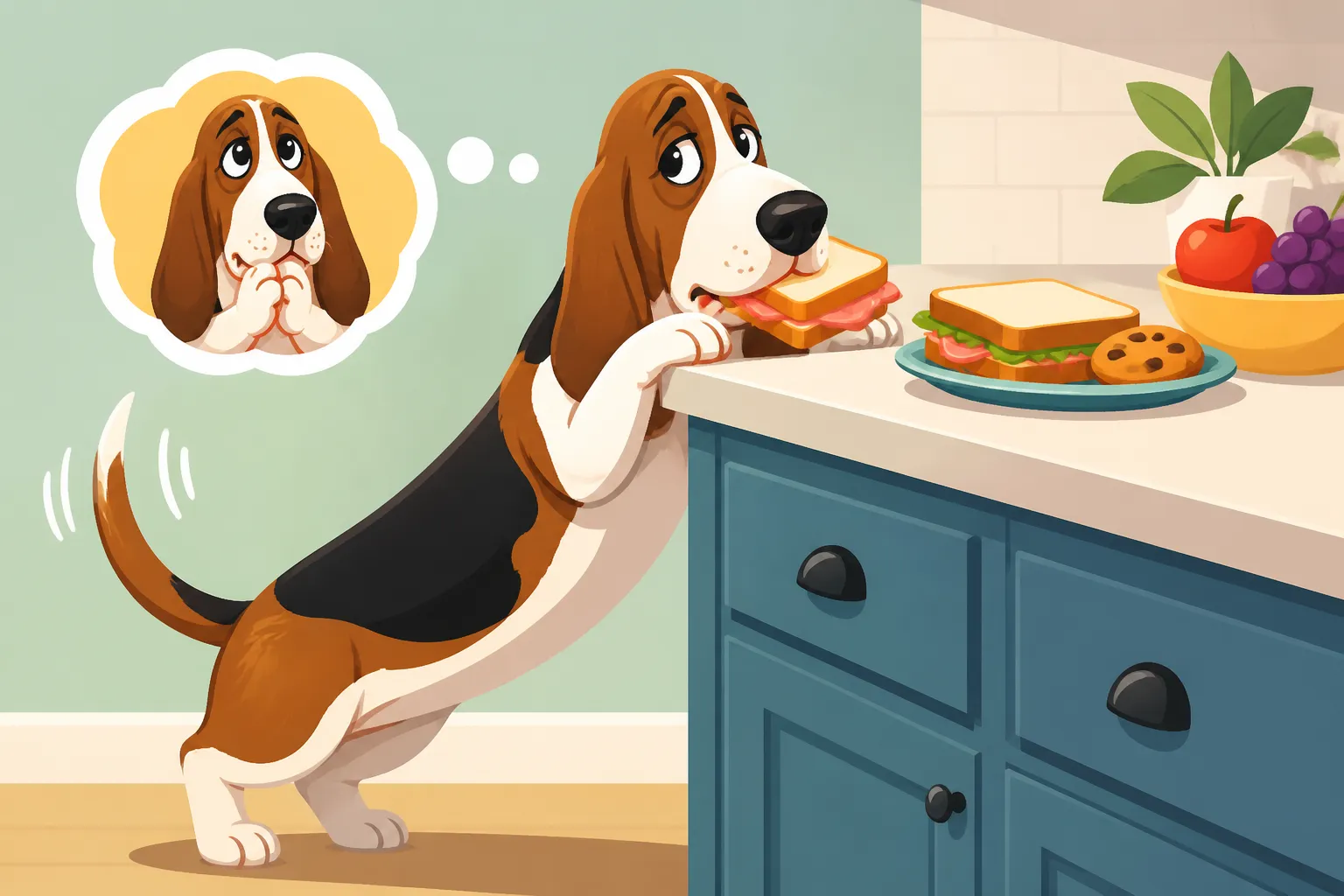
Oh, the infamous counter-surfing Basset Hound! If you've ever walked into your kitchen to find your beloved, low-slung companion with its nose suspiciously close to (or worse, on) the countertop, you're certainly not alone. It's a tale as old as time for many Basset owners: that moment of realization that your carefully prepared meal, or even just a rogue piece of toast, has vanished into the abyss of your hound's insatiable appetite. This guide is here to help you understand why your Basset Hound seems to have a secret mission to clear your counters and, more importantly, what you can actually do about it.
The Alluring Aroma: Why Basset Hounds Are Master Counter Surfers
Let's be honest, calling a Basset Hound a "counter surfer" sometimes feels like an understatement. They're more like counter engineers, always finding new and creative ways to reach forbidden treasures. But why? It all comes down to their genetics, their incredible sense of smell, and a little bit of canine logic.
The Power of Their Nose
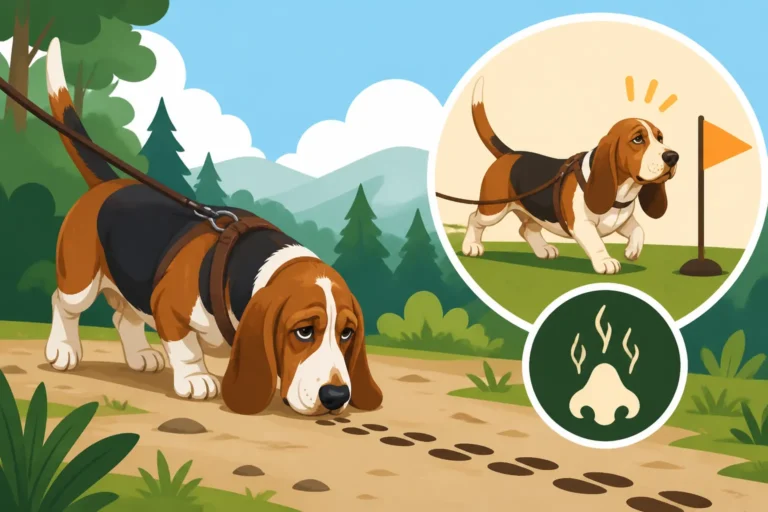
You know that magnificent, ground-hugging nose your Basset has? It's not just for show; it's one of the most powerful scent detectors in the animal kingdom. While a Bloodhound might get all the glory, your Basset Hound isn't far behind in the olfactory department. In fact, many experts would argue that The Nose That Puts a Basset Hound Second to a Bloodhound is truly remarkable. When you leave food on the counter, even if you can't smell it, your Basset's nose is picking up a symphony of enticing aromas.
Imagine for a moment what a roast chicken sitting on the counter smells like to your Basset. To us, it's a pleasant cooking smell. To them, it's an undeniable, intoxicating beacon, a direct invitation to investigate. Their long, pendulous ears, often believed to sweep scents towards their nose, and their extensive dewlaps further enhance their ability to detect and concentrate these smells. This isn't just curiosity; it's an instinctual drive to locate and consume. When that aroma leads them to a readily accessible treat on the counter, it’s like winning the lottery for their nose and their stomach.
Opportunity and Reinforcement
Here’s where we, as owners, often inadvertently become part of the problem. A Basset Hound, for all its charm and seemingly lazy demeanor, is an intelligent creature capable of rapid learning, especially when food is involved. If your Basset manages to snag even a crumb from the counter just once, it creates a powerful positive reinforcement loop. That single success tells them, "Hey, this counter thing works! It's worth trying again!"
This is why consistency is absolutely critical. Even if you only leave a plate unattended for "just a second" and your Basset seizes the opportunity, they've learned something valuable. They’ve learned that sometimes, the counter pays off big time. And because their motivation is so high (food!), they're willing to endure many unsuccessful attempts for that one glorious victory. This isn't about being "bad"; it's about being a highly effective, food-motivated opportunist who has figured out a way to get what they want. They're not being vindictive or disobedient; they're simply following their instincts and previous positive experiences.
The Basset Hound's Clever Mind
Many people mistakenly label Basset Hounds as "stubborn," especially when it comes to training. But often, what looks like stubbornness is actually a selective application of their intelligence, particularly when their nose is engaged. It's less about them being untrainable and more about them weighing the reward. If the reward for ignoring your command is small, and the reward for following their nose is huge (like a piece of roast beef), guess which one wins? If you’ve ever wondered Whether a Basset Hound Is Stubborn or Just Not Interested, you'll find that usually, it's about interest and motivation.
When it comes to counter-surfing, they're not just blindly jumping; they're problem-solving. They might learn which chairs can be nudged closer to the counter, or which low-lying areas allow them to get a paw up. They assess the height, the stability of the object, and the potential payoff. It's a calculated risk, and with their short legs but surprising reach and weight, they can be remarkably effective. They quickly learn the routines of the household, understanding when the kitchen is bustling and when it might be momentarily empty, offering a prime window for a raid. It’s their unique blend of powerful scenting, opportunism, and problem-solving that makes them such formidable counter-surfers.
Preventing the Great Counter Caper: Proactive Strategies
The best defense against a counter-surfing Basset Hound is a good offense. Establishing clear boundaries and consistent habits from day one can save you a lot of frustration (and lost snacks) down the line.
Managing the Environment
The simplest and most effective way to prevent counter-surfing is to remove the temptation entirely. This might sound obvious, but it's often the hardest for us humans to remember in the hustle and bustle of daily life.
- Clear Counters Ruthlessly: Make it a habit to put all food away immediately after use. Even crumbs or cooking splatters can be enough to draw your Basset’s attention. Hot pans, cooling baked goods, dirty dishes – everything needs to be out of reach or completely put away. If it’s not there, they can’t steal it.
- Secure the Trash: Many a Basset Hound has discovered the delights of an open trash can. Invest in a heavy-duty, lidded trash can that can't be easily tipped over or opened by a clever paw. Some Basset owners even use childproof locks on cabinet doors where trash cans are stored, just to be extra safe.
- Limit Access: When you can't supervise, prevent access to the kitchen altogether. Baby gates are fantastic for this purpose, creating a physical barrier that helps enforce boundaries. If you’re wondering What Baby Gates Cost a Basset Hound Owner, it's a worthwhile investment for peace of mind and to protect your hound from eating something they shouldn't. You can find a variety of styles and price points on platforms like Amazon. For periods when you're out of the house, a crate can also be a safe, comfortable haven for your Basset, keeping them out of trouble. How Long a Basset Hound Can Be Left Alone safely often depends on their training and environment.
Teaching "Leave It" and "Off"
Environmental management is crucial, but training is your long-term solution. Teaching "Leave It" and "Off" are fundamental commands that empower your Basset to make good choices even when temptations are present.
- "Leave It": This command teaches your Basset to ignore an item, even if it's right in front of them. Start simple: place a low-value treat on the floor, cover it with your hand, and say "Leave It." When your Basset looks away from your hand, reward them with a different, high-value treat from your other hand. Slowly progress to uncovered treats, then treats on the floor that they walk past, eventually scaling up to items on low tables or even initially, on the counter. The key is to reward them for ignoring the temptation, not for eating the "leave it" item. Consistency and high-value rewards are essential, as What Actually Motivates a Basset Hound is often strongly food-based!
- "Off": This command teaches your Basset to get all four paws off an elevated surface, like the couch, a table, or yes, the counter. Lure them onto a low surface, say "Off," and then lure them off with a treat, rewarding them when all paws are on the floor. Practice this repeatedly. If they jump onto the counter, immediately and calmly say "Off" and lure them down. Never push or pull them off, as this can be perceived as a game or a confrontation.
For comprehensive training support, platforms like BAXTER & Bella offer online courses and resources that can walk you through these commands and other important obedience skills. Their structured approach can be incredibly helpful for any Basset owner looking to refine their hound's manners. Remember, it might take a Basset Hound a little longer to consistently perform certain tasks because they're often weighing the motivation, so don't get discouraged if Whether a Basset Hound Learns Slowly seems true at times; persistence is key.
Providing Appropriate Outlets
A bored Basset Hound, especially one with an incredible nose, is a Basset Hound looking for trouble – often in the form of food. Providing mental and physical stimulation can significantly reduce their desire to invent their own entertainment via counter-surfing.
- Scent Work: This is a fantastic way to engage your Basset's natural talents. Instead of frustrating them by always telling them "no" to their nose, give them acceptable ways to use it. Hide treats around the house for them to find, use snuffle mats, or invest in puzzle toys that require them to problem-solve to get their food. Whether a Basset Hound Takes to Scent Work is almost a resounding "yes" because it taps into their core instincts. Using a snuffle mat, for example, can occupy them for a good chunk of time, burning mental energy in a positive way. You can easily find various snuffle mats and puzzle toys on Amazon.
- Structured Walks: While Basset Hounds aren't marathon runners, they still need regular exercise. Structured walks where they can sniff and explore (on a leash, of course – never trust a Basset off-leash if there’s a scent!) can be mentally enriching. Incorporate short training sessions during walks to reinforce commands. If you’re considering longer walks or trails, remember Whether a Basset Hound Needs a Long Line for safety.
- Chew Toys: Provide a variety of durable, interesting chew toys to keep them occupied, especially when you can't actively supervise. This gives them an appropriate outlet for their oral fixation and prevents them from exploring forbidden objects with their mouths.
Addressing an Established Habit: What to Do When They Already Steal
If your Basset Hound has already developed a robust counter-surfing habit, it's going to take more than just a quick fix. It requires a committed, multi-pronged approach to undo the powerful reinforcement that has built up over time.
Consistency is Key
This cannot be stressed enough: everyone in the household must be on the same page. If one family member is diligent about clearing counters and another occasionally leaves a sandwich unattended, your Basset will quickly learn who the "weak link" is. Every successful counter-surf, no matter how small, reinforces the behavior and makes it harder to break.
Before you begin, have a family meeting. Discuss the rules, the training commands, and the consequences (e.g., immediate redirection, never yelling or physical punishment). Ensure everyone understands that even a momentary lapse can set back weeks of progress. This also applies to visitors and children; educate them on the importance of not feeding the Basset from the table or leaving their plates within reach.
The Role of Management in Retraining
When you're actively trying to break a deeply ingrained habit, management is your best friend. It sets your Basset up for success by preventing opportunities to practice the unwanted behavior.
- Supervised Access Only: If your Basset is a known counter-surfer, do not allow them unsupervised access to the kitchen. Use baby gates to block off the kitchen when you're not actively in there and able to watch them like a hawk. When you are in the kitchen, keep them leashed to you, or tethered to a piece of heavy furniture (never unsupervised!), so you can immediately interrupt any attempts to go for the counter.
- Crating When Unsupervised: For times when you simply cannot provide active supervision – maybe you're stepping out, or focusing on another task – a crate or a secure, dog-proofed room is invaluable. It removes the opportunity to practice the behavior, effectively giving your Basset a "time-out" from the temptation. This isn't a punishment; it's a tool to prevent unwanted habits from forming or strengthening.
- Elevated Bowls: While primarily for comfort in some breeds, using a raised feeding station can sometimes help Bassets with very long ears avoid getting them soaked or dirty in their food. However, for counter-surfing, it’s about controlling their access to your food, not necessarily their own. Ensure their own food bowls are always picked up after mealtimes if they're not free-fed, which is generally not recommended for Bassets given Feeding a Basset Hound That Would Eat Forever.
Making Counter-Surfing Unrewarding
The goal is to teach your Basset that the counter is not a source of food. This means that every attempt must result in no reward. Sometimes, this requires being a little bit clever.
- "Booby Traps" (Used with Caution): Some owners use mild deterrents to make the counter an unpleasant place for a Basset without causing fear. This might include stacking empty, lightweight cans on the edge of the counter, or using a motion-activated air sprayer. The idea is that when the Basset nudges the counter, something startling (but harmless) happens, and they associate the counter itself with the unpleasant sensation, not you. It's crucial that you're not present when this happens, so they don't associate you with punishment. Always ensure these methods are safe and won't cause injury or undue stress. You can find motion-activated alarms on Amazon.
- Positive Interruption: If you catch your Basset in the act of trying to counter-surf, a calm, firm "Leave It" or "Off" command followed by redirection to an appropriate toy or activity can be effective. Reward them profusely when they comply and choose the appropriate alternative. This is where your earlier training of "Leave It" and "Off" really pays off. Remember, the key is to prevent the reward (the food) from being obtained.
Beyond the Counter: Other Food-Related Challenges
A Basset Hound's intense food drive and powerful nose extend beyond just counter-surfing. Understanding these related behaviors can help you create a more harmonious and safer environment for your hound.
Scavenging on Walks
The same powerful nose that leads your Basset to counter-surf can also lead them to all sorts of treasures (and potential dangers) out on walks. From discarded food wrappers to less savory items, Basset Hounds are natural scavengers. This is why a rock-solid "Leave It" command is non-negotiable for their safety, especially since Whether a Basset Hound Eats Things Off the Ground is almost a given.
Training for "Leave It" on walks is just as important as in the home. Start in a low-distraction environment and gradually increase the difficulty. Always be vigilant, scan ahead for potential hazards, and be ready to intervene. A Basset Hound on a scent can be oblivious to everything else, even oncoming traffic, making a strong recall and a secure leash critical to their safety.
Protecting Their Own Food
While Basset Hounds are generally good-natured, their strong food drive can sometimes lead to resource guarding, where they become possessive of their food, treats, or toys. This can manifest as growling, snapping, or freezing when someone approaches their bowl.
To prevent this, establish clear routines around feeding. Teach your Basset to "wait" before eating, and always supervise meal times, especially in multi-pet households or homes with children. Practice hand-feeding occasionally to build positive associations with your presence around their food. If your Basset exhibits signs of resource guarding, such as Whether a Basset Hound Guards a Bone, consult with a professional dog trainer or behaviorist immediately to address it safely and effectively.
The Ever-Present Appetite
It’s often said that a Basset Hound "would eat forever," and for many owners, this feels incredibly true. Their seemingly bottomless appetite means that managing their weight is a lifelong commitment. Counter-surfing is not just annoying; it can contribute to obesity, which is particularly detrimental for a Basset's long back and short legs. Keeping a Basset Hound at Its Correct Weight is vital for their long-term health and mobility.
This constant hunger also means they are relentlessly motivated by food, which, while challenging, can also be leveraged for training. Use their love of food to your advantage during training sessions, employing small, high-value treats for positive reinforcement. Just remember to account for those treats in their daily caloric intake to prevent unwanted weight gain.
Here's a quick overview of approaches to counter-surfing:
| Method | Description | Best For | Pros | Cons |
|---|---|---|---|---|
| Environmental Mgmt. | Removing all food from counters, securing trash, using gates. | Immediate prevention, setting new habits. | Highly effective, no direct confrontation with the dog. | Requires consistent effort from all household members. |
| "Leave It" Training | Teaching the dog to ignore tempting items on command. | Building impulse control, long-term solution. | Empowers the dog to make good choices, applicable everywhere. | Requires patience, consistent practice, and high-value rewards. |
| "Off" Training | Teaching the dog to get all four paws off a surface. | Addressing the physical act of jumping up. | Creates clear boundaries, useful for various surfaces. | May be ignored if the food reward is too high. |
| Enrichment | Scent games, puzzle toys, structured walks. | Reducing boredom, channeling natural drives. | Positive outlet for Basset instincts, reduces overall mischief. | Does not directly address the counter-surfing act itself. |
| Deterrents (Booby Traps) | Motion-activated alarms, stacked cans. | Breaking established habits, unsupervised training. | Dog associates counter with unpleasantness, not the owner. | Must be used with caution, can cause fear if too intense. |
Remember, managing a Basset Hound's love affair with food, especially when it involves your counters, is an ongoing process. With patience, consistency, and a good understanding of what makes your Basset tick, you can help them (and your kitchen) live in harmony.
Disclaimer
This article is for general informational purposes only and does not constitute professional advice. Laws, prices and regulations vary by location and change over time. Consult a qualified professional for guidance on your specific situation.