Whether a Basset Hound Should Be Lifted Into the Car
The daily struggle of getting your beloved Basset Hound into and out of the car is a common lament among owners. Their wonderfully long bodies and adorably short legs, while utterly charming, weren't exactly designed for graceful leaps into SUVs or even sedans, and the thought of them hurting their precious backs is always a worry. This guide will walk you through the reasons why careful car entry and exit is so important for Basset Hounds, and explore all the practical ways you can make car travel safer and more comfortable for them, protecting their delicate spines for years to come.
The Basset Hound's Unique Anatomy and Car Challenges
Those long, low-slung bodies that we adore in Basset Hounds are a marvel of genetic engineering, but they also come with a set of specific challenges, particularly when it comes to activities like jumping. Imagine trying to jump into a car if your legs were only a quarter of your body length – it would be incredibly awkward and put immense strain on your back. That's essentially what your Basset faces every time they try to launch themselves into a vehicle. Their build is a defining characteristic, a testament to their heritage as scent hounds designed to work low to the ground, but it also means we, as their guardians, need to be extra mindful of how they navigate their world, especially when it involves elevation changes.
Understanding the Basset Hound's Spinal Vulnerabilities
The Basset Hound's distinctive silhouette, with its long back and short, sturdy legs, is due to a form of chondrodystrophy, a genetic condition that affects cartilage and bone development. While this is what gives them their unique charm, it also means their spinal discs are predisposed to issues. The most common and concerning of these is Intervertebral Disc Disease in a Basset Hound (IVDD), where the cushioning discs between the vertebrae can bulge or rupture, pressing on the spinal cord. Even a seemingly small jump or twist can put undue stress on these already vulnerable discs.
Think of it this way: their spine is like a long, flexible bridge. Repeated impact, especially from uncontrolled jumping and landing, can weaken the supports and foundations of that bridge over time. A ruptured disc can lead to excruciating pain, nerve damage, and in severe cases, even paralysis. It's a condition that can appear suddenly, seemingly out of nowhere, but often has roots in years of accumulated micro-trauma. Preventing this kind of injury is paramount for ensuring a good quality of life for your Basset.
The Impact of Repeated Jumping
Every time your Basset Hound jumps into or out of a car, they’re creating impact. Even if it looks like a small step to us, for a dog with a disproportionately long back and short legs, it's a significant jarring motion. This repeated stress isn't just a risk for sudden injury; it's also a significant contributor to long-term wear and tear on their joints and spine. Over months and years, these small impacts can lead to inflammation, cartilage degeneration, and contribute to conditions like arthritis.
Consider a Basset Hound who, for years, has been jumping from the sofa or bed, or launching themselves out of the car at the dog park. Each jump might not cause immediate distress, but the cumulative effect can be devastating. Owners often don't see the problem until a sudden lameness or refusal to move strikes, but the damage has been building. It’s not just about IVDD; it's about preserving the overall structural integrity of their skeletal system, allowing them to move comfortably and without pain as they age. This careful consideration becomes even more critical as they reach their senior years, where preventing The Old Basset Hound That Cannot Get Off the Floor becomes a key focus.
Why Their Short Legs Make Jumping Hard (and Dangerous)
It's not just the length of their back; it's the specific mechanics of how their short legs interact with their long body. When a Basset Hound attempts to jump, they lack the leverage and spring that a longer-legged breed might have. They often have to launch themselves with significant force from their hindquarters, then absorb the landing shock primarily through their front legs, which are already prone to issues like The Crooked Front a Basset Hound Is Built On and Why One Basset Hound in Seven Has Bad Elbows.
This awkward physics means that their entire spinal column is put under immense strain during the jump. They twist, contort, and land with an impact that is not efficiently absorbed by their short limbs. This isn't just uncomfortable; it significantly increases the risk of a misstep, a painful landing, or worse, a disc injury. Furthermore, if they miss a step or slip, the consequences can be even more severe. Their low stature, designed for following scent trails steadily, makes sudden, high-impact movements particularly risky.
When Lifting Your Basset Hound is Necessary (and How to Do It Safely)
Despite our best efforts with ramps or steps, there will inevitably be times when lifting your Basset Hound into the car or even onto an examination table at the vet is the only option. It’s not always feasible to carry a ramp everywhere, or perhaps the situation is urgent. The key is to understand when lifting is truly necessary and, more importantly, how to do it in a way that prioritizes your Basset’s spinal health. Rushing or using improper technique can negate all other preventative measures.
Situations Where Lifting Becomes Unavoidable
There are definite times when you’ll find yourself needing to lift your Basset. The most obvious is an emergency situation where speed is critical, and you can't waste time setting up a ramp. If your Basset Hound has been injured or suddenly becomes ill, getting them quickly and gently into the car for a vet visit is paramount. In these moments, safety is still key, but expediency takes precedence over elaborate setup.
Another common scenario is when you have a very young puppy or a senior Basset Hound. Puppies might be too small and uncoordinated to manage a ramp safely, while an older Basset, especially one with Arthritis in a Basset Hound at Seven or other mobility issues, might lack the strength or confidence for a ramp. Post-operative care, where any strain could impede healing, also necessitates careful lifting. Sometimes, it's simply a tight parking spot where a ramp won't fit, or a sudden downpour where you want to get them in quickly and dry. Being prepared with proper lifting technique is crucial for these moments.
The Proper Way to Lift a Basset Hound
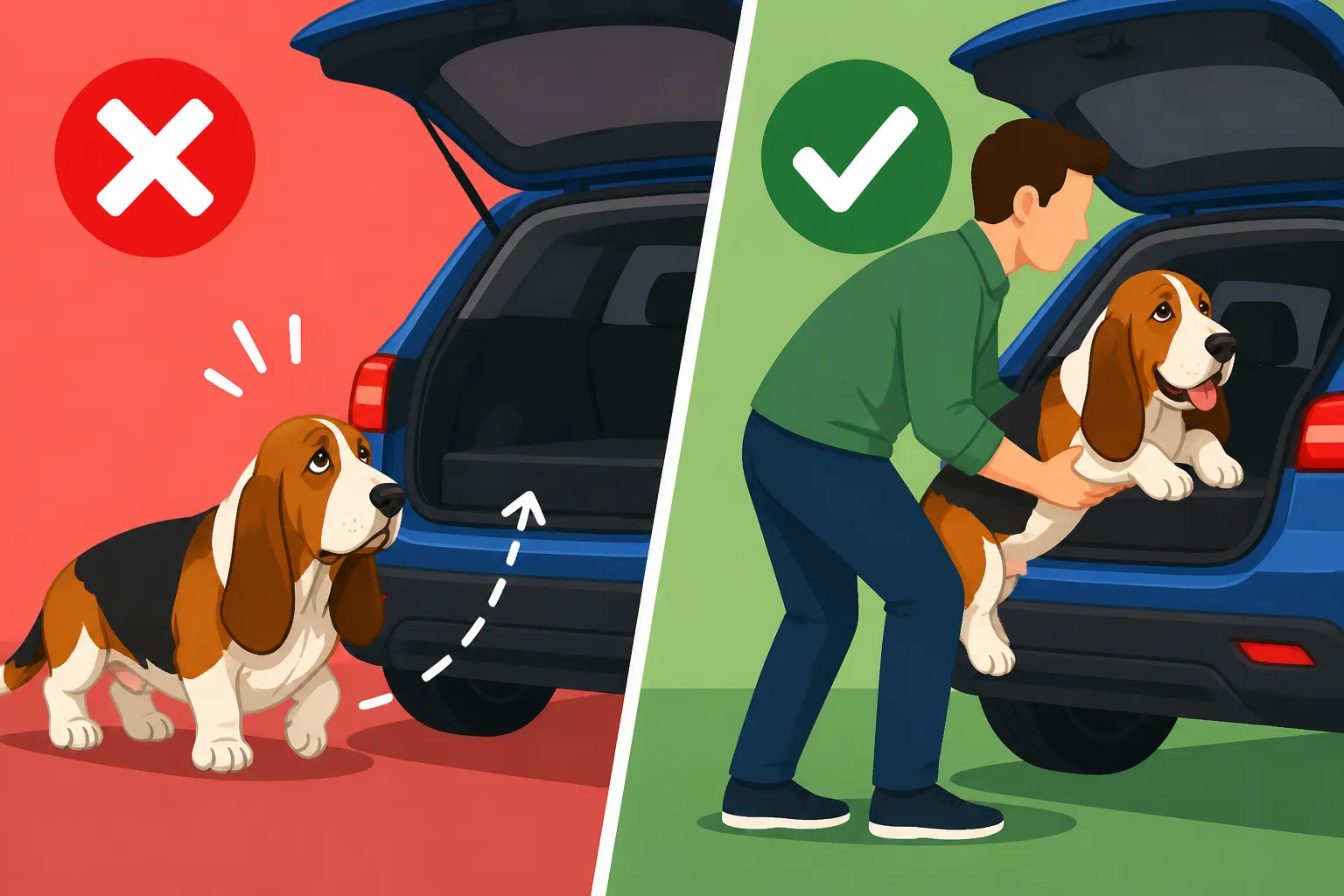
Lifting a Basset Hound safely requires a technique that supports their long body evenly, minimizing any spinal torsion or arching. The goal is to distribute their weight and keep their back as straight and level as possible.
Here's a step-by-step guide on how to safely lift your Basset:
- Approach from the Side: Position yourself alongside your Basset, not from the front or back, to avoid twisting their body.
- Support the Chest: Place one arm underneath their chest, just behind their front legs. This provides primary support for their heavy front end.
- Support the Hindquarters: Place your other arm underneath their belly and hindquarters, just in front of their back legs. This is crucial for supporting their long, vulnerable back.
- Lift Evenly: With both arms providing firm, even support, bend your knees and lift straight up, keeping your back straight. Avoid twisting your own body as you lift.
- Keep Them Level: As you lift and transfer them, try to keep their body as horizontal and stable as possible, minimizing any sagging or arching of their back.
- Gentle Placement: Slowly lower them into the car, ensuring their feet land securely on the floor or seat. Once they are safely in, release your hold gently.
For more detailed visual guidance on this, you might find articles like How to Lift a Basset Hound Safely incredibly helpful. Remember, practice makes perfect, and getting comfortable with this technique will serve both you and your Basset well.
Common Lifting Mistakes to Avoid
While the intent to help is always there, some common lifting mistakes can inadvertently put your Basset Hound at risk. One of the most frequent errors is lifting them only by their front legs or under their armpits. This dangles their entire long back unsupported, creating a massive amount of strain on their spine and potentially wrenching their shoulders. Imagine being picked up by your armpits – it's uncomfortable and puts pressure on your shoulders and spine. For a Basset, it's even worse.
Another mistake is lifting them by their tail or hind legs, which is equally, if not more, dangerous, as it can cause severe spinal and hip injuries. Even lifting them solely from their middle can cause their heavier front and back ends to sag, creating a damaging arch in their back. Finally, rushing the lift, or twisting your body while holding them, can lead to both your injury and theirs. Always take your time, ensure a firm grip, and move smoothly and deliberately. Avoiding these common pitfalls is just as important as knowing the correct technique.
Alternative Solutions for Car Entry and Exit
For most Basset Hounds, especially as they mature or if they have any predisposition to back issues, relying solely on lifting isn't the safest long-term strategy. Thankfully, there are excellent alternatives available that empower your Basset to enter and exit the car independently, minimizing strain on their body and your back. Investing in these tools is often a small price to pay for the long-term health and well-being of your beloved companion.
The Benefits of Using a Dog Ramp
Dog ramps are, in my opinion, the unsung heroes of Basset Hound care. They offer a gentle, gradual incline that allows your Basset to walk into and out of the car without any jumping or lifting. This simple device provides a multitude of benefits, primarily centered around safety and preventative care. Firstly, it completely eliminates the impact and spinal strain associated with jumping, drastically reducing the risk of acute injuries like disc ruptures.
Secondly, ramps promote independence. Your Basset can confidently enter and exit the vehicle on their own terms, which can be particularly beneficial for dogs who are nervous about being lifted, or those with early signs of The Back Trouble a Basset Hound Is Built Into. For older Bassets, or those recovering from surgery, a ramp is invaluable, allowing them to maintain mobility without exacerbating existing conditions. It’s also a huge benefit to you, saving your back from the strain of lifting a sometimes surprisingly heavy dog. Many owners wonder Whether a Basset Hound Should Use a Ramp, and the answer is almost always a resounding yes.
Choosing the Right Ramp for Your Basset Hound and Vehicle
Not all dog ramps are created equal, and finding the perfect one involves considering a few key factors to ensure safety and usability for your Basset Hound and your specific vehicle.
Here’s what to look for:
- Length: This is critical. A ramp that is too short will be too steep, making it difficult or even dangerous for your Basset to use. You want a gentle incline. Measure the height from the ground to your car's entry point and look for a ramp that offers a long enough span to create a comfortable slope. For example, a 6-foot ramp might be ideal for an SUV, while a 4-foot ramp might work for a lower-slung car.
- Surface: The ramp needs a non-slip surface to give your Basset good traction. Carpeting, sandpaper-like textures, or rubberized treads are excellent choices. Smooth plastic or slick surfaces are a definite no-go, especially if it's wet or your Basset has slightly less stable footing.
- Width: Ensure the ramp is wide enough for your Basset to walk comfortably without feeling cramped or at risk of stepping off the side. A wider ramp generally feels more secure for them.
- Stability: The ramp should feel sturdy and secure when extended. Look for features like rubber feet that grip the ground and a lip or strap that secures to your vehicle's bumper or cargo area. It shouldn't wobble or slide when your Basset is using it.
- Portability and Storage: Consider how easily the ramp folds or collapses, and its weight. You want something you can manage on your own and that fits comfortably in your vehicle's trunk or back seat. Ramps available through retailers like Amazon offer a vast selection, from telescoping designs to foldable models, allowing you to compare features and read reviews.
Investing in a good quality ramp is one of the best preventative measures you can take for your Basset's spinal health.
Dog Steps vs. Ramps: Pros and Cons for Basset Hounds
While ramps are generally considered ideal for Basset Hounds due to their long backs, dog steps are another option that some owners consider. Let's weigh the pros and cons for our low-riders.
Dog Steps:
- Pros:
- Compact: Steps are often more compact and can be easier to store in smaller vehicles or tighter spaces when not in use.
- Less Space Needed for Deployment: They don't require the same length of clear space behind the car that a ramp does, which can be useful in crowded parking lots.
- Can Be More Stable for Some Dogs: Some dogs might feel more secure on defined steps rather than a long, sloping surface, especially if they're nervous about heights or movement.
- Cons:
- Still Involve "Steps": Even low steps require your Basset to lift and place each leg, and sometimes jump, putting some degree of strain on their joints and spine with each rise. This isn't ideal for preventing Intervertebral Disc Disease in a Basset Hound.
- Not as Gentle: The abruptness of steps, even shallow ones, is less gentle on the spine and joints than a smooth incline. For dogs with existing back issues or mobility challenges, steps might still be too jarring.
- May Not Fit All Vehicles: The height of the steps needs to match your car's entry point perfectly, or there will still be an awkward jump to get the last bit in.
Ramps:
- Pros:
- Gentle Incline: The biggest advantage is the continuous, smooth slope, which eliminates all jumping and stepping. This is paramount for protecting their delicate backs.
- Reduced Joint Stress: Ideal for Bassets with arthritis, hip or elbow dysplasia, or any pre-existing mobility issues, as it minimizes impact.
- Increased Confidence: Many Bassets take to ramps quickly, feeling more secure on a gradual incline than having to navigate individual steps.
- Versatile: A single ramp can often be used for different heights (car, sofa, bed) more easily than steps. The Ramps, Beds and Gates a Basset Hound Needs often includes a good ramp.
- Cons:
- Longer/Bulkier: Ramps typically take up more space when stored and require more room to deploy behind the vehicle.
- Can Be Heavier: Some sturdy ramps can be a bit heavier to maneuver, though lightweight aluminum or plastic options are available.
- Training Might Be Needed: Some dogs might be initially wary of a ramp's surface or sensation, requiring a bit of positive reinforcement training.
For a Basset Hound, the gentle incline and minimal impact offered by a ramp generally make it the superior choice for car access, significantly reducing stress on their long, vulnerable spines.
Creating a Safe and Comfortable Car Environment
Getting your Basset Hound into the car safely is just the first step. Ensuring they are secure and comfortable during the actual journey is equally important, not only for their well-being but also for your safety as the driver. A loose dog can be a dangerous distraction, and an uncomfortable dog can become anxious or agitated, making for a stressful trip for everyone.
Securing Your Basset Hound During Travel
For your Basset Hound's safety and yours, never allow them to roam freely in the car. In the event of a sudden stop or accident, an unsecured dog can become a projectile, causing serious injury to themselves and others in the vehicle. There are a few excellent options for safely securing your Basset:
- Safety Harnesses: These are designed to be worn by your dog and then clipped into a seatbelt receiver. Look for crash-tested harnesses that distribute impact forces across your dog's chest and shoulders, rather than their neck. Brands widely available on Chewy offer a range of sizes and designs that prioritize safety. This allows your Basset to sit or lie down comfortably on the seat while remaining restrained.
- Crates: A travel crate or carrier, securely fastened in the cargo area or backseat, offers an excellent level of protection. Choose a crate that is appropriately sized – large enough for your Basset to stand up, turn around, and lie down comfortably, but not so large that they can be tossed around inside during sudden movements. Hard-sided crates generally offer more protection, but soft-sided options can work for calmer dogs on shorter trips. Ensure the crate itself is secured with straps or bungee cords to prevent it from sliding.
- Car Seats/Boosters: While more common for smaller dogs, some brands offer booster seats designed for larger, lower-profile breeds. These elevate your Basset for a better view (which can sometimes reduce Whether a Basset Hound Gets Car Sick) and typically feature an internal strap to secure them. Always ensure the seat itself is firmly anchored to your car's seat.
Whichever method you choose, consistency is key. Always secure your Basset Hound, even for the shortest trips, to make it a routine part of their car experience.
Comfort and Support for the Journey
Beyond safety, consider your Basset's comfort during car rides. Their long bodies and prone position can benefit from supportive bedding, especially on longer journeys. An orthopedic bed or a thick, cushioned mat can provide extra padding and support for their joints and spine, mimicking the comfort of What an Orthopedic Bed Costs for a Basset Hound. This is particularly important for older Bassets or those with musculoskeletal issues.
Temperature control is also vital. Basset Hounds can overheat easily due to their short snouts and dense coats, especially in warmer weather. Ensure adequate ventilation, use air conditioning, and never leave them unattended in a parked car, even for a few minutes. In colder weather, while their coat provides some insulation, their low-slung body can get chilly, especially their belly. A warm blanket or a dog sweater might be appreciated for very cold trips. Keeping them hydrated is also important, so bring along a travel water bowl and fresh water for stops.
Managing Car Sickness and Anxiety
Some Basset Hounds, despite all your efforts, may still struggle with car sickness or anxiety, making car travel a less-than-pleasant experience for everyone. Recognizing the signs – drooling, lip-licking, yawning, whining, restlessness, or vomiting – is the first step.
For car sickness:
- Limit Food Before Travel: Avoid feeding your Basset a large meal right before a car ride. A small, bland snack a couple of hours beforehand might be better.
- Fresh Air: Keep windows slightly cracked to allow fresh air circulation.
- Forward Facing: Some dogs do better looking forward rather than out the side window.
- Short, Frequent Trips: Start with very short, positive trips to pleasant destinations (like a park, not just the vet) to help them associate the car with good things.
- Veterinary Consultation: If car sickness is severe, your vet can prescribe anti-nausea medication.
For anxiety:
- Gradual Acclimation: Introduce the car slowly. Start with just sitting in the parked car, then short trips around the block, gradually increasing duration.
- Positive Reinforcement: Offer favorite toys or treats (if they're not prone to sickness) and lots of praise for calm behavior.
- Comfort Items: Bring a familiar blanket or toy from home to provide comfort and a sense of security.
- Calming Aids: Consider natural calming supplements, pheromone sprays, or even a thundershirt-type wrap if anxiety is mild. For severe anxiety, consult your vet; they might suggest behavioral modification techniques or anti-anxiety medication.
By addressing these comfort and psychological aspects, you can turn car trips from a dreaded chore into a more relaxed and enjoyable outing for your Basset Hound.
Long-Term Health Considerations and Prevention
Our primary goal as Basset Hound owners is to ensure our furry friends live long, happy, and healthy lives. The way they interact with their environment, including how they get into and out of vehicles, has profound implications for their long-term well-being. Proactive care, understanding their predispositions, and working closely with your veterinarian are all crucial components of this commitment.
The Link Between Car Access and Intervertebral Disc Disease in a Basset Hound
We’ve talked about IVDD a bit already, but it bears repeating: Intervertebral Disc Disease in a Basset Hound is a real and often devastating risk. Their unique body structure makes them highly susceptible. The jarring impacts from jumping, the twisting motions as they try to navigate heights, and the sheer strain on their elongated spinal column are all direct contributors to disc degeneration and rupture. Even if your Basset Hound is young and appears agile, every jump they make into or out of a car is a tiny gamble with their future spinal health.
Preventative care, therefore, is not just about avoiding immediate injury, but about minimizing cumulative stress. Using a ramp or consistently and correctly lifting them removes these harmful impacts. This isn't about being overly cautious; it's about being a responsible guardian for a breed specifically engineered in a way that makes their back a potential Achilles' heel. Preventing IVDD can save your Basset from immense pain and suffering, and you from the emotional and financial burden of What a Basset Hound's Emergency Surgeries Cost – which can be substantial for spinal procedures.
Consulting Your Veterinarian
Your veterinarian is your most valuable partner in your Basset Hound's health journey. Don't hesitate to discuss safe car travel practices with them. They can offer tailored advice based on your dog's age, weight, overall health, and any pre-existing conditions. For instance, if your Basset has already experienced some back pain or has been diagnosed with mild disc degeneration, your vet might recommend specific types of ramps or restrictions on certain activities.
They can also assess your Basset’s mobility and recommend appropriate joint supplements or other preventative measures. A yearly check-up is an excellent opportunity to discuss any concerns you have about your Basset’s gait, flexibility, or any signs of discomfort. Catching subtle issues early can make a huge difference in managing their long-term health. Never underestimate the value of professional veterinary advice when it comes to the unique needs of your Basset Hound.
Diet and Joint Health Support
Nutrition plays a surprisingly significant role in supporting overall skeletal and joint health, especially for a breed like the Basset Hound. A balanced diet appropriate for their life stage and activity level is foundational. Preventing What Extra Weight Does to a Basset Hound is paramount, as excess weight places additional, immense strain on their joints and spine, accelerating degeneration and increasing the risk of IVDD and arthritis.
Beyond a good base diet, many Basset Hound owners opt for joint supplements. Ingredients like glucosamine, chondroitin, and omega-3 fatty acids (often found in fish oil) are commonly used to support cartilage health, reduce inflammation, and improve joint lubrication. While supplements are not a magic bullet, they can be a valuable part of a comprehensive preventative strategy, especially as your Basset ages. You can find a wide array of high-quality joint supplements through retailers like Chewy or Amazon, or explore fresh food delivery services like Ollie that often incorporate joint-supporting ingredients. Always discuss any supplements with your vet before introducing them, as they can advise on appropriate dosages and potential interactions.
Taking a holistic approach that includes safe car access, proper lifting, a healthy diet, and veterinary oversight will give your Basset Hound the best chance at a comfortable and active life, minimizing the impact of their unique, lovable build.
| Method of Car Entry/Exit | Pros for Basset Hounds | Cons for Basset Hounds | Best Use Case | Cost (relative) |
|---|---|---|---|---|
| Lifting | Direct control; no equipment needed (emergency) | High risk of spinal/joint injury; strain on owner's back | Emergencies; very young/old; short distances | Low (direct) |
| Ramp | Eliminates jumping/impact; gentle on spine/joints; independence | Can be bulky/heavy; requires space; initial training may be needed | Regular car travel; senior dogs; dogs with back issues | Medium |
| Steps | More compact than ramps; less space needed for deployment | Still involves some stepping/impact; less gentle than ramp; may not fit all vehicles | Very low entry cars; smaller dogs; quick trips | Low-Medium |
Disclaimer
This article is for general informational purposes only and does not constitute professional advice. Laws, prices and regulations vary by location and change over time. Consult a qualified professional for guidance on your specific situation.