How Much Food an Adult Basset Hound Eats Monthly
If you’ve ever owned a Basset Hound, you know the look. That soulful, pleading gaze directed at your plate, at the treat jar, or just at thin air, as if they’re constantly envisioning their next meal. Figuring out how much to feed these adorable, food-motivated dogs can feel like a guessing game, especially when their appetite seems boundless. This guide is here to help you navigate the often-confusing world of canine nutrition for your Basset Hound, giving you a realistic understanding of how much food an adult Basset Hound truly needs each month to stay healthy and happy, without packing on those extra pounds that can cause so many issues.
The Hungry Hound: Understanding Your Basset Hound’s Caloric Needs
It's a common misconception that all dogs of a certain weight need the same amount of food. With Basset Hounds, this couldn't be further from the truth. Their unique build, lower energy levels compared to some other breeds, and their undeniable love for food mean that their caloric intake needs careful management. You're not just dealing with a dog; you're dealing with a Basset Hound, a breed almost genetically predisposed to wanting more.
Why Basset Hounds Are Prone to Overeating and Weight Gain
Let's be honest, our Bassets are masters of manipulation when it comes to food. Their mournful eyes and those long, mournful bays can convince even the most disciplined owner to offer an extra bite. But their propensity for weight gain isn't just about their charming begging; it's also tied to their metabolism and their natural activity levels. Basset Hounds, while they enjoy a good sniffari, aren't typically high-energy dogs that burn off calories with wild abandon. They are bred for endurance in trailing, not for sprinting or agility. This means that a relatively moderate amount of food can quickly become too much if not paired with consistent, albeit leisurely, exercise.
Many owners face the challenge of Whether a Basset Hound Is Fat or Just Built That Way. It’s easy to look at their loose skin and heavy bone and think they just naturally carry a lot of weight. However, this loose skin can actually mask true weight gain. It's crucial to regularly assess their body condition by Feeling for a Basset Hound's Ribs Under Loose Skin to ensure they are at a healthy weight. Extra weight puts a tremendous strain on their unique skeletal structure, especially their long backs and short, bowed legs, leading to potential issues down the line. We know What Extra Weight Does to a Basset Hound, and it’s not pretty for their joints or overall longevity.
Factors Influencing Your Basset Hound’s Daily Portions
Determining the exact amount of food your Basset Hound needs requires more than just glancing at the back of a bag. Several factors play a significant role:
- Age: A younger, still-growing adult Basset (typically up to 2 years old, though they fill out later) might need slightly more calories than a fully mature, sedentary senior. However, don't confuse growth with needing endless food. An older Basset Hound, especially one that is becoming The Old Basset Hound That Cannot Get Off the Floor, will have significantly reduced caloric needs.
- Activity Level: Is your Basset Hound a dedicated couch potato, enjoying short strolls around the block, or do they accompany you on longer, consistent walks? Even a slight difference in daily exercise can impact their needs. A Basset who loves Giving a Basset Hound's Nose Something to Do through scent games or leisurely trail walks might need a bit more than one whose main activity is moving from the sofa to the food bowl.
- Metabolism: Just like people, dogs have individual metabolic rates. Some Bassets are naturally lean, while others seem to gain weight just by looking at food.
- Spay/Neuter Status: Whether a Neutered Basset Hound Gains Weight is a real concern. Spaying or neutering can lower a dog's metabolic rate, meaning they may need fewer calories to maintain their weight. This is a common reason for unexpected weight gain after the procedure.
- Health Conditions: Any underlying health issues, such as Signs a Basset Hound's Thyroid Has Failed (hypothyroidism), can affect metabolism and weight. Always consult your veterinarian if you notice sudden changes in appetite or weight.
Most adult Basset Hounds will fall into a general weight range, and the goal is to keep them within their healthy range, which can be around 40-60 pounds, depending on their sex and build. A good starting point is usually about 2-3 cups of high-quality kibble per day, divided into two meals. However, this is just a starting point.
What's for Dinner? Food Types and How They Affect Quantity
The type of food you choose for your Basset Hound isn't just about nutritional value; it also impacts the volume of food they need and, consequently, your monthly expenditure. Higher quality foods often pack more nutrients into smaller portions, which can be beneficial for managing weight.
Dry Kibble: The Most Common Choice
Dry kibble is by far the most popular and convenient option for feeding Basset Hounds. The caloric density of kibble can vary wildly between brands and formulas. A "light" or "senior" formula might have fewer calories per cup than an "all-life-stages" or "performance" formula.
When choosing kibble, look for:
- High-quality protein sources as the first ingredient.
- Appropriate fat content for their activity level.
- Fiber to help them feel full.
- Joint support ingredients like glucosamine and chondroitin are often beneficial, especially as Basset Hounds age. Whether a Basset Hound Needs Glucosamine Early is a valid question many owners have, given their predisposition to joint issues like Why One Basset Hound in Seven Has Bad Elbows.
Let's consider a hypothetical scenario: You purchase a 30-pound bag of a popular, good-quality kibble from a retailer like Chewy. If your Basset Hound needs, on average, 2.5 cups per day, and there are roughly 4 cups per pound of kibble (this varies, always check the bag!), then a 30-pound bag would contain about 120 cups.
120 cups / 2.5 cups/day = 48 days.
So, a 30-pound bag might last you about 1.5 months. If you buy a smaller 20-pound bag, that's roughly 80 cups, lasting about 32 days.
This calculation helps illustrate What Kibble Costs for a Basset Hound over the long term, as you'd need roughly two 20-pound bags or one 30-pound bag plus a smaller one to get through a month and a half.
Remember, always consult the specific feeding guidelines on your chosen food bag and adjust based on your dog's individual needs, activity level, and body condition. These guidelines are just a starting point.
Wet Food and Fresh Food Options
Some Basset Hound owners opt for wet food, either as a topper or as a complete meal, or even switch to fresh, human-grade food.
- Wet Food: Generally less calorically dense than kibble due to its higher moisture content. While delicious to a Basset, feeding exclusively wet food can become very expensive very quickly, and you'll need to feed a much larger volume to meet their caloric needs.
- Fresh Food (e.g., Ollie): Brands like Ollie deliver pre-portioned, fresh, human-grade meals. These can be excellent for nutrition and palatability, but they come at a higher price point. The portions are usually carefully calculated by the company based on your dog's age, weight, and activity level. If you're feeding a fresh food diet, you'll be getting specific daily recommendations, which then dictates your monthly supply. What Fresh Food Costs for a Basset Hound can be a significant investment, but many owners find the health benefits worth it.
Here’s a simplified comparison of food types:
| Food Type | Caloric Density (Approx. per cup) | Typical Daily Volume (for adult Basset) | Monthly Cost Implication | Benefits | Considerations |
|---|---|---|---|---|---|
| Dry Kibble (Std) | Medium-High (350-450 kcal) | 2-3 cups | Moderate | Convenient, cost-effective, easy to store | Quality varies, can be boring for picky eaters |
| Dry Kibble (Lite) | Medium-Low (300-380 kcal) | 2.5-3.5 cups | Moderate | Good for weight management | Less palatable for some, may feel like more volume needed |
| Wet Food | Low (100-200 kcal per can/pouch) | Multiple cans/pouches | High | High palatability, good for hydration | Very expensive, often used as a topper |
| Fresh Food | Varies, usually balanced | Pre-portioned | High | Highly digestible, great nutrition | Requires refrigeration, significant investment |
Mastering Mealtime: Strategies for Healthy Feeding Habits
Feeding a Basset Hound isn't just about what and how much; it's also about how you feed them. Their enthusiasm for food can lead to fast eating, begging, and a constant quest for snacks. Establishing good habits is key to keeping them healthy and preventing issues like Whether a Basset Hound Gets Bloat.
Slowing Down the Gobbler
Basset Hounds can be champion gobblers. They often Whether a Basset Hound Bolts Its Food in a matter of seconds, which isn't great for digestion and can increase the risk of serious conditions like bloat. Investing in a slow feeder bowl can make a huge difference. These bowls have obstacles or ridges that force your Basset to eat more slowly, making mealtime last longer and aiding digestion. Whether a Slow Feeder Suits a Basset Hound is often answered with a resounding yes by owners who have tried them. Another trick is to scatter their kibble across a clean, hard floor or use a snuffle mat, turning mealtime into a mental exercise. This also engages their incredible nose, which is something Basset Hounds truly enjoy.
Dealing with the Begging Game
Ah, the begging. It's an art form for Basset Hounds. It’s hard to resist that mournful gaze, but consistency is vital. If you feed them human food from the table, even small scraps, you are reinforcing the begging behavior. Your Basset Hound will learn that persistence pays off. It's easy to wonder Whether a Basset Hound Ever Feels Full, but in reality, their drive for food is often more about opportunity than genuine hunger.
Instead of human food, offer appropriate, low-calorie dog treats in moderation. These should be factored into their daily caloric intake. If you're giving a lot of treats, reduce their meal portions slightly. For training, tiny, high-value treats work best. Many owners find success using pieces of their regular kibble as treats to avoid adding extra calories.
The Importance of a Consistent Feeding Schedule
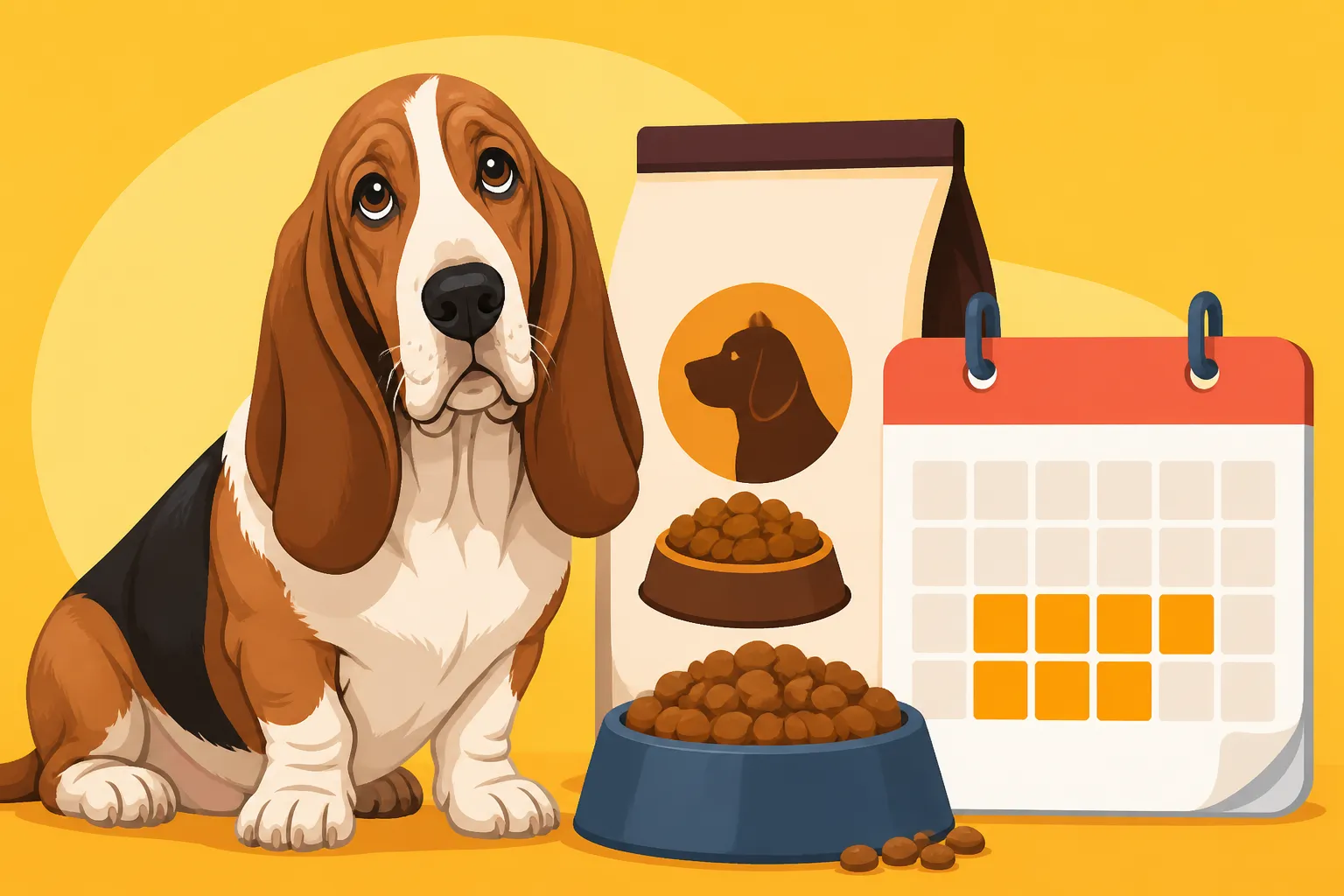
Feeding your adult Basset Hound two meals a day at consistent times is generally recommended. This helps regulate their metabolism, prevents them from getting excessively hungry between meals, and aids in house training. If you have an older Basset, sometimes three smaller meals can be easier on their digestion.
A routine helps them understand when food will be available and can reduce anxiety around meal times, potentially lessening begging behavior. When they know food is coming at 8 AM and 5 PM, they're less likely to hound you at 3 PM. This consistent schedule also helps you accurately track how much you're feeding them each month. If you're consistently running out of a bag of food faster than anticipated, it's a good sign you might be overfeeding or adding too many extra snacks.
Budgeting for Bellies: Monthly Food Costs and Beyond
Understanding how much food your Basset Hound eats monthly naturally leads to thinking about the cost. Food is one of the most significant recurring expenses for any dog owner, and for a Basset Hound, whose health often depends on maintaining a healthy weight, choosing the right food and sticking to appropriate portions is paramount.
Estimating Monthly Food Expenditure
As we discussed, the type of food greatly influences the monthly cost.
- Economy Kibble: While cheaper upfront, these often have lower caloric density, meaning you might need to feed more cups per day, potentially balancing out the cost or even costing more in volume over time. A 30lb bag might cost you anywhere from $30-$50 and last 1.5 months, meaning a monthly spend of $20-$35.
- Premium Kibble: These foods typically have higher quality ingredients and better caloric density. A 30lb bag could range from $50-$80, potentially lasting 1.5-2 months, making the monthly spend around $25-$55. Many Basset Hound owners find that a good quality food often leads to better coat health, fewer digestive issues, and can even help with weight management because the dog feels more satisfied.
- Fresh/Wet Food: As noted, these are the most expensive options. A monthly subscription to a fresh food service could easily be $100-$250+, depending on your Basset's size and needs. Mixing a high-quality kibble with a smaller amount of wet or fresh food as a topper can be a good compromise to provide palatability without breaking the bank.
Don't forget to factor in treats! While they shouldn't make up a large portion of the diet, treats are part of the monthly food budget. Opt for healthy, low-calorie options to avoid inadvertently causing Whether a Neutered Basset Hound Gains Weight.
Hidden Costs of Overfeeding
It’s easy to focus on the upfront cost of food, but neglecting proper portion control can lead to much higher expenses down the line. What Extra Weight Does to a Basset Hound is a stark reminder of this. Overweight Basset Hounds are at a significantly increased risk for a range of health problems:
- Joint Issues: Exacerbated Elbow Dysplasia in a Basset Hound and Arthritis in a Basset Hound at Seven are common. The cost of pain medication, anti-inflammatories, or even joint supplements like What Joint Supplements Cost a Basset Hound Owner can add up quickly.
- Back Problems: Their long backs are already prone to Intervertebral Disc Disease in a Basset Hound. Extra weight increases the pressure on their spinal discs, making slipped discs more likely. What Disc Surgery Costs on a Basset Hound is often a four-figure sum, making proactive weight management a financial imperative.
- Other Health Issues: Whether a Basset Hound Gets Diabetes or Whether a Basset Hound Gets Pancreatitis are also concerns for overweight dogs.
- Reduced Lifespan: Perhaps most heartbreakingly, Whether an Overweight Basset Hound Lives Shorter is a sad reality. Investing in proper nutrition and portion control now can mean more healthy, happy years with your beloved companion.
Considering pet insurance from providers like Healthy Paws can help mitigate some of these potential veterinary costs, but prevention through diet and exercise is always the best approach. Keeping a Basset Hound at their correct weight is not just about aesthetics; it's about safeguarding their health and your wallet in the long run. When facing the challenge of Getting Weight Off a Basset Hound That Will Not Exercise, sometimes it comes down to being firm with food portions, even if it feels a little mean in the face of those big, sad eyes.
Ultimately, the goal is to provide enough nutrient-dense food to fuel your Basset Hound's body and mind without overdoing it. Consistent portion control, a good quality food, and regular monitoring of their weight are your best tools for ensuring your Basset Hound thrives month after month.
Disclaimer
This article is for general informational purposes only and does not constitute professional advice. Laws, prices and regulations vary by location and change over time. Consult a qualified professional for guidance on your specific situation.